
Every fencing project starts with the same essential question: “How much will this cost?” In 2026, fence installation pricing continues to evolve as material costs fluctuate, labor rates rise, and overall demand for home improvement projects increases across the country. Homeowners today are investing in fences not only for basic property boundaries, but also for enhanced privacy, added security, noise reduction, pet safety, and improved curb appeal. Because of these expanding needs, understanding the true cost of a fence is more important than ever.
Several key factors influence your total project price, including the type of material you choose, the height of the fence, the number of posts and gates required, and the complexity of your property’s terrain. Market conditions also play a major role, as supply chain changes and regional labor shortages can cause prices to shift throughout the year.
Having a clear understanding of cost per linear foot, common add-ons, and installation challenges can help you create a realistic budget and avoid expensive surprises during construction. This guide breaks down everything homeowners need to know from standard pricing ranges to the pros and cons of popular fencing materials so you can confidently plan your project and choose the best fence for your property.
Understanding Fence Installation Costs in 2026
Fence installation costs have increased slightly across the U.S. as material prices rise and labor shortages continue. For most homeowners, a new fence costs between $2,400 and $9,500, depending on size, style, and material.
Why Fence Costs Continue to Rise
Manufacturing, shipping, and demand for home improvement projects play major roles in cost increases. Wood and steel prices fluctuate more than vinyl and composite because of supply limitations.
Key Factors Affecting Fence Installation Cost
Several elements influence your fencing budget:
Material type (wood, vinyl, aluminum, steel, composite)
Your chosen material heavily impacts cost and lifespan. Wood is affordable but needs maintenance, vinyl and aluminum offer low upkeep, steel provides top strength, and composite blends durability with style, creating a long-lasting fence with minimal long-term care.
Fence height and linear feet
The taller and longer your fence is, the higher your total cost. Increased linear feet require more posts, panels, and labor, while added height demands stronger support systems and deeper holes, making the project more complex and expensive overall.
Labor rates in your region
Local labor pricing significantly affects installation costs. Areas with high demand, limited contractors, or increased cost of living typically charge more. Skilled installers may also charge premium rates, influencing your total budget depending on project size and difficulty.
Yard conditions and slope
Uneven, sloped, or rocky terrain increases installation difficulty and time. Contractors may need extra tools, grading work, or specialized methods to ensure proper alignment. Challenging ground conditions generally raise labor costs and limit certain fencing options.
Number of gates and hardware
Additional gates, latches, locks, and decorative hardware add to your final cost. Each gate requires precise framing, reinforced posts, and careful installation. Even small hardware upgrades can increase both material expenses and labor time substantially.
Permits required by your city or HOA
Many cities and HOAs require fence permits, design approvals, or property line confirmations. Fees vary widely and missing paperwork can delay your project. These administrative requirements add costs and must be considered when planning your installation.
Key Factors Affecting Fence Installation Cost
Material type (wood, vinyl, aluminum, steel, composite)
Your chosen fence material has the biggest impact on price. Wood is budget-friendly but needs more upkeep, vinyl costs more upfront but lasts longer, and aluminum or steel offer premium durability. Composite blends strength and style but usually sits at the top of the price range.
Fence height and linear feet
The taller and longer your fence is, the more materials and labor it requires. More linear feet increases posts, panels, and fasteners, while taller fences need stronger support and deeper footing. Both drastically shape your project’s overall cost.
Labor rates in your region
Professional installation prices vary widely based on local labor rates, demand for home improvement services, and contractor availability. Areas with skilled labor shortages or high cost of living often have higher installation fees, which can significantly affect your total project cost.
Yard conditions and slope
Uneven ground, steep slopes, rocky soil, or difficult digging conditions increase installation time and complexity. Contractors may need additional equipment, grading, or soil preparation. These challenges raise the labor cost and may also limit certain fence styles or materials.
Number of gates and hardware
More gates, latches, locks, and decorative hardware increase your fencing cost. Gates require additional framing, stronger posts, and precise alignment, which add labor time. Even one extra gate can noticeably raise the overall budget depending on its size and design.
Permits required by your city or HOA
Many cities and HOAs require fence permits, design approvals, or property line verifications. Fees vary by region, and missing paperwork can cause delays or fines. These administrative steps add to your project cost and must be included when budgeting.
Types of Fence Materials and Their Costs
Choosing the right fence material affects appearance, durability, and long-term costs. Here’s what homeowners can expect in 2026:
Wood Fence Pricing and Lifespan
Wood fences offer classic warmth and natural beauty. They cost $20–$45 per foot depending on the species (pine, cedar, redwood). While beautiful, wood requires maintenance and sealing to prevent rot.
Vinyl Fences: Modern, Durable, and Cost-Effective
Vinyl fencing is a popular low-maintenance choice. Costs range from $28–$55 per linear foot, with strong durability and no painting required. Vinyl fences resist pests, moisture, and warping.
Aluminum Fences: Lightweight and Stylish
Aluminum fences provide a sleek look at $32–$70 per foot. They mimic wrought iron but without rust issues. Great for modern homes, pools, and decorative perimeter fencing.
Wrought Iron and Steel: Premium, Long-Lasting Options
Premium wrought iron or steel fences run $60–$125 per linear foot and offer unmatched strength. These are ideal for luxury homes or high-security needs.
Chain-Link Fencing: The Affordable Option
A chain link fence is the most affordable at $10–$22 per foot. Perfect for large yards, pet enclosures, or rental properties. Adding privacy slats will increase costs slightly.
Composite Fencing: Low-Maintenance and Strong
Composite fencing costs $45–$75 per foot and provides excellent longevity with minimal upkeep. It blends wood fibers with recycled plastics for durability and color retention.
Cost Breakdown per Linear Foot
Average Cost per Material
Here is a quick comparison:
Material | Cost Per Linear Foot |
Chain Link | $10–$22 |
Wood | $20–$45 |
Vinyl | $28–$55 |
Aluminum | $32–$70 |
Composite | $45–$75 |
Wrought Iron | $60–$125 |
Labor Cost by Region
Labor costs vary based on location:
- West Coast: Highest due to labor demand
- Midwest: Moderate
- South: Lowest labor cost
How Fence Height and Style Affect Price
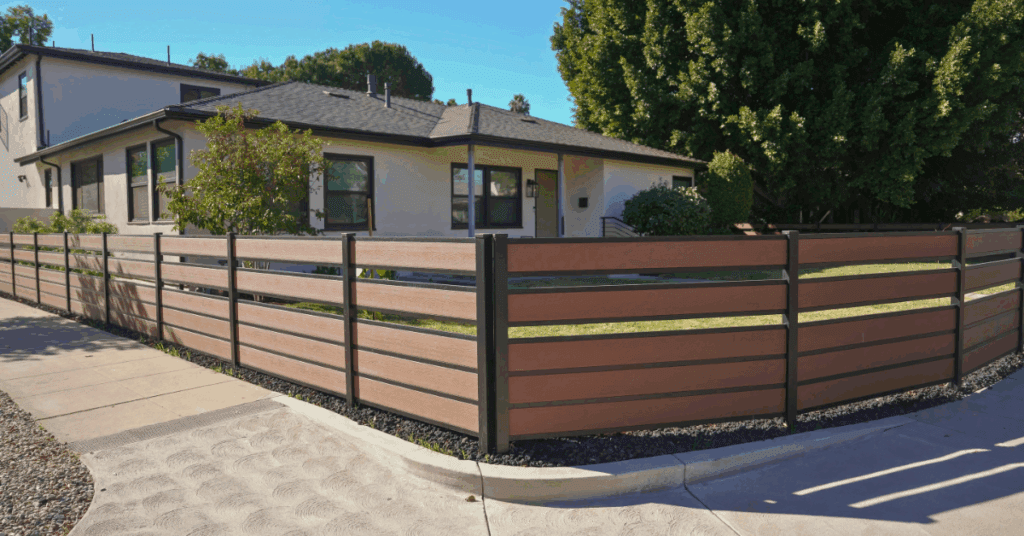
Taller fences require more materials, deeper posts, and higher labor time. Decorative styles like lattice tops, horizontal fences, or wrought-iron caps also raise costs.
Additional Cost Factors Homeowners Should Expect
Old Fence Removal
Removing an old fence adds $3–$9 per foot depending on its condition.
Fence Posts, Gates, and Hardware
Stronger posts and decorative gates increase project costs but boost durability.
Yard Grading and Site Preparation
Uneven terrain or rocky soil raises installation costs due to extra labor.
Permits and HOA Requirements
Cities often require fence permits, and HOAs may enforce height and style rules.
How to Reduce the Overall Cost of Your Fencing Project
Choosing the Right Materials
Pick fencing materials that balance upfront cost with long-term lifespan. Vinyl and aluminum are excellent mid-range solutions because they offer durability, low maintenance, and appealing style without the high price of premium options.
Planning Your Yard Layout
A well-planned yard layout can significantly reduce installation costs. Straight fence lines and level terrain minimize labor time, making the project easier for installers and helping you avoid additional grading or customization fees.
Taking Advantage of Flexible Payment Plans
Many contractors now offer flexible payment plans, allowing homeowners to break large fencing projects into manageable monthly installments. This makes it easier to start your upgrade sooner without straining your household budget.
DIY vs. Professional Fence Installation
Pros and Cons of DIY
DIY fencing can save money upfront but also increases the risk of uneven posts, weak structural support, incorrect measurements, or code violations. Without experience, small mistakes can lead to expensive repairs later.
Why Labor Costs Are Worth It
Professional installers ensure your fence is built to last for decades, using proper tools and techniques. They also understand city codes and HOA requirements, preventing costly rework and guaranteeing long-term stability and compliance.
When to Hire a Licensed Installer
Hire a licensed installer when dealing with large yard layouts, steep or uneven terrain, or premium materials like steel, aluminum, or composite. These projects require expert precision to ensure proper alignment and durability.
Conclusion
Fence installation costs in 2026 vary based on material, labor, and property conditions. Understanding cost breakdowns, comparing materials, and using a fence calculator helps homeowners budget wisely. Whether you’re upgrading curb appeal or improving security, the right fence can transform your yard and increase your property value.
FAQs
Is it cheaper to build or buy fence
Building a fence yourself is usually cheaper upfront because you avoid labor costs. However, DIY projects can become more expensive if mistakes lead to leaning posts, uneven panels, or code violations. Buying a professionally installed fence costs more initially but ensures proper alignment, long-term durability, and compliance with city or HOA rules. For most homeowners, a professionally installed fence offers better long-term value, especially for large yards or premium materials.
How much does it cost to install a 100 ft fence?
Installing a 100-foot fence typically costs $1,800 to $6,200 in 2026, depending on material and labor. Here’s a quick breakdown:
Chain-link: $1,500–$3,000
Wood: $2,200–$4,500
Vinyl: $3,000–$6,000
Aluminum: $3,200–$6,200
Costs increase with extras like gates, taller panels, difficult terrain, or old fence removal. Getting a detailed local quote will give you the most accurate estimate based on your yard conditions.
How long does professional fence installation take?
Most professional fence installations take 1 to 3 days to complete, depending on yard size, terrain, material type, and the number of gates. Simple 100–150 ft wood or chain-link fences can often be installed in a single day. Larger properties, uneven ground, or premium materials like composite or iron may take up to a week. Weather and permit delays can also affect the overall timeline.
Does aluminum fencing need special maintenance?
Aluminum fencing requires very little maintenance compared to wood or steel. It doesn’t rust, warp, or attract insects, making it ideal for long-term durability. Most homeowners only need to wash it once or twice a year with mild soap and water to remove dirt or debris. Unlike wood, aluminum never needs painting or staining, and its protective powder coating keeps it looking new for decades. This makes aluminum one of the lowest-maintenance fencing options available.
What type of fence offers the best long-term value?
The longest-lasting fencing materials are aluminum, steel, wrought iron, and composite. These materials resist rust, insects, moisture, and warping, allowing them to last 30 to 50 years or more with minimal maintenance. Vinyl also offers excellent longevity, typically lasting 20 to 30 years. Wood fences have the shortest lifespan unless regularly sealed, stained, or pressure-treated. If durability is your priority, choose metal or composite fencing for superior long-term performance.

Ronnie is the CEO and Co-Founder of Globus Gates, bringing hands-on leadership and industry experience to the company’s aluminum gates, fences, patio covers, wall cladding, and exterior systems. His insights focus on helping homeowners, contractors, designers, and builders understand durable, modern, factory-direct, and non-combustible aluminum solutions built for long-term performance.