
A modern aluminum fence can do far more than mark a property line. In Los Angeles, the right fence can create privacy around a pool, frame a modern entry, extend an existing masonry wall, coordinate with an automated driveway gate, reduce maintenance and help replace combustible exterior materials near a home.
The difficult part is choosing the right system for the property. Horizontal slats, vertical battens, tongue-and-groove privacy, louvered screening, wall toppers and custom gates all behave differently. Fence height, post spacing, wind exposure, slope, pool conditions, masonry and local zoning matter just as much as color and style.
This guide explains how Los Angeles homeowners, builders and designers can compare modern aluminum fence options without turning the decision into a catalog or temporary price list.
Why Modern Aluminum Fences Work So Well in Los Angeles
Los Angeles has an unusually wide range of residential conditions: flat suburban lots, hillside homes, coastal properties, dense side yards, modern rebuilds, pool decks, masonry walls and large gated estates. Aluminum adapts well because the same material can be fabricated into open, semi-private or full-privacy systems without changing the overall architectural language.
Modern Architecture Needs Cleaner Fence Lines
Many Los Angeles homes use flat rooflines, smooth stucco, dark window frames, wood-look accents and large driveway openings. Traditional wood dog-ear fencing or ornamental pickets can feel disconnected from that architecture. Horizontal or vertical aluminum creates a cleaner visual extension of the building.
Privacy Is Often More Important Than Decoration
Side yards can be narrow, neighboring homes can sit close together and outdoor living areas are used year-round. Aluminum slat fencing gives homeowners control over sightlines without automatically turning the yard into a solid wall.
Low Maintenance Matters in a Harsh Exterior Climate
Southern California combines strong UV exposure, irrigation minerals, dust and, near the coast, salt. Powder-coated aluminum does not need the recurring stain cycle of wood and does not develop the red-rust failure mode of carbon steel.
One Material Can Continue Across the Property
A modern project can use the same finish across fixed fence sections, wall toppers, pedestrian gates, sliding or swing driveway gates and railing. That continuity can make a renovation look intentional even when the work is completed in phases.
Aluminum Supports Both Privacy and Airflow
Horizontal slats can be spaced for semi-privacy. Tongue-and-groove profiles can create full visual closure. Louvers can block direct views while preserving ventilation. This flexibility is useful around pools, outdoor kitchens and mechanical areas.
Choose the fence based on how the property needs to function first, then select the slat orientation, privacy level, height and finish that support the architecture.
Modern Aluminum Fence Styles for Los Angeles Homes
The term modern aluminum fence includes several very different systems. Understanding the differences early prevents the common mistake of choosing a style from a photo without considering privacy, wind or installation.
| Fence Style | Privacy | Visual Character | Best Uses | Main Planning Issue |
|---|---|---|---|---|
| Horizontal slat | Open to high privacy | Clean, wide, contemporary | Backyards, side yards, pools, front elevations | Gap size, alignment, post spacing |
| Vertical aluminum | Open to high privacy | Tall, rhythmic, modern | Entries, wall toppers, narrow lots | Profile width, spacing, height |
| Tongue-and-groove | Full privacy | Solid architectural plane | Outdoor living, equipment, dense property lines | Wind load and structure |
| Louvered | High directional privacy | Deep, premium, architectural | Mechanical screens, patios, pool equipment | Blade orientation and ventilation |
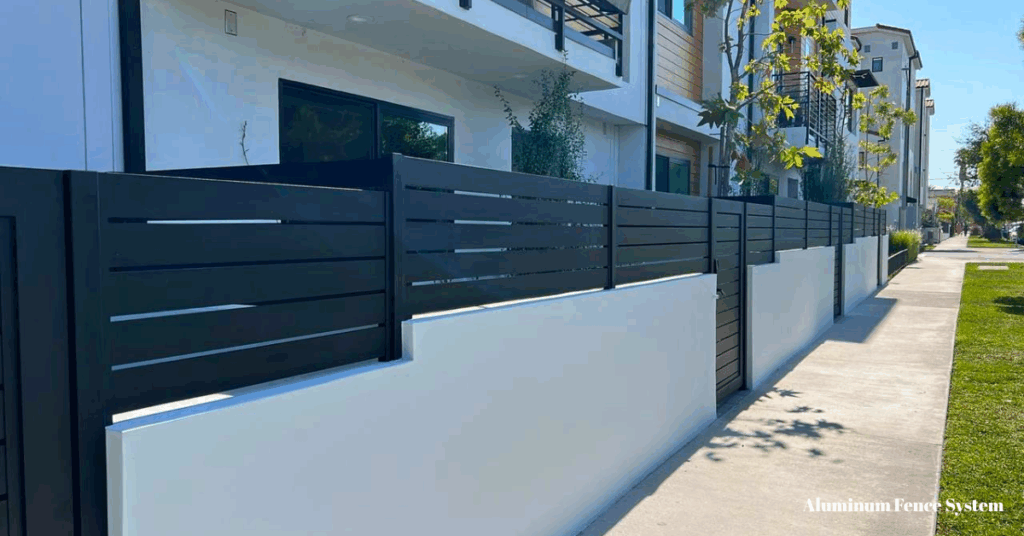
| Wall topper | Depends on infill | Lightens existing masonry | Block walls, stucco walls, retaining conditions | Wall strength and total height |
| Wood-look aluminum | Depends on profile | Warm contemporary | Modern farmhouse, coastal, warm minimalism | Finish consistency and handling |
Horizontal Is Not Automatically the Most Modern
Horizontal slats are popular because they emphasize width, but vertical profiles can be equally contemporary. The better choice depends on house proportions, wall height, gate design and whether the property benefits from appearing wider or taller.
Full Privacy Should Be Intentional
Solid fencing can be ideal along a neighboring property line but unnecessary at a front entry where visibility and openness matter. Using different privacy levels around the same property often produces a better result than one fence style everywhere.
Specialty Systems Have a Purpose
Louvers, decorative panels and custom battens should solve a design or performance problem. Choosing them only because they look different can add complexity without improving the property.
Horizontal Aluminum Fences: The Los Angeles Modern Look
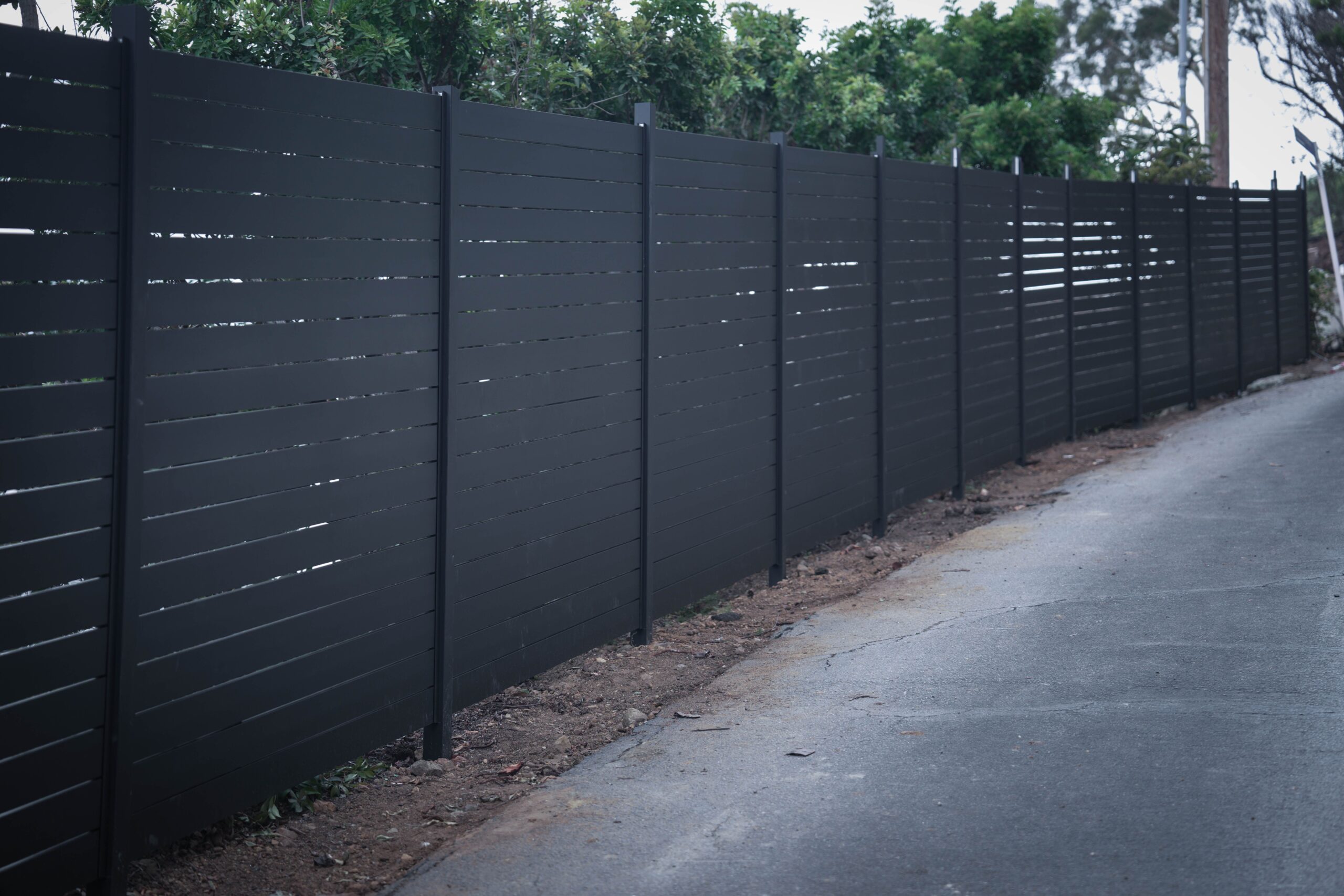
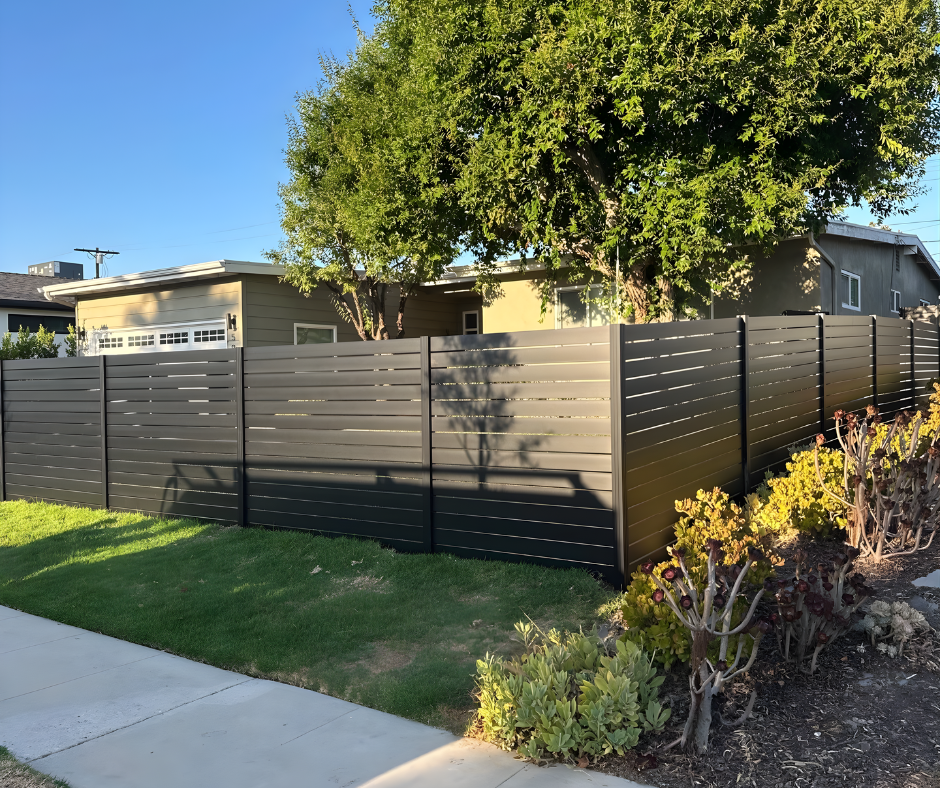
Horizontal aluminum fencing is one of the most recognizable modern fence styles in Southern California. The long lines echo contemporary architecture and can visually widen a narrow yard.
Narrow Slats
Narrow profiles create many repeated horizontal lines. The effect is refined and detailed, especially on long side yards and wall-topper sections.
Wide Slats
Wider profiles create a stronger, calmer surface. Fewer horizontal courses can make large fence runs feel more substantial and less visually busy.
Semi-Privacy Gaps
Consistent gaps let air and light pass through while breaking direct views. The wider the slat relative to the gap, the more private the fence appears from angled viewpoints.
Alignment Is Everything
Horizontal fence quality is easy to judge because every slat becomes a visual level line. Post elevations, channel positions and gate alignment need to be planned carefully so the fence does not appear to rise and fall.
Long Runs Need Rhythm
Very long horizontal fences can look flat if there is no architectural rhythm. Posts, masonry pilasters, gate openings, planting and changes in height can break the run into intentional sections.
Matching Gates
The strongest horizontal fence projects carry the slat pattern through pedestrian and driveway gates. The infill can match while the gate itself uses a structural frame designed for movement.
Vertical Aluminum Fences: A Cleaner Alternative to Traditional Pickets
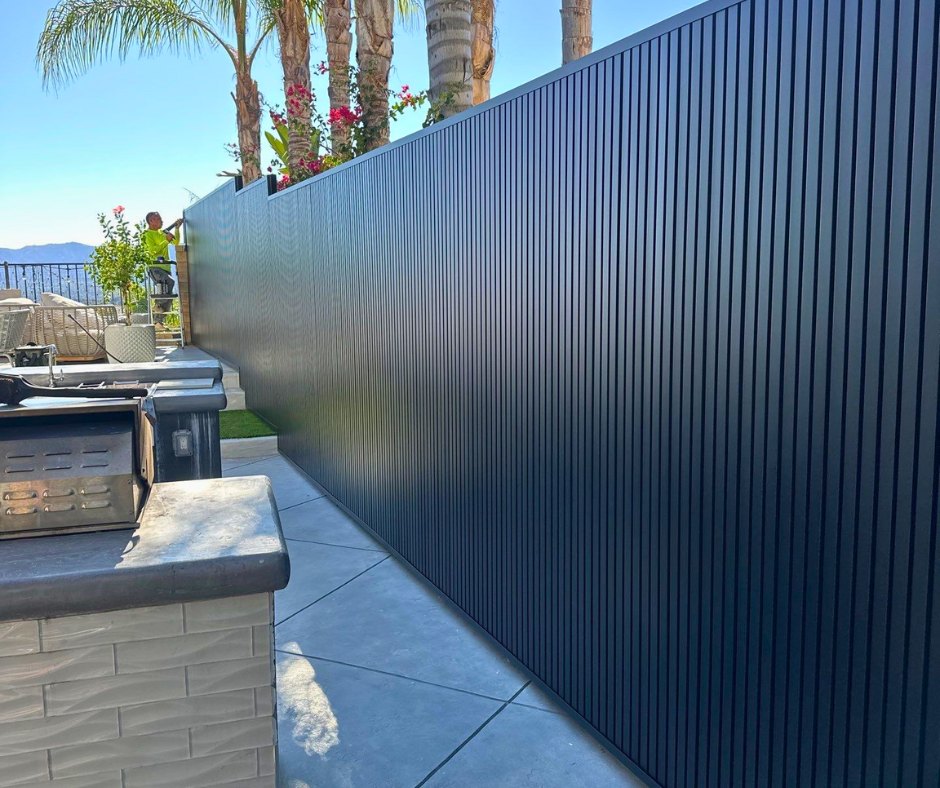
Vertical aluminum can create a contemporary fence without looking like ornamental wrought iron. Rectangular battens, consistent spacing and simple posts change the character completely.
Vertical Profiles Emphasize Height
Vertical lines pull the eye upward. This can help a low masonry wall feel taller or give a front entry a more formal architectural rhythm.
Open Vertical Fencing
Wider spacing preserves visibility and airflow while creating a secure perimeter. This works well where the house should remain visible from the street.
Private Vertical Screens
Wider profiles or tighter spacing increase screening. Vertical privacy can be useful where horizontal lines would conflict with the house or where a taller visual proportion is preferred.
Wall Toppers
Vertical battens contrast nicely with horizontal masonry and can make a heavy wall feel lighter. They are also useful where the homeowner wants privacy without another broad horizontal band.
Gate Coordination
A vertical fence can continue into a vertical pedestrian gate or driveway gate, creating one uninterrupted design language.
Landscape Integration
Vertical aluminum works particularly well with upright plant forms, hedges, ornamental grasses and narrow trees. The fence can recede into the landscape instead of becoming the dominant horizontal element.
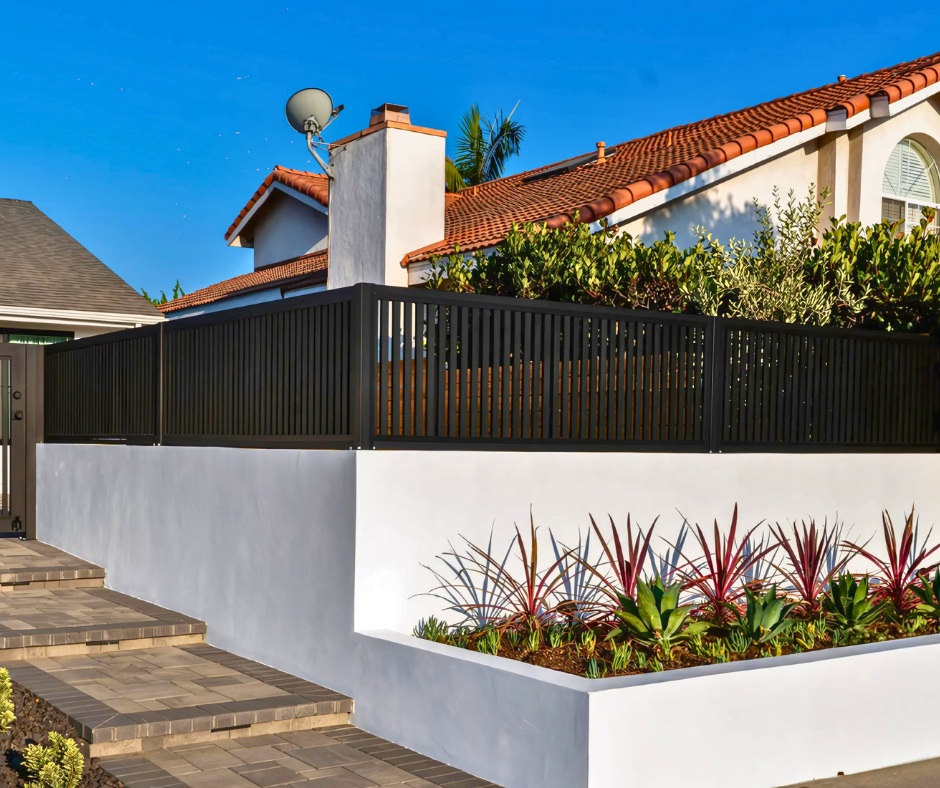
Semi-Privacy vs Full-Privacy Aluminum Fencing
Privacy is not a yes-or-no decision. Aluminum lets homeowners tune the amount of visual separation based on how each side of the property is used.
Semi-Privacy
Semi-private slat fencing uses controlled gaps between profiles. It blocks much of the direct view but keeps the boundary lighter and more breathable. This often works well on long side yards and around patios.
Full Privacy
Full-privacy systems eliminate intentional openings. They are useful beside neighboring windows, outdoor kitchens, pool areas and equipment zones where direct sightlines are the real problem.
Privacy From an Angle
A fence can feel more private than its physical gap suggests because wide slats overlap sightlines when viewed from the side. This is important on long property lines where neighbors rarely view the fence perfectly straight on.
Airflow
Small gaps can make an outdoor space more comfortable by allowing air to move through. A solid fence can reduce airflow and increase wind pressure at the posts.
Light
Full privacy can shade planting beds and side yards. Semi-private fencing can preserve more natural light while still creating strong visual separation.
Use Different Privacy Levels Around One Property
A front boundary can remain open, the side yard can use semi-privacy and the pool or rear boundary can use stronger screening. Aluminum makes that mixed strategy easier because color and profile families can remain coordinated.
Tongue-and-Groove Aluminum Fencing for Maximum Privacy
Tongue-and-groove aluminum creates a continuous fence surface by interlocking one profile with the next. It is the strongest choice when the design calls for no intentional sightline gaps.
Where Full Privacy Helps Most
Outdoor kitchens, hot tubs, pool lounges, bedrooms near property lines and equipment areas benefit from strong screening.
Architectural Appearance
A no-gap aluminum fence can read more like exterior cladding than traditional fencing. This makes it compatible with minimalist stucco homes and contemporary landscape walls.
Wind Surface
Full privacy increases solid area, which means the support system must resist more pressure. Taller fences and exposed lots need stronger attention to posts, footings and mounting.
Drainage
A solid fence should not become an unintended dam. Bottom clearance, curbs and landscape drainage need to be resolved before installation.
Sound
A solid surface may reduce some direct noise transmission compared with open slats, but a standard privacy fence should not be marketed as an engineered sound wall unless it has specific acoustic testing.
Gates
Full-privacy gate leaves catch more wind. Hinge posts, sliding hardware and gate operators should be selected for the actual leaf size and exposure.
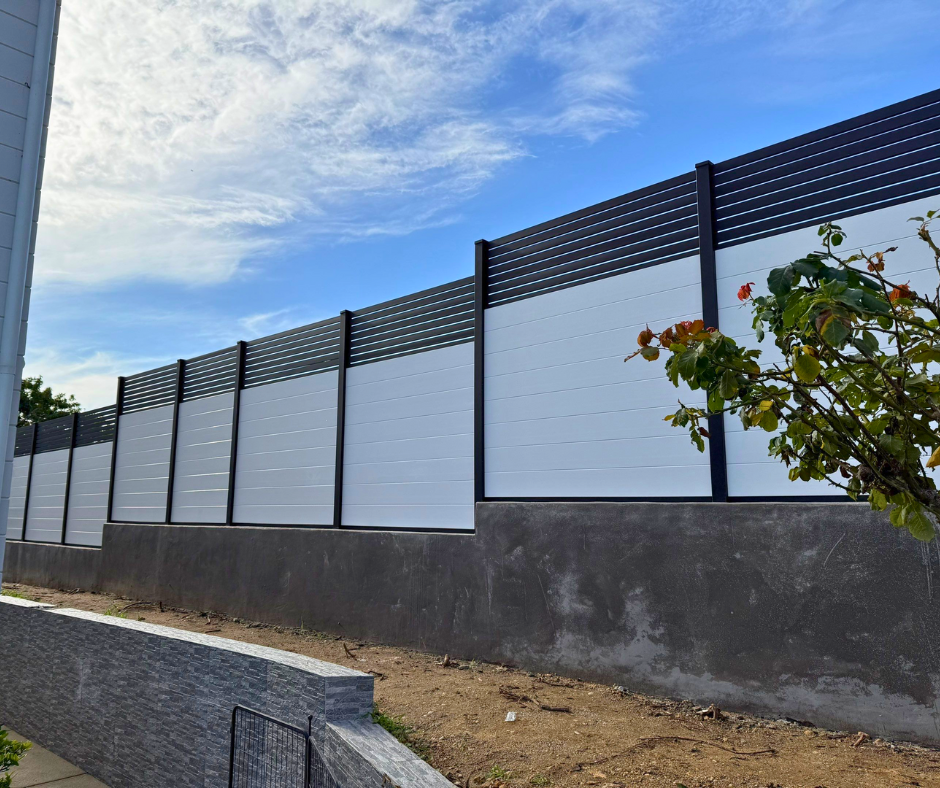
Louvered Aluminum Fences for Privacy and Airflow
Louvered aluminum uses angled blades instead of flat slats. The geometry blocks direct sightlines while allowing air to move through the panel.
Mechanical Equipment
Pool pumps, air-conditioning equipment and generators often need ventilation. Louvers can conceal them without trapping as much heat as a solid wall.
Pool and Patio Areas
Louver screens can create privacy around outdoor living spaces while maintaining airflow, which is valuable in warm climates.
Directional Views
Privacy depends on the blade angle and viewing direction. The system should be evaluated from both sides of the property before final orientation is selected.
Premium Visual Depth
Angled blades cast deeper shadows than flat slats, giving the fence a more architectural three-dimensional appearance.
Wind
Louvers are not equivalent to an open picket fence. They still redirect wind and transfer pressure to posts and supports.
Use Louvers Where They Solve a Problem
If ordinary semi-private slats provide enough screening and airflow, a simpler horizontal system may be more efficient. Louvers make the most sense where ventilation or directional privacy is an actual design requirement.
Aluminum Wall Toppers: Modernizing Existing Block and Stucco Walls
Many Los Angeles properties already have masonry walls. Adding aluminum above them can increase privacy and update the appearance without rebuilding the entire boundary.
Why Wall Toppers Work
Masonry provides mass and a durable lower barrier. Aluminum adds visual lightness, privacy and height while reducing the amount of new full-height fencing required.
Horizontal Toppers
Horizontal slats can extend the modern language of a matching driveway gate across an older stucco wall.
Vertical Toppers
Vertical profiles can make a wall feel taller and less heavy. They are especially effective on long street-facing boundaries.
Structural Wall Condition
The wall must be capable of supporting the added fence load. Decorative cap material, hollow block and old unreinforced masonry should not be assumed to be adequate attachment points.
Total Height
Los Angeles zoning looks at the complete wall-and-fence condition, not only the aluminum portion. The topper should be designed after the applicable height limit is confirmed.
Core Mount vs Surface Mount
Posts can sometimes be core-mounted or surface-mounted to suitable masonry. The correct method depends on wall width, reinforcement, waterproofing and structural design.
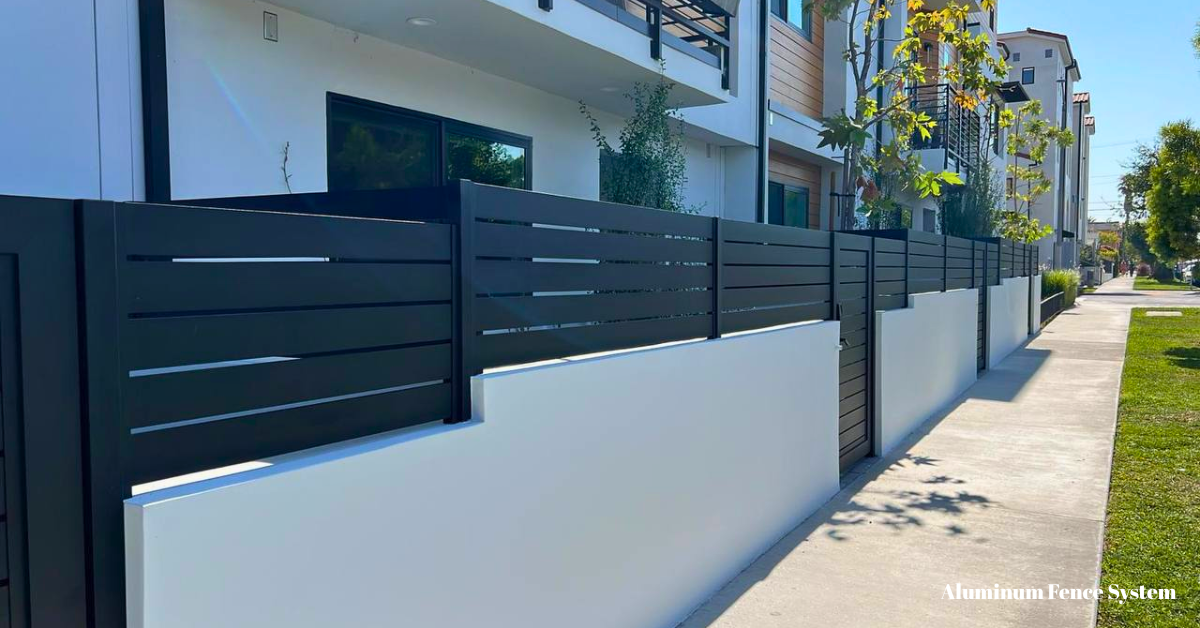
Front-Yard Aluminum Fences: Privacy Without Hiding the House
Front-yard fencing has a different job from backyard privacy fencing. It should define the property, add security and support curb appeal without making the house feel isolated from the street.
Lower Height Usually Feels Better
Where zoning and property goals allow, a lower front fence maintains visibility to the entry and landscaping. It can feel more welcoming while still creating a clear boundary.
Semi-Private Slats
Moderate spacing can screen parked vehicles or lower windows without completely hiding the house.
Vertical Battens
Vertical aluminum works well at front elevations because it provides security and rhythm while preserving more open views.
Gate as the Focal Point
The pedestrian or driveway gate often becomes the strongest design element. The surrounding fence should support that entry rather than compete with it.
Corner Visibility
Corner lots and driveways can have sightline requirements. A tall full-privacy fence placed close to a driveway or sidewalk can create visibility problems even if the homeowner prefers more screening.
Landscape Layering
Combining aluminum fencing with hedges, trees and low planting creates privacy in layers. This often looks softer than relying on a single tall solid barrier.
Side and Rear-Yard Aluminum Privacy Fences
Side and rear yards are where aluminum privacy systems provide the most practical benefit. These areas often face neighboring windows, service spaces and outdoor living zones.
Narrow Side Yards
Full-height fencing can make a narrow side passage feel darker. Semi-private slats or vertical profiles can maintain airflow and light while screening utilities and neighboring views.
Rear Property Lines
Backyards often benefit from stronger privacy because the fence becomes the backdrop for pools, lawns and outdoor kitchens.
Neighboring Elevation
If the neighboring property sits higher, increasing fence height may not solve the privacy problem alone. Landscaping or strategic screens closer to the living area can be more effective.
Equipment Areas
Trash bins, pool equipment and utility zones can use shorter or louvered screens instead of extending full-privacy fencing everywhere.
Gate Access
Side yards frequently contain pedestrian gates. Plan the gate opening and hinge support before dividing the remaining fence into bays.
Maintenance Access
Leave enough clearance for irrigation, meters, pool equipment and future maintenance. A beautiful fence should not block access to essential building systems.
How Tall Can an Aluminum Fence Be in Los Angeles?
Fence height is one of the first local questions homeowners should resolve before selecting a panel system.
LADBS currently states that, in most residential areas, fences are generally limited to 3 feet 6 inches in the front yard and 6 feet in side and rear yards. LADBS also notes that height can be increased in some circumstances and that zoning requirements apply even when a separate building permit is not required.
Front Yard
Front-yard limits are typically lower because of neighborhood character, visibility and streetscape considerations. A tall privacy fence should not be assumed to be allowed simply because neighboring properties appear to have one.
Side and Rear Yards
Six feet is a common residential limit in the City of Los Angeles, but overlays, hillside conditions, corner lots, specific plans and other zoning rules can change the answer.
Wall Plus Fence
If aluminum is installed above masonry, the total combined height matters. Measure from the applicable grade point to the top of the complete wall-and-fence assembly.
Special Approvals
Los Angeles City Planning has procedures for certain fence and wall height requests. Properties seeking extra height may need planning review rather than simply building taller.
Different Cities, Different Rules
Beverly Hills, Santa Monica, Malibu, Pasadena, West Hollywood and other independent cities within Los Angeles County have their own rules. City of Los Angeles guidance should not be applied automatically outside City boundaries.
Verify Before Fabrication
Custom aluminum is easiest to manufacture correctly when finished height is known in advance. Changing height after fabrication can affect post length, slat count, gate dimensions and wall-topper proportions.
Matching Aluminum Gates: Pedestrian, Swing and Sliding Systems
A modern fence looks incomplete when the gate feels like a separate product. The best projects coordinate the visible infill while designing the gate frame for movement and daily use.
Pedestrian Gates
A side or entry gate needs a rigid frame, hinge or pivot system, latch and stable support posts. The slats can align with adjacent fence panels for a continuous appearance.
Double-Swing Driveway Gates
Two leaves share a driveway opening and can create a symmetrical estate entry. Hinge posts need to support leaf weight and wind while maintaining alignment.
Sliding Gates
Sliding gates work well where the driveway slopes or where swing clearance is limited. The property needs enough runback space beside the opening.
Automation
Automatic gates add operators, power, safety devices and access control. The motor and hardware should be selected around the actual gate frame, weight, width and wind surface.
Full-Privacy Gates
Closed infill catches more wind than open slats. The gate structure and operator should reflect that difference.
Plan the Gate First
Place driveway and pedestrian openings before laying out fixed fence bays. This helps avoid awkward short sections and keeps slat lines aligned.
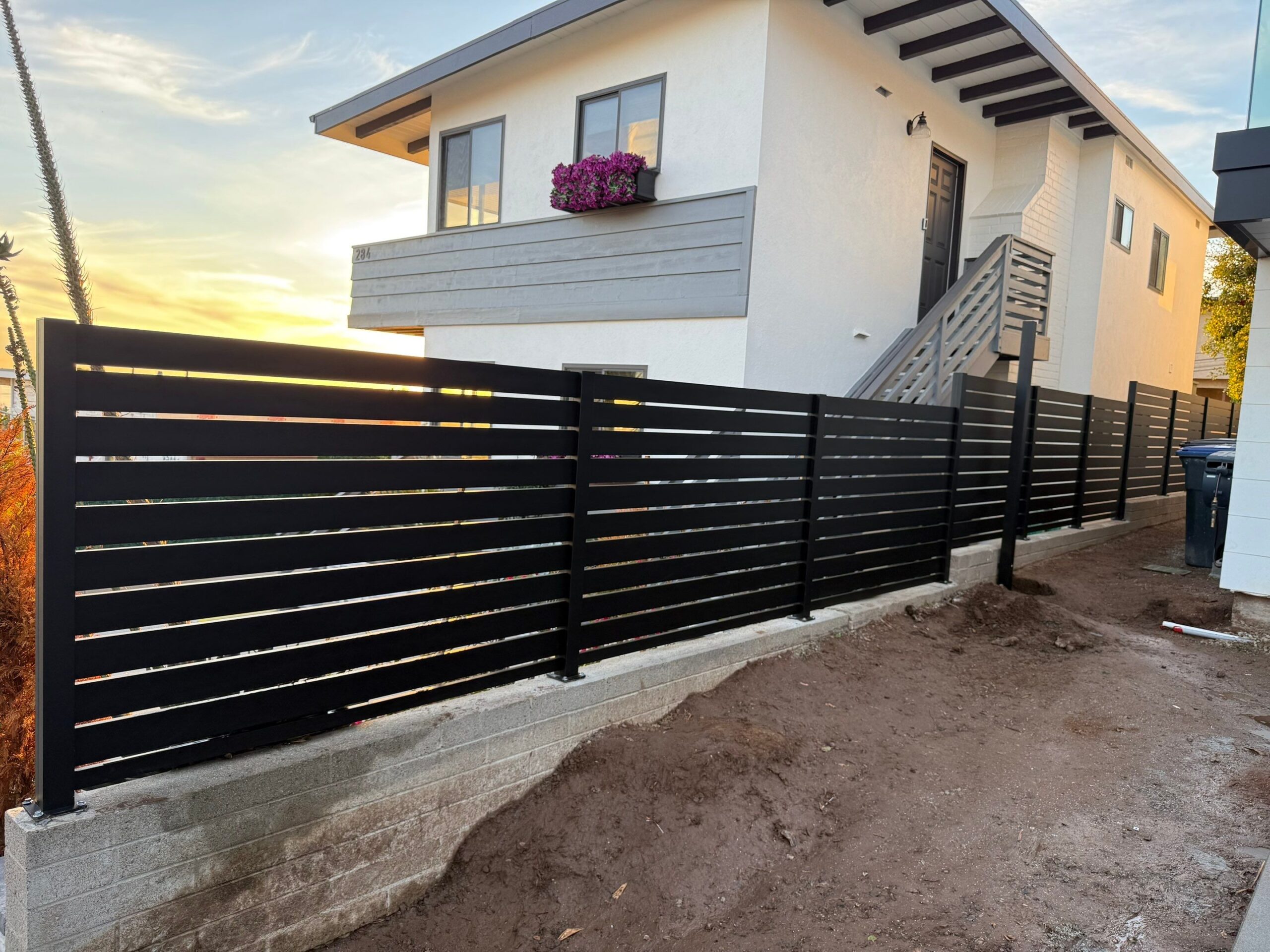
Aluminum Fencing Around Pools and Outdoor Living Areas
Pool fencing combines architecture with safety. A modern aluminum system can provide privacy, withstand regular moisture and coordinate with gates, patio covers and outdoor kitchens, but the barrier still needs to satisfy the applicable pool requirements.
Open vs Private Pool Fencing
An open vertical fence can preserve views to the pool from the house. A semi-private or full-privacy fence can screen neighboring properties. The correct choice depends on where supervision, privacy and visual openness matter most.
Pool Gates
If the gate is part of the required pool barrier, self-closing and self-latching requirements may apply. Gate hardware should be selected for reliable operation rather than appearance alone.
Horizontal Elements
Horizontal slats can create climbability questions in some pool-barrier conditions. The design should be reviewed against the applicable code and local interpretation before final fabrication.
Water and Chemicals
Pool splash, salt systems and cleaning chemicals increase the importance of finish quality and compatible fasteners. Rinsing the fence periodically helps prevent deposits.
Equipment Screening
Louvered aluminum can hide pumps and heaters while preserving airflow. Full solid screens can trap heat around equipment if ventilation is not considered.
Outdoor Living Continuity
Using the same black, bronze or wood-look finish across pool fencing, gates and patio structures can make the backyard feel designed as one environment.
Aluminum Fences for Malibu, Santa Monica and Coastal Los Angeles
Coastal Los Angeles properties face a combination of salt, wind, moisture and strong UV exposure. Aluminum is well suited to these environments when finish, hardware and maintenance are specified correctly.
No Red-Rust Failure Mode
Aluminum does not form the iron-oxide rust associated with carbon steel. That makes it attractive for coastal gates and fences where paint failure on steel can become an ongoing maintenance problem.
Powder Coating Still Matters
The base metal is only part of the system. Proper pretreatment and exterior-grade powder coating help preserve color and surface appearance in strong sun and salt air.
Stainless Hardware
Stainless fasteners and hardware are commonly paired with aluminum, but they still need suitable grade selection and cleaning near the ocean.
Dissimilar Metals
Wet contact between aluminum and other metals can create galvanic corrosion. Compatible fasteners, isolation and coatings are important details in marine exposure.
Fresh-Water Cleaning
Salt should be rinsed from slats, channels, post bases and gate hardware periodically. Coastal maintenance is simple compared with refinishing wood or repairing rusted steel, but it is not zero.
Wind Exposure
Open ocean-facing and bluff properties can experience strong wind. Full-privacy panels require a support strategy suited to the actual exposure.
Views
Where the property has an ocean view, use privacy selectively. A solid fence on the wrong edge can block one of the property's most valuable features.
Modern Aluminum Fencing for Hillside and Sloped Los Angeles Lots
Hollywood Hills, Bel Air, Malibu, Topanga and many other Los Angeles neighborhoods contain steep lots where fence design is as much about grade and structure as it is about style.
Stepped Horizontal Panels
Horizontal aluminum is commonly kept level within each bay and stepped with the grade. This preserves the clean slat line but creates changing bottom clearances.
Shorter Bays on Steep Slopes
Reducing bay width lowers the elevation difference across each panel. The finished fence can look cleaner, but it requires more posts and more installation points.
Retaining Walls
A privacy fence on top of a retaining wall adds wind load to a structure already resisting soil. The wall should be evaluated before new posts are cored or bolted to it.
Access
Steep driveways, stairs and narrow side yards can make long aluminum profiles harder to carry and stage. Installation planning should consider how material reaches the work area.
Drainage
Hillside properties depend on controlled drainage. Fence foundations, curbs and solid panels should not block surface water or interfere with existing drainage paths.
Views and Privacy
On a slope, the neighbor may be above or below the fence. A taller fence may not solve privacy if the viewing angle comes from a second story or higher pad. Strategic screens and landscaping can sometimes work better.
Post Length
Changing grade can require different exposed post heights and field cuts. Measure the actual slope before custom material is finalized.
Wind Load and Privacy: Why the Fence Surface Changes the Structure
Two fences can have the same height and color while creating very different loads on their posts. The main difference is how much air passes through the panel.
Open Vertical Fence
Large gaps allow substantial airflow. The fence still needs proper foundations, but the panel creates less continuous wind surface.
Semi-Private Slat Fence
Horizontal slats with controlled gaps balance screening and airflow. Tightening the gap increases privacy and also increases the percentage of solid surface.
Full-Privacy Fence
Tongue-and-groove or other no-gap systems behave more like a solid screen. Wind pressure transfers to posts, base plates, anchors and footings.
Louvered Fence
Louvers allow air through but also redirect it. Their wind behavior is different from both open pickets and flat solid panels.
Taller Fence, Larger Leverage
As height increases, wind acts farther from the post base. That can require larger posts, closer spacing or stronger foundations.
Exposed Locations
Canyon edges, hilltops, coastal bluffs and open corner lots can experience more demanding conditions than sheltered backyards.
Do not choose post size or spacing from appearance alone. The fence height, panel openness, span, site exposure, foundation and attachment should be evaluated together.
Fence Posts, Footings, Base Plates and Mounting Conditions
The quality of a modern fence is often determined by components homeowners barely see. Posts and foundations control alignment, gate performance and resistance to wind.
Embedded Posts
Ground-mounted fences typically use posts set into concrete footings. The footing size depends on height, soil, privacy, post spacing and exposure.
Surface-Mounted Posts
Base plates can anchor posts to structural concrete. The slab needs enough thickness and reinforcement for the fence loads.
Pavers Are a Finish
A paver itself should not be assumed to be the structural attachment. The post needs approved concrete or other structure beneath the finish.
Core-Mounted Posts
Posts can sometimes be set into cored holes in concrete or masonry. This creates a clean base but requires proper depth, grout or anchoring and waterproofing.
Wall Channels
Where a panel terminates at a structural wall, side channels can eliminate an unnecessary freestanding post. The wall connection still needs appropriate anchors.
Gate Posts
Gate posts carry moving loads and can require a different support strategy from line fence posts. Sliding and swing systems should be planned independently.
Alignment Before Concrete
Horizontal fencing magnifies post errors. String lines, lasers and temporary bracing help establish one consistent plane before concrete cures.
What Makes a High-Quality Aluminum Fence System?
High-quality aluminum fencing is not defined by one buzzword. It is the combination of profile geometry, alloy, wall thickness, connections, finish and installation.
Extruded Profiles
Extrusion allows aluminum slats and posts to include internal ribs, interlocks, screw pockets and consistent wall thickness. Purpose-built profiles create cleaner assembly than unrelated generic tubing.
Architectural Alloy
Architectural aluminum alloys are widely used because they offer corrosion resistance, consistent extrusion and a surface suited to premium finishing. The specific alloy and temper should be confirmed when engineering or specifications require it.
Wall Thickness
Outside dimensions do not tell the whole story. Two posts can look identical while containing different amounts of metal. Structural performance depends on geometry and wall thickness.
Channels and Covers
Matched side channels conceal slat ends and fasteners. Covers and caps create a finished appearance without exposed fabrication details.
Mechanical Connections
Well-designed systems use repeatable brackets, screws or internal connections. Field welding can still be appropriate for certain frames, but fixed fence panels do not always need to be fabricated as one welded object.
Gate Frames
The gate should have a structural frame distinct from the fence infill. A strong frame prevents sag and keeps locks, hinges and operators aligned.
System Compatibility
Fence, post, channel and gate components should be designed to work together. Mixing parts only because they share a similar black finish can create attachment and warranty problems.
Powder-Coated Aluminum Fences: Finish Quality Beyond the Color
Powder coating is one of the biggest reasons modern aluminum fences look clean and remain low maintenance. The quality of the coating process matters more than simply selecting black.
Pretreatment
The aluminum should be cleaned and pretreated before powder application. Good pretreatment improves adhesion and long-term exterior performance.
Architectural Exterior Powder
Exterior-grade architectural powder systems are designed for stronger UV and weather exposure than basic decorative coatings. Buyers can ask what performance standard the finish is intended to meet.
Texture
Fine texture can hide fingerprints and minor surface variation while creating a premium low-gloss appearance.
Factory Application
Factory powder coating provides more consistent coverage than field painting finished fence sections after installation.
Cut Edges
Some field cutting is normal on custom fence projects. Good system design hides cut ends inside channels and keeps visible repair to a minimum.
Touch-Up
Touch-up products are useful for small scratches but do not recreate a factory-cured powder finish. Installation crews should protect finished material during handling.
Cleaning
Mild soap, fresh water and non-abrasive cleaning are typically appropriate. Harsh chemicals and abrasive pads can damage the finish.
Black, Bronze, White and Wood-Look Aluminum Fence Design
Color changes how a fence relates to the house. The most successful choice usually repeats or complements another exterior element instead of becoming an isolated accent.
Black
Black is the modern default because it works with dark windows, contemporary gates, concrete and green landscaping. It can visually recede when the background is shaded.
Bronze
Dark bronze feels softer than black and can work well with warm stone, beige stucco and traditional-modern homes.
White
White aluminum can create a coastal or clean contemporary look. Dirt and irrigation deposits are more visible, so maintenance expectations should be considered.
Gray
Charcoal and gray finishes coordinate with concrete, metal roofing and cooler exterior palettes without creating the contrast of black.
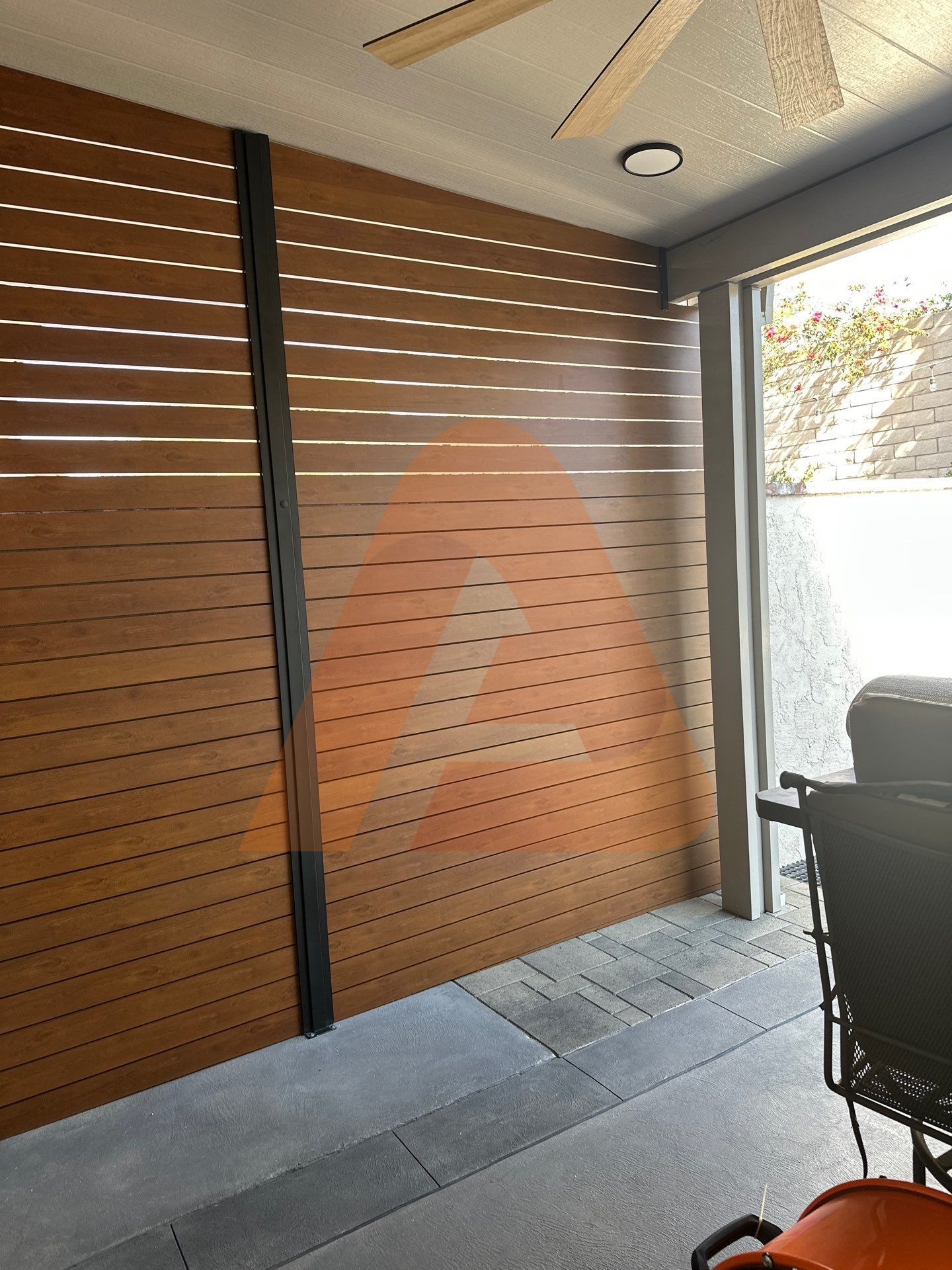
Wood-Look
Wood-look aluminum adds warmth while keeping the fence structure metal. It works well on modern farmhouse, coastal and warm minimalist properties.
Custom Colors
Custom architectural colors can match windows, cladding or brand standards. Fence and gate components should be ordered in coordinated finish batches when exact matching matters.
Use Samples Outside
Color can look different in direct sun, shade and evening light. Review samples beside the actual stucco, stone, windows and hardscape before finalizing a large perimeter.
Noncombustible Aluminum Fencing and Zone 0 Planning
Wildfire-conscious design has made fence material more important near homes in California, especially where a combustible fence connects directly to the structure.
CAL FIRE identifies the first five feet around a home as the most important Zone 0 area and currently recommends replacing combustible fencing, gates and arbors attached to the home with noncombustible alternatives.
Aluminum Is a Noncombustible Base Metal
Unlike wood, aluminum does not ignite and continue burning as a fuel source. This makes it useful for fence sections that connect to the house or sit close to exterior walls.
Do Not Overstate Compliance
A complete fence can include coatings, accessories, vegetation, gate operators and nearby combustible materials. Aluminum slats alone do not make every project automatically compliant with every current or future Zone 0 rule.
Rules Are Evolving
California's Zone 0 regulatory process remains active in 2026. Local fire districts and jurisdictions can also have stricter requirements. Project-specific verification is important.
Transition Sections
A property does not necessarily need the same material everywhere to improve wildfire planning. Replacing the fence section nearest the building with noncombustible aluminum can reduce a direct combustible connection.
Wood-Look Aluminum
Wood-look finishes can provide visual warmth while keeping the underlying fence structure aluminum. The complete finish and assembly should still be considered in any project-specific fire review.
Privacy vs Security: What an Aluminum Fence Can and Cannot Do
Privacy and security are related but not identical. A solid fence blocks views, while a secure perimeter depends on height, openings, gates, locks, hardware and how easily the system can be bypassed.
Visual Privacy
Slats or T&G panels block sightlines and can make outdoor living areas feel more secluded.
Physical Deterrence
Fence height, rigid posts and limited footholds can make casual entry more difficult. The design should still comply with local height and pool rules.
Gate Security
Locks, access control, hinge protection and operator design often matter more than adding another few inches of fence height.
Horizontal Slats
Horizontal elements can create footholds depending on profile spacing. Where anti-climb performance is important, vertical or specially detailed designs may be preferable.
Visibility Can Improve Security
A completely solid front fence can hide activity from the street. Some homeowners prefer semi-private or vertical designs at the front so the property remains visible while the rear stays private.
Layered Security
Fencing works best with lighting, gates, cameras, landscaping and clear entry control rather than as the only security measure.
How Long Does an Aluminum Fence Last, and What Maintenance Does It Need?
Aluminum is selected largely because it reduces recurring maintenance, but long service life still depends on installation, finish and environment.
Routine Cleaning
Fresh water and mild detergent remove dust, irrigation minerals and pollution. Coastal locations need more frequent rinsing.
No Staining or Sealing Cycle
Unlike wood, powder-coated aluminum does not need recurring stain or sealer to remain usable.
No Red Rust
Aluminum does not form the red iron oxide associated with carbon steel. Hardware and dissimilar metal connections still need inspection.
Post Movement
A fence that starts leaning usually has a support or soil problem, not a slat-finish problem. Footings, anchors or walls should be corrected rather than forcing the panel back into alignment.
Gate Maintenance
Gates need more service than fixed fence panels because they move. Hinges, rollers, closers, locks and automatic operators should be inspected according to the hardware requirements.
Finish Damage
Small scratches can be touched up. Bent structural posts or frames should be repaired or replaced rather than treated as cosmetic damage.
Keep Records
Save finish information, profile references and project drawings. Future modifications and replacement parts are easier to coordinate when the original system is documented.
What Professional Aluminum Fence Installation Should Look Like
Professional fence installation is a sequence of layout, structural support, panel assembly and finish work. The best result depends on getting the early steps right.
Property line, walls, grade, gates and finished height.
Posts, corners, openings and panel rhythm.
Footings, base plates, channels and structural anchors.
Slats, T&G, louvers, gates and trim.
Alignment, gaps, hardware, finish and operation.
Site Verification
Property conditions should be checked before material is cut. Walls, grade and gate openings often differ from preliminary plans.
Post Layout
Installers establish the control line and post positions before excavation or drilling. Gate posts and corners should be resolved first because they control adjacent bay widths.
Foundations and Anchors
Posts are embedded, surface mounted, core mounted or attached to structure according to the actual condition.
Panel Assembly
Horizontal slats, vertical profiles, T&G and louvers each have different assembly logic. Spacing and alignment should be checked throughout the process.
Gate Installation
Gates are installed after support points are stable. Hinges, rollers and operators are adjusted so the leaf moves smoothly and aligns with the fence.
Finish Protection
Powder-coated aluminum should be staged on padded surfaces. Concrete splash and metal chips should be removed before they damage the finish.
Final Walkthrough
The completed fence should be checked for plumb posts, consistent gaps, secure fasteners, clean edges, reliable gate operation and visible finish damage.
Do Aluminum Fences Need a Permit in Los Angeles?
Los Angeles fence projects involve two separate questions: whether a building permit is required and whether the fence complies with zoning. A fence can avoid a building permit and still violate a height, location or visibility rule.
LADBS currently states that a permit is required for a masonry or concrete fence over 3 feet 6 inches high and for a fence made from another material when it exceeds 10 feet. LADBS also states that fences must comply with the Los Angeles Zoning Code even when a separate permit is not required.
Why Most Residential Aluminum Fences Still Need Planning Review
Typical residential aluminum fences are far below the 10-foot building-permit threshold, but zoning limits can be much lower. Front-yard and side/rear-yard height rules, corner visibility, overlays and special districts still matter.
Wall Toppers
Installing aluminum on top of masonry can involve both the wall and the fence. The existing wall height, construction and combined finished height should be reviewed before fabrication.
Hillside and Retaining Conditions
A fence attached to a retaining wall or hillside structure can involve structural work beyond ordinary fencing. Plan review or engineering can become necessary depending on scope.
Pool Barriers
Pool enclosures have separate safety requirements. A fence that is legal as a property boundary is not automatically suitable as a required pool barrier.
HOA and Private Restrictions
Homeowners associations can impose design, color and height rules that are more restrictive than city requirements. HOA approval does not replace city compliance, and city compliance does not automatically satisfy an HOA.
Independent Cities in Los Angeles County
Globus Gates serves many communities that are not governed by City of Los Angeles zoning. Beverly Hills, Malibu, Santa Monica, Pasadena, Burbank, Glendale and West Hollywood have their own departments and rules.
Verify Before Ordering Custom Material
Custom post height, panel dimensions and gate frames are difficult to change after fabrication. Confirm the property jurisdiction and applicable rules before locking the design.
How to Choose an Aluminum Fence Contractor in Los Angeles
A modern aluminum fence combines finish work with structural installation. The contractor should understand both the architectural appearance and the support system behind it.
Ask to See Similar Projects
Look for completed horizontal fences, wall toppers, gates, slopes and privacy installations similar to your property. Wide-angle photos are useful, but close-up details reveal more about post bases, corners and gate alignment.
Ask How the Fence Is Built
The contractor should be able to explain the profile system, posts, channels, fasteners and finish rather than describing the project only as “aluminum fencing.”
Ask About Post and Foundation Planning
For ground-mounted fencing, ask how post spacing and footing assumptions are determined. For concrete or masonry, ask how the attachment substrate is verified.
Ask About Powder Coating
Confirm whether the system is factory finished and what exterior coating level is used. Color alone does not describe coating performance.
Ask How Gates Are Framed
Pedestrian and driveway gates should use a structural frame designed for the leaf, hardware and operator. Matching slats are only the visible infill.
Ask Who Handles Permits and Engineering
The proposal should state whether zoning research, plans, permits and engineering are included, excluded or provided by another party.
Ask About Existing Conditions
Demolition can expose rotten wood, weak masonry, broken concrete or underground utilities. A professional proposal should explain how unforeseen conditions are handled.
Ask About Finish Protection
Good contractors protect powder-coated material during cutting, staging and installation. Excessive field touch-up can indicate poor handling.
Compare Scope, Not Just One Number
A lower bid can omit demolition, concrete, gates, wall repair or permit coordination. Compare what is actually being installed, not only the final total.
How Aluminum Fence Design Changes Across Los Angeles Neighborhoods
Los Angeles is not one architectural market. The same black horizontal fence can look perfect in one neighborhood and overly heavy in another. Site context should influence privacy, height, finish and orientation.
Coastal, view-driven, wildfire-conscious
Use privacy selectively so ocean and canyon views are preserved. Durable exterior finishes, salt maintenance and noncombustible-material planning are especially relevant.
Estate entries and custom architecture
Large gates, masonry integration, bronze or black finishes and carefully controlled front-yard visibility are common design concerns.
Slopes, narrow access and views
Stepped panels, retaining walls, custom post heights and material access can influence the design more than stock panel dimensions.
Large yards and outdoor living
Horizontal semi-private fencing, pool screening and matching driveway gates can create one continuous backyard and front-entry system.
Compact coastal properties
Privacy is important, but narrow lots benefit from airflow and light. Semi-private slats and wood-look aluminum can soften dense boundaries.
Mixed traditional and modern homes
Vertical aluminum, bronze, wood-look and selective horizontal elements can modernize a property without fighting older architectural character.
Front Yard vs Backyard
Even within one property, the best fence can change by location. A more open street-facing fence can transition to strong privacy around the backyard.
Architecture First
Repeat window color, gate geometry, garage-door lines or cladding tones. The fence should feel like part of the property, not an object placed in front of it.
Landscape Matters
Dense planting can provide softness and privacy that the fence does not need to achieve by itself. Combining aluminum with landscape often produces a more comfortable result than maximizing fence height everywhere.
Aluminum vs Wood, Vinyl, Steel and Composite Fencing
Aluminum is a strong choice for modern Los Angeles projects, but it is not automatically the best material for every budget, style or use.
| Material | Privacy Options | Maintenance | Weather Behavior | Design Flexibility | Typical Best Use |
|---|---|---|---|---|---|
| Aluminum | Open to full privacy | Low | No red rust, no wood rot | Very high | Modern privacy, gates, coastal, wall toppers |
| Wood | Excellent | Higher | Can warp, rot and require refinishing | High | Natural appearance, traditional privacy |
| Vinyl | Good to full | Low | No rust or rot | Moderate | Traditional residential privacy |
| Steel / iron | Open to custom solid | Moderate | Coating damage can lead to red rust | Very high | Ornamental, heavy frames, custom welded work |
| Composite | High privacy | Low to moderate | No wood rot, material movement varies | Moderate | Board-style privacy and mixed-material design |
Aluminum vs Wood
Wood offers authentic grain and can be easy to modify on site, but exterior boards need maintenance and can move with moisture. Aluminum is more stable and lower maintenance but has a more manufactured appearance unless a wood-look finish is selected.
Aluminum vs Vinyl
Vinyl is low maintenance and practical for standard privacy fencing. Aluminum offers more architectural profile choices, thinner visual lines and easier integration with heavy-duty gates.
Aluminum vs Steel
Steel is excellent for heavy welded structures and traditional ornamental work. Aluminum is lighter, easier to handle and avoids carbon-steel rust, making it attractive near the coast.
Aluminum vs Composite
Composite can create warm board-style privacy, but profiles are often thicker. Aluminum provides sharper architectural lines and a broader range of custom metal finishes.
Noncombustible Material Planning
Aluminum's noncombustible base metal is another differentiator for California projects reducing combustible materials near structures. That advantage should be evaluated with the complete fence assembly and current local requirements.
Choose by Lifecycle, Not Trend
The best fence material should still make sense after years of cleaning, gate use, weather and landscape changes. Initial appearance is only one part of the decision.
Common Aluminum Fence Design and Installation Mistakes
Making every side full privacy
Some edges need screening while others benefit from views, airflow and openness. Use privacy strategically.
Choosing height before checking zoning
Front-yard and side/rear-yard conditions can have different limits. Confirm the property before fabrication.
Planning gates after panels
Gate posts and openings should control the surrounding fence layout, not be squeezed into leftover space.
Ignoring wind
Closing slat gaps changes the load on posts and foundations. Privacy is a structural decision as well as a visual one.
Mounting to finish materials
Stucco, pavers and decorative wall caps are not automatically structural attachment points.
Using one post detail everywhere
Line, corner, gate, hillside and wall-topper conditions can require different support.
Overusing black
Black is versatile but can feel heavy on some traditional or warm-toned homes. Bronze, gray, white or wood-look finishes may integrate better.
Skipping finish samples
Color changes in direct sun and shade. Review samples next to real stucco, stone and windows.
Calling all aluminum automatically Zone 0 compliant
Aluminum is noncombustible as a base metal, but the full assembly and current rules still require verification.
Ignoring maintenance access
Do not block pool equipment, meters, irrigation or building-service areas behind an impossible-to-open fence.
Forgetting drainage
Solid fence systems and new curbs should not trap water against walls or landscape areas.
Judging quality only from wide photos
Look at corners, post bases, gates, channels and finish details. Those areas reveal the quality of the installation.
Los Angeles Aluminum Fence Planning Checklist
- Confirm the property jurisdiction
- Verify front, side and rear-yard height limits
- Identify HOA or design-review requirements
- Measure every straight fence run
- Mark every corner and wall termination
- Plan pedestrian gates before fixed panels
- Plan driveway gate type and opening
- Choose horizontal, vertical, T&G or louvered style
- Choose open, semi-private or full privacy
- Review sightlines from both sides of the property
- Check neighboring elevation and second-story views
- Confirm pool-barrier requirements where applicable
- Review wildfire / Zone 0 conditions near the home
- Select black, bronze, gray, white or wood-look finish
- Review finish samples in exterior light
- Identify line, end, corner and gate post conditions
- Confirm ground, surface, core or wall mounting
- Verify structural concrete below pavers
- Inspect masonry before wall-topper attachment
- Plan for slope and stepped panel conditions
- Review wind exposure for privacy fencing
- Locate public utilities before digging
- Identify private irrigation, pool and lighting lines
- Coordinate drainage around solid fence areas
- Preserve access to meters and mechanical equipment
- Confirm gate automation and access-control requirements
- Confirm who handles permits and engineering
- Protect powder-coated material during installation
- Plan coastal cleaning where salt exposure exists
- Keep project drawings and finish records after completion
A good fence project becomes much easier once these decisions are resolved before fabrication. The objective is not simply to install aluminum around the property. It is to create a perimeter that works with the architecture, the site and the way the homeowner actually uses the space.
Aluminum Fence and Los Angeles Planning Resources
These resources provide additional information for homeowners comparing fence styles, finishes, local installation and wildfire-conscious material planning.
Frequently Asked Questions About Modern Aluminum Fences in Los Angeles
These questions cover the design, privacy, height, installation and maintenance decisions that come up most often when planning an aluminum fence in Los Angeles.
What type of aluminum fence is best for a modern Los Angeles home?
Horizontal aluminum slats are one of the most popular choices for modern Los Angeles homes because they create clean lines and adjustable privacy. Vertical aluminum, tongue-and-groove privacy and louvered systems can be better when the property needs a different proportion, full visual closure or more airflow.
Is aluminum fencing good for privacy?
Yes. Aluminum fencing can be designed from open to fully private. Semi-private slats use controlled gaps for airflow and screening, while tongue-and-groove systems create a continuous no-gap surface. Louvered fencing can block direct sightlines while preserving ventilation.
How tall can a residential fence be in Los Angeles?
LADBS currently states that, in most City of Los Angeles residential areas, fences are generally limited to 3 feet 6 inches in the front yard and 6 feet in side and rear yards. Special conditions, overlays and approvals can change the result, so the specific property should be verified before fabrication.
Do I need a permit for an aluminum fence in Los Angeles?
LADBS currently states that a building permit is required for a fence made from a non-masonry material when it exceeds 10 feet in height. However, zoning rules can impose much lower height and location limits even when a building permit is not required. Wall toppers, retaining conditions, pool barriers and special properties can require additional review.
Is a horizontal aluminum fence good for a front yard?
It can be, especially when the height and slat spacing preserve some visibility to the house. Front yards often benefit from lower or semi-private fencing rather than full solid privacy. Driveway visibility, corner conditions and local zoning should also be considered.
Is aluminum fencing good around a pool?
Yes, aluminum is durable around moisture and can be configured as open, semi-private or privacy fencing. If the fence is part of the required pool barrier, the height, openings, gate direction, self-closing hardware and latch conditions must satisfy the applicable pool requirements.
Can an aluminum fence be installed on top of a block wall?
Yes, when the masonry is structurally suitable. Aluminum wall toppers can use approved surface-mounted, core-mounted or other attachment details. The total wall-and-fence height, wall reinforcement and waterproofing should be reviewed before installation.
Can horizontal aluminum fencing be installed on a slope?
Yes. Horizontal aluminum fencing is commonly installed in level stepped bays on sloped properties. Steeper grade changes can require shorter bays, more posts and careful planning of bottom clearances and retaining-wall conditions.
Is aluminum fencing good for Malibu and coastal Los Angeles?
Yes. Aluminum does not develop red rust like carbon steel and works well near the coast when paired with durable exterior coating, compatible hardware and regular fresh-water cleaning. Coastal wind exposure should also be considered for tall or full-privacy fences.
Is aluminum fencing noncombustible?
Aluminum is noncombustible as a base metal. CAL FIRE currently recommends replacing combustible fencing, gates and arbors attached to a home with noncombustible alternatives in the first five feet. The complete fence assembly and current local or state requirements still need project-specific review.
What is better for privacy, horizontal slats or tongue-and-groove aluminum?
Horizontal slats are better when the homeowner wants adjustable privacy, airflow and a lighter appearance. Tongue-and-groove aluminum is better when the goal is full visual privacy with no intentional gap. The more closed the fence becomes, the more important wind and structural support become.
What color aluminum fence works best with a modern house?
Black is the most common modern choice because it coordinates with dark window frames, concrete and contemporary gates. Bronze can soften warm stucco and stone, while white, gray and wood-look finishes can work better with coastal, farmhouse or warm minimalist architecture.
How much maintenance does an aluminum fence need?
Powder-coated aluminum is low maintenance. Routine care usually involves washing with fresh water and mild detergent, checking fasteners and keeping gate hardware adjusted. Coastal properties should be rinsed more frequently to remove salt deposits.
How do I choose a good aluminum fence contractor in Los Angeles?
Look for real completed projects similar to your property and ask how the contractor handles posts, foundations, wall attachments, powder coating, gates, zoning and structural conditions. Compare the complete scope of work rather than only the visible fence style.
Final Thoughts: The Best Aluminum Fence Looks Like It Belongs to the Property
A modern aluminum fence should not feel like a product selected from a catalog and repeated around every edge of the lot. The strongest Los Angeles projects begin with the property itself: the architecture, neighboring sightlines, street visibility, slope, pool, walls, gates, wind and landscape.
Use horizontal slats when long clean lines support the house. Use vertical aluminum when the design benefits from height and rhythm. Choose semi-privacy where airflow and light matter. Use tongue-and-groove where direct sightlines need to disappear. Consider louvers when screening and ventilation have to happen at the same time.
Then resolve the hidden decisions. Posts, foundations, wall connections and gate frames determine whether the fence stays straight and operates correctly. A beautiful full-privacy panel is only as successful as the structure carrying its wind load.
Los Angeles also requires local planning. Front-yard and side-yard rules are different. Wall toppers change the total fence height. Hillside properties add grade and retaining-wall conditions. Pools add barrier requirements. Coastal properties need finish and hardware attention. Wildfire-conscious projects may benefit from replacing combustible fence connections near a home with noncombustible aluminum.
Finally, coordinate the entire perimeter. A pedestrian gate, driveway gate, fence, wall topper and landscape should read as one design rather than separate purchases. Color, slat direction, post rhythm and privacy can change by location while the overall architecture remains consistent.
That is what turns aluminum fencing from a low-maintenance boundary into a permanent part of the home's exterior design.