
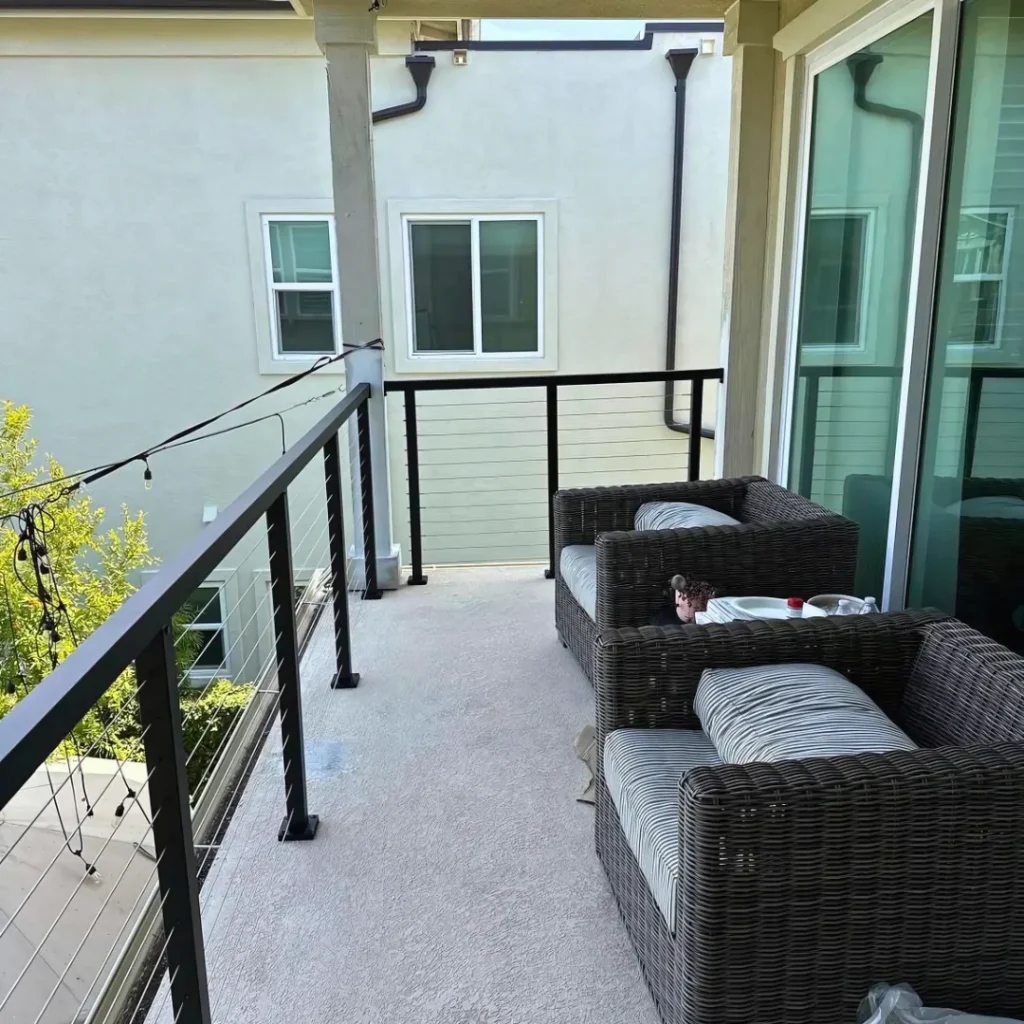
Cable railing is one of the most expensive railing styles to estimate from a photograph because the visible stainless lines are only a small part of the system. The budget also includes structural posts, top rails, end fittings, tensioners, corners, stair angles, base plates, anchors, substrate work, powder coating, permits and installation.
Current 2026 market references place professionally installed cable railing anywhere from roughly $75 to $300 per linear foot depending on material and complexity. For aluminum-post cable systems specifically, current HomeGuide data is about $150 to $240 per linear foot installed, while Angi reports $9,000 to $15,000 for a professionally installed 50-linear-foot cable system, which works out to roughly $180 to $300 per foot.
This guide explains what Los Angeles homeowners, builders and designers should actually compare before choosing cable railing for a deck, balcony, rooftop or stair project.
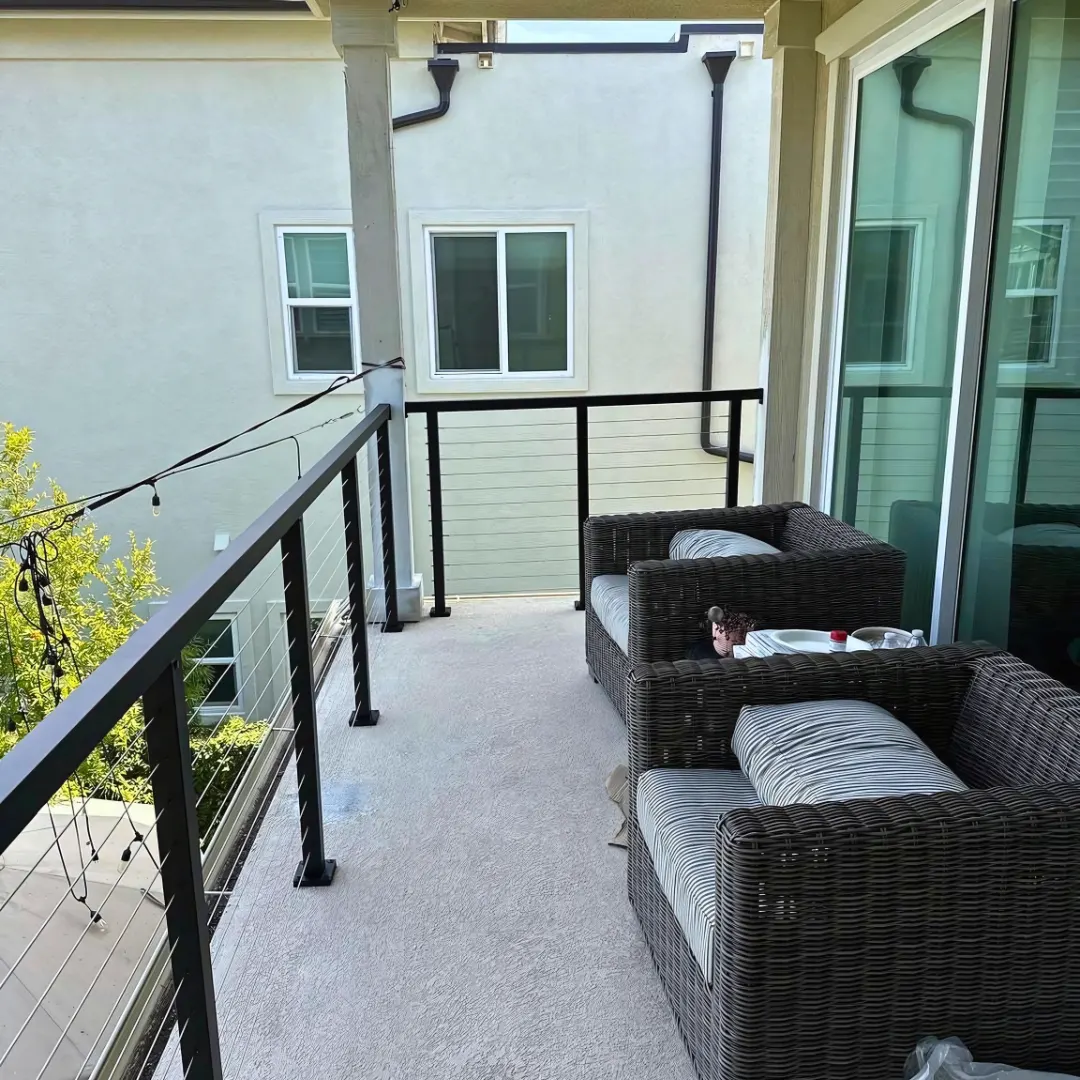
Globus Gates pricing is often significantly lower than the published market ranges shown above. Because every railing is measured and configured for the actual property, our current project pricing is provided by request.
How Much Does Cable Railing Cost in Los Angeles?
Cable railing is a premium railing category. The posts and top rail may be aluminum, but the cost is driven by the complete tension system, not by the stainless cable alone.
Current national 2026 market data places aluminum cable railing around $150 to $240 per linear foot installed. Angi currently reports $9,000 to $15,000 for a professionally installed 50-linear-foot cable railing system, which converts to roughly $180 to $300 per linear foot. HomeAdvisor publishes a broader cable-railing range of $75 to $260 per linear foot installed. For a custom Los Angeles project, a sensible early planning band is therefore approximately $150 to $300+ per linear foot, with stairs, balconies, fascia mounting, difficult access, engineering and premium finishes capable of moving above that range. This is an editorial planning range, not a Globus Gates price list.
The $150-$300+ figures in this guide are outside market planning references. They are not our advertised selling price. Request a project quote to see current Globus Gates pricing for your actual footage, layout and mounting conditions.
Los Angeles homeowners should be cautious with low material-only prices. A cable spool and a set of fittings are not a complete guardrail. A finished cable railing system needs posts stiff enough to resist cable tension, a top rail that ties the frame together, end and corner posts, compatible cable hardware, base plates or fascia brackets, structural anchors and a substrate that can transfer the required loads into the building.
For a level deck with easy access and repetitive post spacing, the project may stay near the middle of current installed market ranges. A second-story balcony, rooftop deck or exterior stair can cost more because the installer is working at an elevated edge and may need special mounting, fall protection, scaffolding, waterproofing coordination or structural blocking.
Aluminum posts, top rail, stainless cable, repetitive level sections.
More corners, stairs, high elevations, custom brackets and engineering.
A useful total-project benchmark for professionally installed cable railing.
The most accurate way to estimate cable railing cost Los Angeles homeowners will actually pay is to separate the project into level footage, stair footage, corners, end posts, mounting conditions and any required handrails. A single blended number can hide the part of the project that creates the premium.
Why Cable Railing Costs More Than the Cable Itself
Stainless cable is visually minimal, which can make the system look inexpensive. In reality, a cable railing contains many more individual tension components than a standard picket panel.
Every Cable Line Has Hardware
A 42-inch guard can require many horizontal cable runs depending on the approved design. Each cable may have a fixed end, a tensioning end, washers, receivers, protective sleeves or concealed fittings. Ten cable lines across one straight run can create twenty major end fittings before intermediate posts and corners are counted.
End Posts Carry Cable Tension
Intermediate posts mainly guide cables and control openings. End posts resist the combined pull of every cable line. If the end post bends, cable tension falls and openings increase. End-post design therefore affects post size, wall thickness, base plate, anchors and top-rail stiffness.
Corners Are Structural Events
At a 90-degree corner, cables either terminate and restart or turn through a specific corner detail. Both approaches change hardware and post loads. This is why current cost guides identify corners as a major budget factor. Angi's 2026 cable-railing guide notes that corners can increase project costs materially because they add components and complexity.
Stair Fittings Are Angled
Cables on stairs follow the rake angle. Terminals need to align with the sloped cable, and post holes must be drilled or fabricated at the correct angle. The number of unique parts increases compared with a level deck.
The Substrate Is Part of the Railing System
A strong aluminum post mounted to weak wood blocking is not a strong guard. The load must continue through the post base into deck framing, concrete, structural steel or another approved substrate. Existing deck conditions can add repair work that is not visible in the cable railing itself.
Installation Requires Tensioning and Final Adjustment
Cables are normally brought to tension gradually and in sequence. Over-tightening can pull posts out of alignment. Under-tensioning can allow excessive deflection. Final tensioning is part of the installation labor and can require a return visit after the system settles.
If one quote includes aluminum posts, top rails, stainless cable, all fittings, structural anchors, blocking, installation and final tensioning while another quote lists only cable hardware, they are not comparable even if both advertise a price per linear foot.
Cable Railing Price Comparison: What Current Cost Guides Actually Show
The current market is wide enough that homeowners can find almost any number online. The table below explains why.
| Current Source / Category | 2026 Cost Reference | What It Represents | How to Use It |
|---|---|---|---|
| HomeGuide aluminum cable | $150-$240 / LF installed | Aluminum posts/frame with cable infill | Strong baseline for aluminum cable systems |
| HomeGuide complete cable | $150-$285 / LF installed | Multiple post materials and complete systems | Premium cable market context |
| Angi professional 50-ft system | $9,000-$15,000 total | Professional installation, 50 linear feet | Equivalent to roughly $180-$300 / LF |
| HomeAdvisor cable | $75-$260 / LF installed | Broad material and complexity spectrum | Shows how widely project scope varies |
| Retail / material systems | Often lower | Posts, rails or cable hardware without full field scope | Do not compare directly to turnkey installation |
Market references reviewed August 14, 2026. All figures are external planning benchmarks and can change. Globus Gates project pricing requires a measured project-specific quote.
These published figures show what the broader installed market can charge. Globus Gates operates with direct project pricing that can come in considerably below comparable market benchmarks. Request pricing before deciding whether cable railing is outside your budget.
Why the Angi 50-Foot Number Is Useful
Homeowners often think in total project budget, not only price per foot. Angi's current $9,000 to $15,000 range for fifty feet gives a useful reality check for professionally installed cable railing. A price far below that can still be legitimate if it is material only or a simple DIY system, but the buyer should ask what is excluded.
Why HomeGuide Is Useful for Aluminum
HomeGuide separates aluminum cable from wood, composite and stainless-post systems. Its current $150 to $240 installed range is therefore one of the more relevant public comparisons for the kind of black aluminum-post cable railing Globus Gates shows on its Los Angeles railing service page.
Why Local Installation Still Needs a Site Visit
Los Angeles labor and access conditions vary dramatically. A flat backyard deck in the Valley and a hillside balcony in Hollywood Hills can have the same rail footage but very different installation logistics. The public ranges are a starting point, not a substitute for field measurement.
Aluminum-Post Cable Railing Cost: Why Black Aluminum Is So Popular
Globus Gates' current railing service page specifically features cable railing with black posts and horizontal stainless cables. That combination has become popular because it preserves views while coordinating with modern windows, gates, patio covers and exterior finishes.
Aluminum Reduces Frame Weight
Compared with a fully stainless railing frame, aluminum posts and top rails are lighter to fabricate, ship and install. The material does not develop red rust like carbon steel and works well with durable exterior powder coating.
Black Powder Coat Creates a Minimal Frame
Matte or textured black visually recedes against the view. Stainless cable catches light while the black frame defines the edge. The result works particularly well on Los Angeles decks overlooking canyons, neighborhoods, pools and the coast.
Aluminum Cable Is Not the Same as All-Aluminum Railing
The frame may be aluminum, but the tensioned infill is typically stainless cable with stainless fittings. That combination requires compatible hardware and attention to dissimilar-metal contact, especially in coastal environments.
Why Aluminum Cable Still Costs More Than Pickets
The aluminum post and top-rail material can be similar to a picket system, but cable adds drilled posts, many horizontal lines, fittings and final tensioning. The labor and hardware create the premium.
Custom Post Spacing
Reducing post count can save visible framing but increases span and cable deflection. Post spacing should follow the tested or engineered assembly. A minimalist appearance does not justify stretching the structural system beyond its approved limits.
Top Rail Style
A wide rectangular top rail creates a stronger architectural line and can improve frame stiffness. A very slim top rail can look minimal but may require more internal reinforcement to control end-post movement.
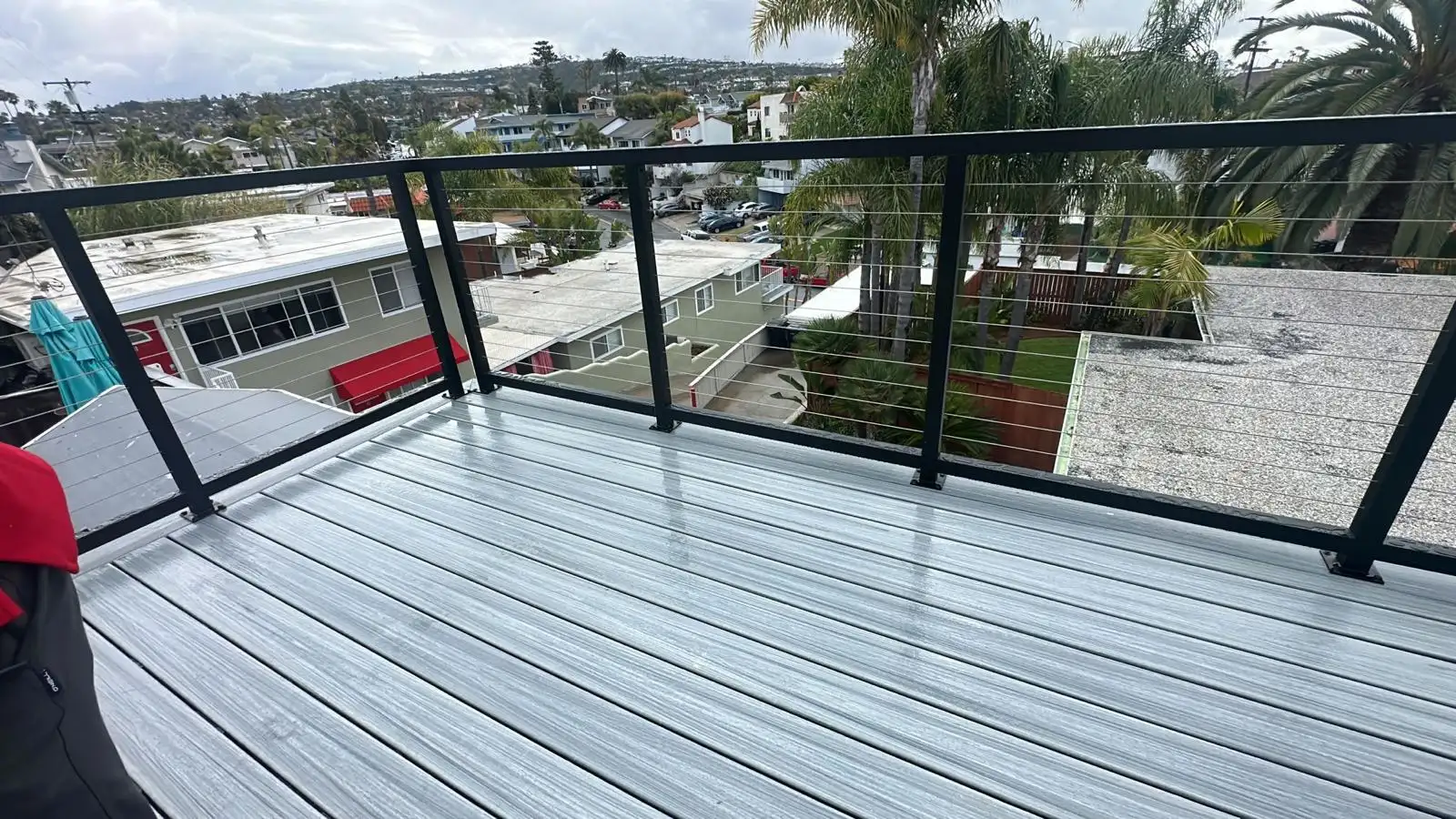
Deck Cable Railing Cost in Los Angeles
Deck cable railing is usually the easiest cable system to budget because much of the footage is level. Even then, deck framing and geometry can move the project from a simple installation into a structural retrofit.
Simple Rectangular Deck
A deck with long straight runs, four 90-degree corners and easy access is the most efficient layout. Posts repeat, cables remain level and materials can be cut in batches. This is the project type most likely to align with published installed cost ranges.
Existing Deck Replacement
Replacing wood railing with aluminum cable railing can expose inadequate blocking or deteriorated rim framing. The new post base may require stronger structural attachment than the original wood post. Framing repairs should be treated as separate scope instead of being hidden inside the railing price.
Composite Decking
Composite boards are a finish surface, not the structural attachment by themselves. Cable-railing posts normally transfer loads through the deck boards into blocking or framing. Base-plate layout should be coordinated before expensive composite boards are cut.
Fascia Mount on a Deck
Fascia-mounted posts preserve usable deck surface and keep base plates off the walking area. They require access to the rim structure and often use more complex brackets or through-bolts. This can increase labor compared with a straightforward top mount.
Deck Lighting
Post-cap lights or low-voltage lighting can be integrated into a railing project, but wiring routes should be planned before posts are permanently anchored. Lighting adds fixtures, transformers, wiring and electrical coordination beyond the base railing cost.
Deck Gate
A gate at stairs or a pool transition introduces a framed moving panel with hinges, latch and possibly self-closing hardware. Price it separately rather than averaging the gate into the fixed cable footage.
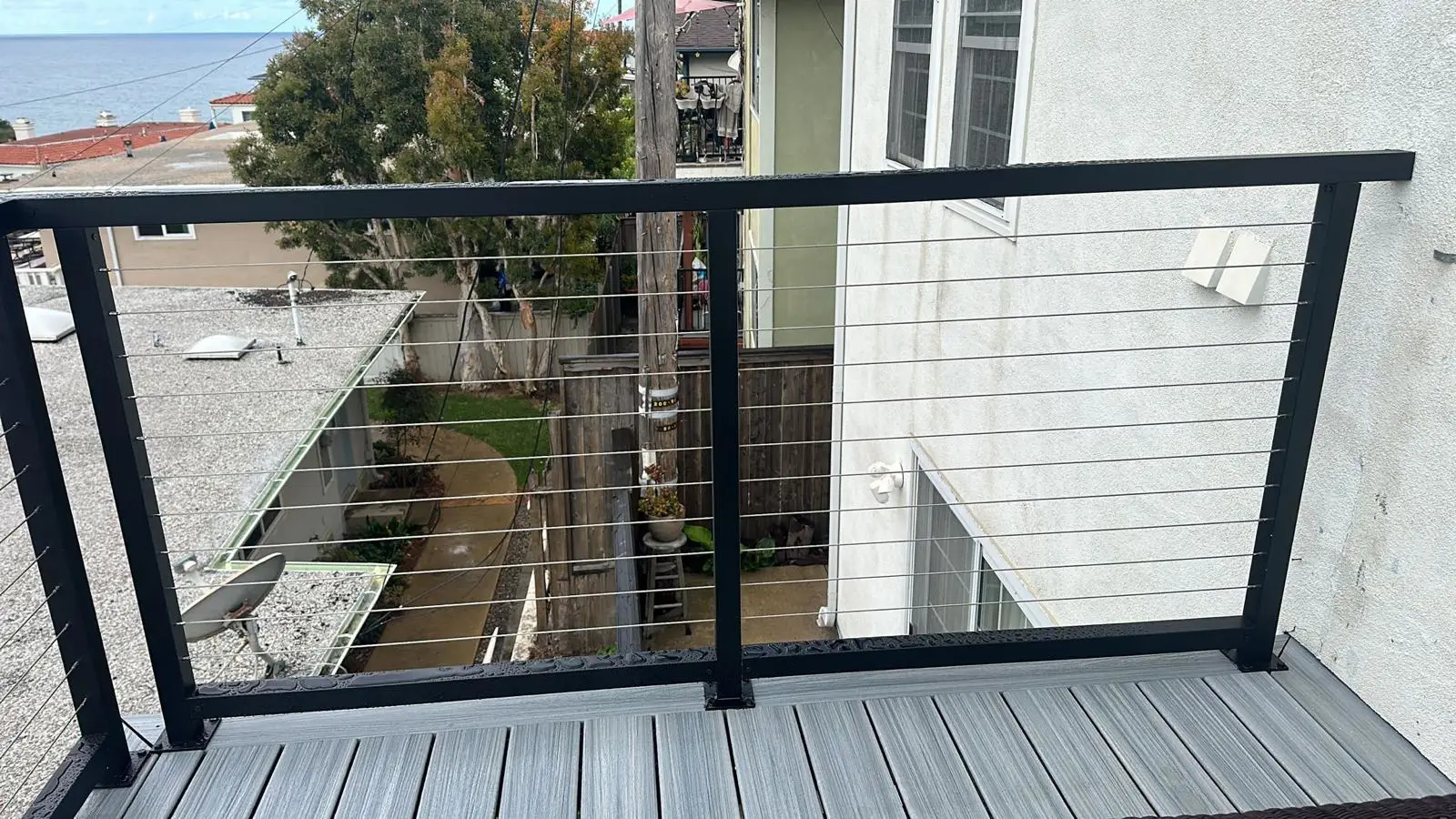
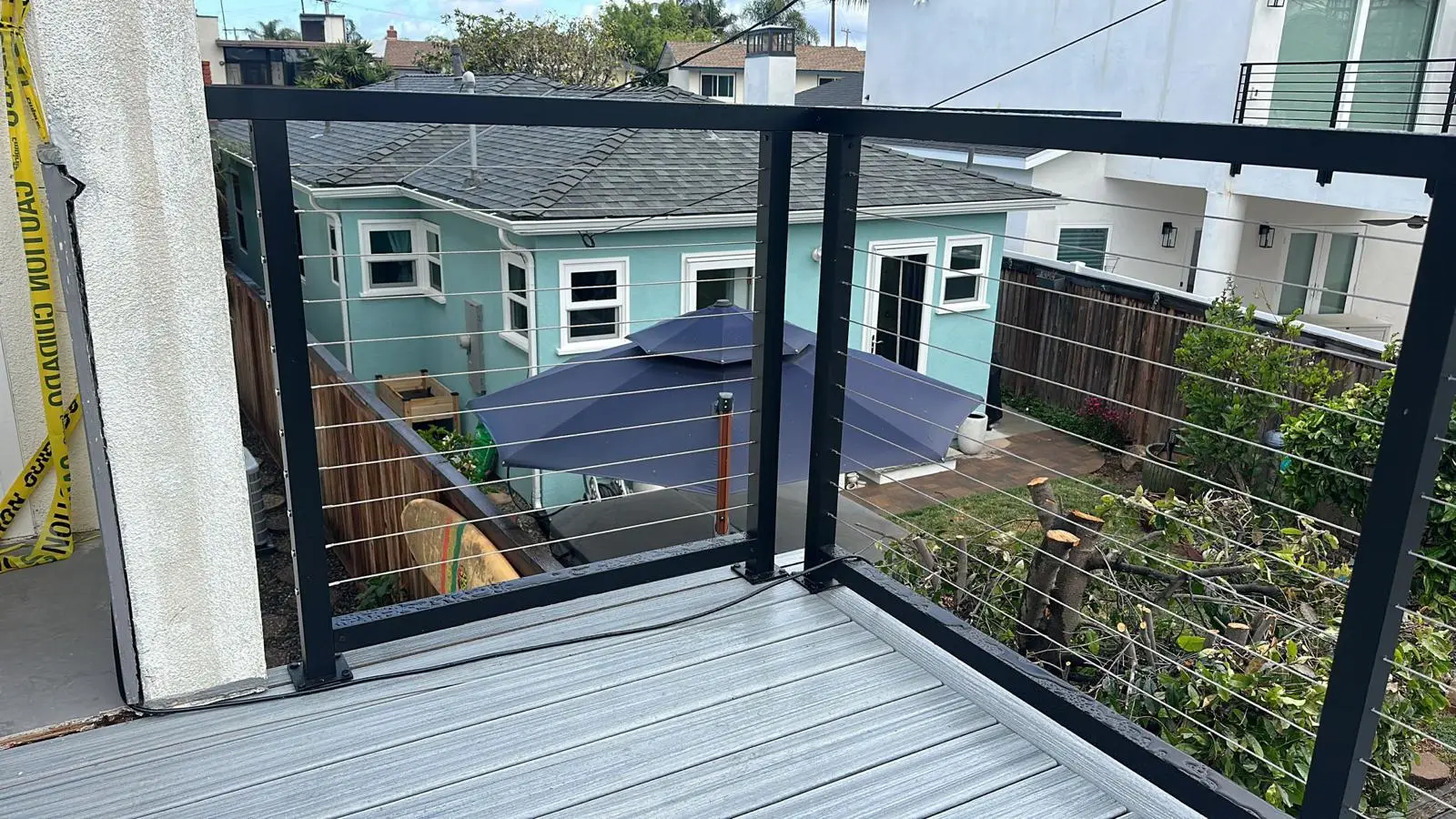
Balcony Cable Railing Cost: Why Elevated Edges Add Complexity
Balcony cable railing can use the same visible posts and cable as a deck, but the work environment is different. Elevated installation changes access, waterproofing, fall protection and structural attachment.
Concrete Balcony
Top-mounted posts on structural concrete require approved anchors, adequate concrete thickness and proper edge distances. The installer may need to avoid post-tension tendons, waterproofing membranes and embedded utilities. Unknown concrete can require scanning or engineering review.
Wood-Framed Balcony
Posts should connect into structural blocking or framing, not only sheathing or deck coating. Exterior elevated wood elements can deteriorate from water intrusion, so existing framing condition matters before a new guard is installed.
Fascia-Mounted Balcony Railing
Side mounting can preserve deck surface and improve the view through the bottom of the guard, but it may require longer posts and brackets, exterior access and waterproofing around through-bolts.
Installation at Height
Second- and third-story balconies can require scaffolding, lifts or enhanced fall protection. Material handling takes longer because installers cannot simply stage every rail beside the work area.
Waterproofing
A guard post penetration through a balcony deck coating must be integrated with the waterproofing system. A low-cost base plate that creates future water intrusion is not a low-cost solution.
Balcony Privacy
Some properties combine cable railing at the primary view with privacy aluminum panels on the side facing a neighbor. Mixed systems can preserve the view where it matters and add screening where it does not.
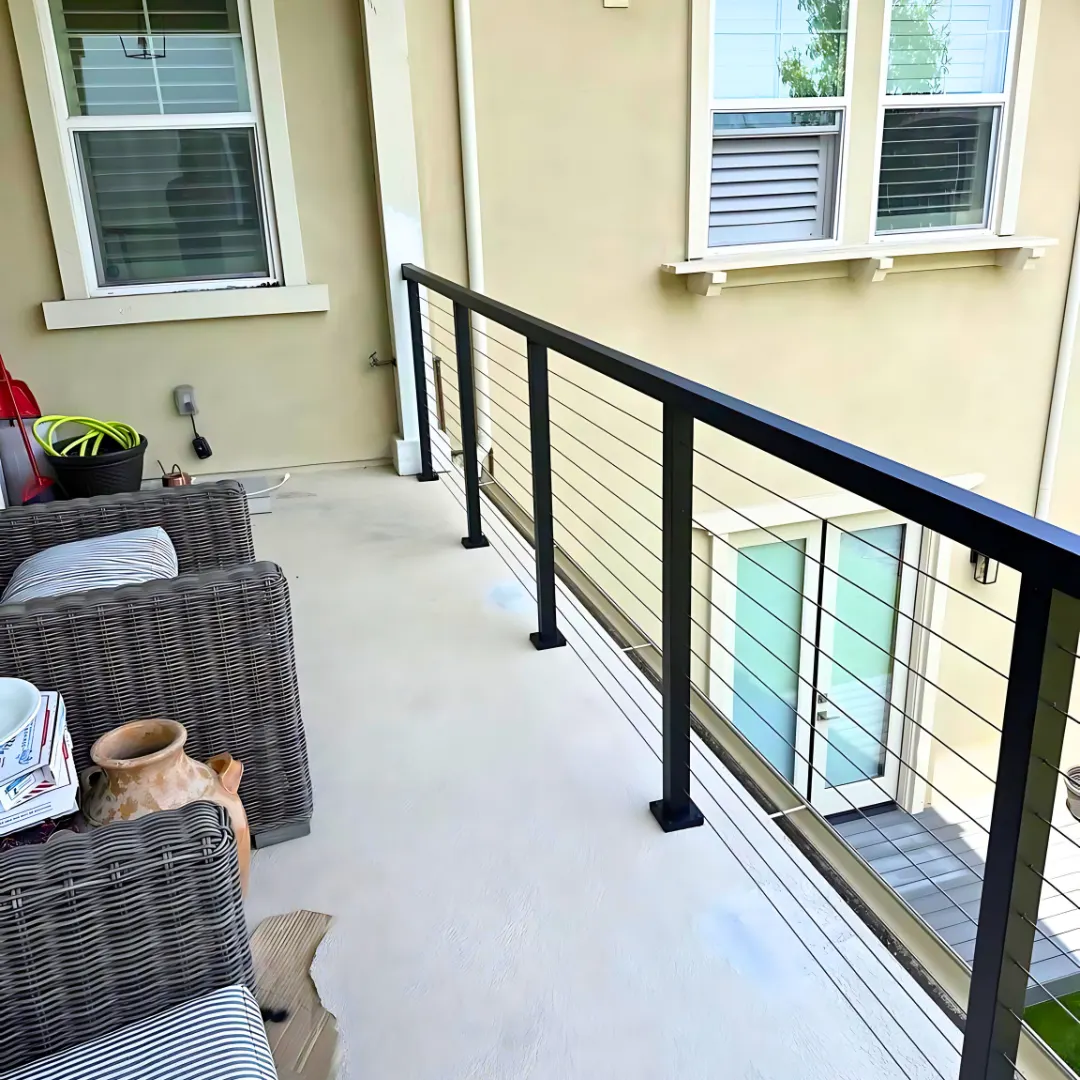
Stair Cable Railing Cost: The Most Detailed Part of the Project
Stair cable railing often has the highest cost per linear foot because almost every component changes angle. The system must coordinate the sloped guard, cable rake, posts, landings and any separate graspable handrail.
Rake Angle
The cable follows the stair slope. End fittings and post holes must align with that angle. Standard level fittings cannot always be rotated into a stair condition without changing their load path or appearance.
Different Post Heights
Stair posts are measured from sloped treads or stringers, so the exposed length can vary. Posts must also align with level landing guards at the top and bottom.
More Terminations
A short stair run may require every cable line to terminate at both ends. Ten cables can mean twenty stair-specific terminals on only a few feet of guard. Hardware density is therefore much higher than on a long deck run.
Handrail Requirement
The decorative cable guard top rail may not automatically satisfy required handrail height, graspability or extensions. A separate graspable aluminum handrail can add another rail line, wall brackets or post brackets to the stair budget.
Inside and Outside Stairs
Interior stairs require finish protection and attachment into hidden framing. Exterior concrete stairs require anchors with adequate edge distance. Neither should be priced from level deck footage alone.
Landings
Every landing creates a transition from sloped cable to level cable. The corner or transition post can need different holes and fittings than a straight intermediate post.
Ask every contractor to list level cable railing and stair cable railing as separate quantities. A blended price can hide whether the stair premium has actually been included.
Rooftop Cable Railing Cost
Rooftop decks are one of the strongest aesthetic uses for cable railing because the open horizontal lines preserve skyline, canyon and ocean views. They are also among the most demanding installations.
Material Access
Posts, long top rails, cable spools, tools and anchors may need to move through the house, up stairs or by exterior lift. Limited access increases labor before installation even begins.
Roof Waterproofing
Railing posts should not compromise the waterproofing assembly. Top-mounted posts on curbs, parapets or pedestals require details coordinated with the roofing manufacturer and building design.
Wind Exposure
Open cable railing has less solid wind area than glass or privacy panels, but rooftop posts and anchors still need to resist required guard loads and environmental conditions. The top rail should not be treated as a decorative element only.
Parapet Mounting
Some rooftops have existing concrete or framed parapets. The guard can mount to the top or side of that element when structurally suitable. The parapet height may reduce the visible railing height, but it does not eliminate the need to verify the complete guard condition.
Commercial Rooftops
Multifamily and hospitality rooftops can add accessibility, occupancy, egress and submittal requirements. Shop drawings and engineering can be a meaningful part of the total installed cost.
View Value
Rooftop owners often choose cable specifically to avoid the visual obstruction of pickets or solid panels. That means the railing is both a safety system and a high-value architectural finish, which can justify spending more on precise posts, concealed fittings and powder coating.
Coastal Cable Railing Cost and Material Planning
Los Angeles County includes coastal conditions from Malibu and Pacific Palisades through Santa Monica, Venice and the South Bay. Cable railing near saltwater needs more attention to hardware and maintenance than an inland project.
Aluminum Frame
Powder-coated aluminum is attractive near the coast because it does not develop red rust like carbon steel. The coating still needs proper pretreatment and should be washed to remove salt deposits.
Stainless Cable
Stainless steel is corrosion resistant, not maintenance free. Salt deposits can create staining and surface contamination. Cable grade, fittings and cleaning recommendations should match the exposure.
Dissimilar Metals
Aluminum posts and stainless fittings create a dissimilar-metal interface. Compatible fasteners, isolation and drainage are important in wet salt environments.
Open View and Airflow
Cable is well suited to coastal decks because it preserves ocean views and allows airflow. Glass can block wind but also catches more wind load and requires frequent cleaning to remain transparent.
Coastal Cleaning Cost
Maintenance is simple but should be planned. Fresh-water rinsing and periodic inspection of cable fittings are lower-cost tasks than repainting corroded steel, but they are still part of long-term ownership.
Hardware Premium
Higher-grade stainless fittings or specialty isolation hardware can cost more at installation. The premium is small compared with replacing corroded components later.
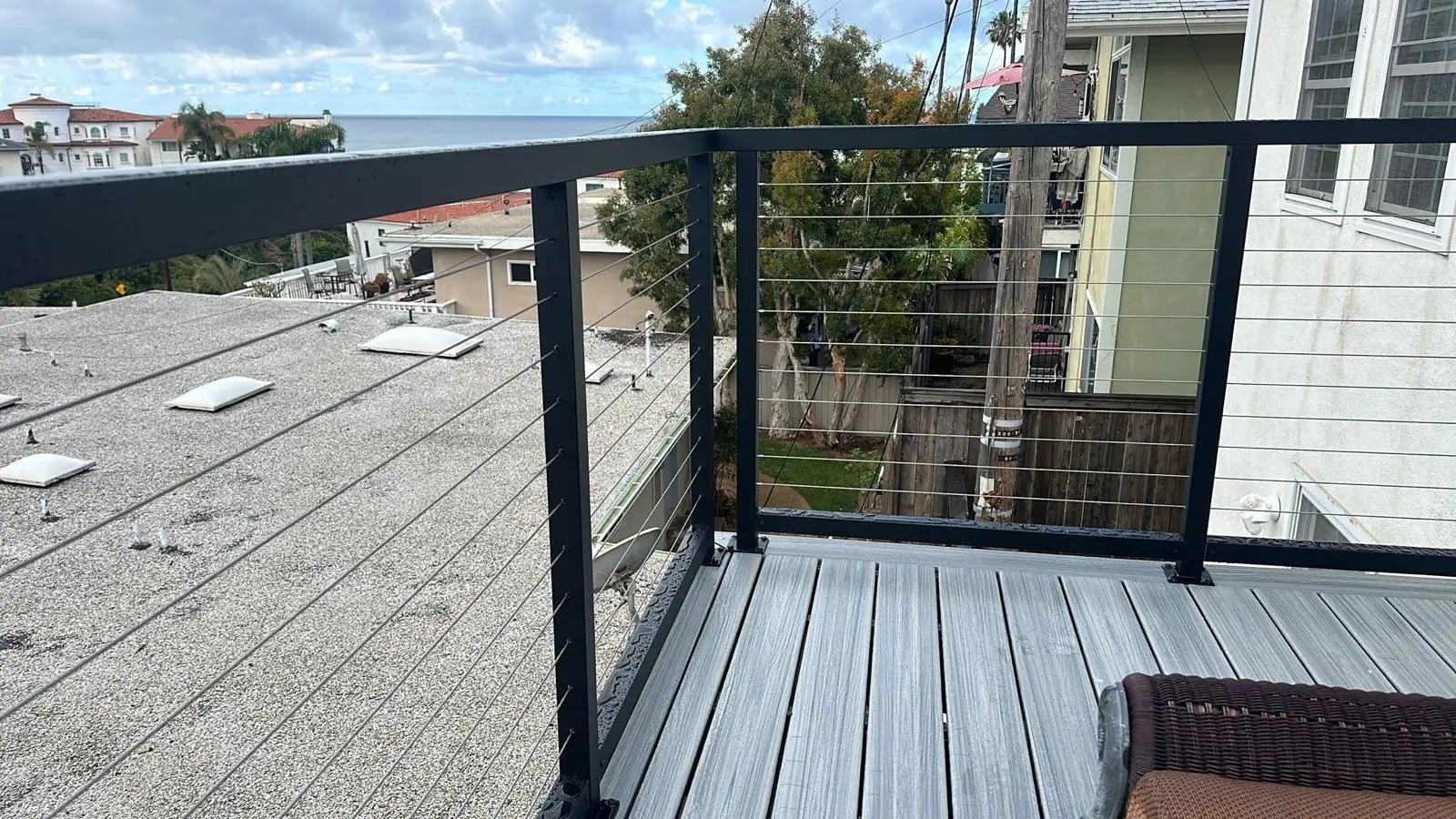
20, 40, 50, 75 and 100 Linear Foot Cable Railing Cost Examples
Homeowners frequently search by total railing length. The following table uses current installed cable-railing market data to show the scale of a project. It is not a Globus Gates estimate.
| Total Cable Railing | At $150 / LF | At $200 / LF | At $240 / LF | At $300 / LF | Typical Scale |
|---|---|---|---|---|---|
| 20 ft. | $3,000 | $4,000 | $4,800 | $6,000 | Small balcony or landing |
| 40 ft. | $6,000 | $8,000 | $9,600 | $12,000 | Compact deck |
| 50 ft. | $7,500 | $10,000 | $12,000 | $15,000 | Current Angi total range reaches $9k-$15k |
| 75 ft. | $11,250 | $15,000 | $18,000 | $22,500 | Large balcony/deck |
| 100 ft. | $15,000 | $20,000 | $24,000 | $30,000 | Large perimeter or combined areas |
Arithmetic examples only. The $150-$240 band reflects current HomeGuide aluminum-cable market data. $300 per foot illustrates the upper end implied by Angi's current 50-foot professional installation range. Stairs, demolition, framing repair, lifts, engineering and permits can add cost.
The totals above are arithmetic examples based on published market rates. Our pricing is frequently much lower than those market-level calculations, depending on footage, layout, material configuration and installation scope. The only way to see the applicable Globus Gates price is to request current pricing for the project.
How Much Does 50 Feet of Cable Railing Cost?
Current public data gives one of the clearest answers here. Angi reports $9,000 to $15,000 for a professionally installed 50-foot cable railing system. HomeGuide's aluminum-cable range would put the same length at roughly $7,500 to $12,000. The difference reflects materials, project complexity and scope.
How Much Does 100 Feet Cost?
At current aluminum-cable benchmarks, 100 feet can quickly become a $15,000 to $24,000 project. Complex Los Angeles installations can move higher. That is why early measurement and stair/corner counts are valuable before choosing a railing style.
Why Small Projects Can Be Expensive Per Foot
A 20-foot balcony may still require a site visit, design, four end/corner posts, custom anchors, freight, mobilization and final tensioning. Those fixed costs are divided across less footage.
Cable Railing Post Cost, Post Spacing and End-Post Strength
Posts are the structural skeleton of a cable railing. They also explain why two visually similar systems can have different prices.
Intermediate Posts
Intermediate posts guide cables and reduce free span. Closer spacing uses more aluminum and base plates but limits cable deflection. Wider spacing can look cleaner but demands more from the cable and frame.
End Posts
Every cable termination pulls on the end post. A complete end post can require heavier wall thickness, reinforcement, a stronger base plate or closer structural attachment than an intermediate post.
Corner Posts
Corner posts can receive tension from two directions. If cables terminate at the corner, the post may carry the sum of both runs. If cables turn through the corner, the fittings and post holes are different.
Stair Posts
Stair posts have rake-angle cable holes and different exposed heights. They are not always interchangeable with level posts.
Mounting Changes Post Length
A fascia-mounted post extends farther below the top rail than a top-mounted post. A core-mounted post may require extra embedment. Ordering the wrong post type can create costly field modifications.
Why Post Spacing Should Not Be Value-Engineered Blindly
Increasing spacing reduces post count but changes rail span, cable deflection and attachment loads. The correct spacing should come from the approved railing system, engineering or test data, not from a desired price target.
Cable Line Count, Fittings and Why Hardware Adds Up
One linear foot of cable railing contains many linear feet of cable. That simple fact is one of the biggest reasons cable railing is more expensive than it appears.
Total Cable Footage
If a 50-foot railing uses ten horizontal cable lines, the project can contain roughly 500 feet of cable before corners, waste or separate stair runs are considered. Eleven or twelve lines increase that total again.
Fittings at Every End
Each cable line needs an approved termination. Depending on the system, that can include a threaded tensioner, fixed terminal, receiver, washer, jaw, swage fitting or concealed hardware.
Pass-Through Posts
Intermediate posts need clean holes or sleeves so cable can pass without damaging the powder coat or cable. Factory-prepared posts can improve consistency and reduce field drilling.
Protective Sleeves
Some systems use sleeves, grommets or bushings where stainless cable passes through aluminum. These small components improve finish protection and appearance, but their quantity multiplies across every post and cable line.
Stair Hardware
Angled fittings cost more and are less repetitive than level fittings. A project with several stair flights can therefore have a much higher hardware cost even if total railing footage is modest.
Spare Parts
Contractors often include extra cable or fittings for field conditions. The material waste percentage should be built into a professional estimate instead of assuming every cut is perfect.
A retail cable kit may display a low cable price but exclude structural posts, top rails, specialized end fittings, corner hardware, anchors and labor. Build the complete bill of materials before comparing to an installed railing quote.
Cable Railing Corners, End Conditions and Termination Cost
Railing length is only one dimension of cost. The number of corners and terminations can matter almost as much because every cable run needs a way to stop, turn or restart.
Terminate and Restart
The most straightforward corner strategy is to terminate every cable at the corner and begin a new run in the next direction. This creates predictable tension but doubles end fittings at the corner. A ten-line system can need twenty cable terminations at a single corner.
Continuous Cable Through a Corner
Some systems allow cable to turn through a corner post or fitting. This can reduce visible end hardware but requires the post and fittings to accommodate the change in direction. Bending radius and friction influence how evenly the cable can be tensioned.
45-Degree and Irregular Corners
Angled decks create custom geometry. The installer may need swivel fittings, custom-drilled posts or segmented top rails. Field measurement becomes more important because standard 90-degree fittings do not apply.
Wall Terminations
A cable run can terminate at a structural wall if an approved bracket or anchor is available. Stucco or siding alone is not a structural attachment. Hidden framing or masonry has to be identified.
Open Ends
At stairs or deck openings, the end post has to resist cable tension while keeping the guard line clean. These posts are high-value components and should not be omitted from a material count.
Cost Effect of Corners
Current 2026 Angi guidance identifies corners as one of the major cable-railing cost drivers. More corners mean more posts, fittings and installation time. When comparing contractors, count corners separately rather than relying only on total footage.
Top-Mount, Fascia-Mount and Concrete Cable Railing Cost
The visible cable system can be identical while the installation price changes significantly based on how the posts attach to the building.
Top-Mount Cable Railing
Top-mounted posts use base plates on the walking surface. This is often the most direct method when structural blocking or concrete is available below. The installer marks post locations, drills or through-bolts the base and installs a cover over the structural plate.
Fascia-Mount Cable Railing
Fascia mounting moves the post to the outside edge, preserving deck area and creating an unobstructed walking surface. It can require longer posts, more complex brackets and access to the side or underside of the deck. This often raises labor and hardware cost.
Concrete Surface Mount
Concrete anchors must satisfy the railing load and maintain required edge distance. Cracked or thin concrete can limit anchor capacity. On a balcony, post-tension tendons or embedded utilities can affect where drilling is allowed.
Core-Mount Posts
Core mounting inserts the post into a drilled pocket in concrete. The post is aligned and grouted or secured using an approved detail. The result can be visually minimal, but coring, cleanup, temporary bracing and waterproofing add labor.
Parapet and Curb Mounting
Rooftop railing can mount to a concrete curb or parapet if the structure is suitable. The existing height of that element affects the final guard geometry and post length.
Why Mounting Must Be Decided Before Fabrication
Top-mount, fascia-mount and core-mount posts are not simply interchangeable. Their length, hole pattern and base detail differ. Changing mounting method after fabrication can require replacement posts or custom field modifications.
Deck Framing, Concrete and Waterproofing: The Cost Beneath the Railing
A cable railing quote can be perfectly accurate for the railing and still change once the installer opens the existing structure. The substrate is one of the largest hidden variables in renovation work.
Wood Blocking
Deck posts need structural blocking capable of transferring loads into joists, rim boards or beams. A decorative fascia board or deck plank is not enough. Older decks can need new blocking before railing installation begins.
Rot and Water Damage
Existing balconies and decks should be inspected for deterioration around old post penetrations. Installing a new cable system on damaged framing does not correct the underlying problem.
Concrete Thickness
Anchor capacity depends on concrete thickness, strength, cracked condition and edge distance. A thin topping slab over waterproofing or structural concrete should not be treated as the same substrate as a full structural slab.
Post-Tensioned Concrete
Some Los Angeles balconies and multifamily decks use post-tensioned concrete. Drilling without locating tendons can be dangerous and expensive. Scanning or engineered anchor locations may be required.
Waterproofing Membranes
Balcony coatings and roof membranes must remain watertight around railing anchors. Flashing, sealants and compatible waterproofing details can add material and coordination cost beyond the rail installer.
Steel Framing
Commercial or modern residential structures may use steel edge beams. Railing posts can bolt or weld to steel depending on design. Finish repair and corrosion protection around field connections should be included.
Why Substrate Allowances Matter
A professional proposal should identify what substrate condition is assumed and how unforeseen repairs are handled. Otherwise a low railing quote can become a much larger change order once old material is removed.
Cable Railing Installation Labor Cost in Los Angeles
Labor for cable railing includes more than setting posts. The installer has to create a straight structural frame, route every cable through the correct holes, terminate the runs and tension the system without pulling posts out of alignment.
Current Labor Context
HomeGuide currently places cable-railing labor around $20 to $50 per linear foot in its 2026 pricing data. That is a broad national benchmark. Los Angeles installation can vary with wage rates, access, elevation, parking, permit requirements and the condition of the existing structure.
Level Deck Labor
Repetitive level runs are the fastest installation. Posts can be laid out at regular spacing, top rails can be cut in batches and cable passes through aligned holes.
Stair Labor
Every stair line follows an angle. Terminations, posts and handrail details are less repetitive, so labor per foot normally rises.
Balcony and Rooftop Labor
Working at elevated edges can require fall protection, scaffolds, lifts and controlled staging. Tools and material may need to move through occupied homes or common areas.
Concrete Drilling Labor
Structural anchors require proper drilling, hole cleaning and installation torque. Core-mounted posts require larger drilling equipment and more alignment time.
Final Tensioning
Cable is tensioned progressively after the post and top-rail frame is secure. The installer checks opening size and post deflection as tension increases. This process can be time consuming on large projects with many separate runs.
Return Adjustment
Some contractors include a follow-up cable tension check. Whether this is part of the original price should be stated in the proposal.
Existing Railing Removal, Disposal and Repair
Replacing an old railing is not the same cost as installing on a new deck that was framed for the new system. Demolition can reveal both structural damage and finish repairs.
Wood Railing Removal
Wood rails are relatively easy to cut apart, but embedded posts, bolts and old waterproofing penetrations can take time. Rotten wood around post bases can indicate larger deck repairs.
Iron and Steel Railing Removal
Welded metal railing may be embedded in concrete or attached with steel plates. Cutting, grinding and hauling heavy steel adds labor and can damage tile or stucco if not controlled.
Glass Railing Removal
Glass panels require careful handling and disposal. Existing base shoes or core holes may not align with the new aluminum cable post locations.
Patch and Finish Work
Removing old posts can leave holes in concrete, deck coating or stucco. The scope should state whether patching, waterproofing and paint are included.
Reuse of Existing Post Locations
Reusing holes can reduce finish repairs, but only if spacing and structural capacity fit the new system. Cable railing can place different tension demands on end and corner posts than the original guard.
Hauling and Disposal
Dump fees and truck access vary. Contractors should identify removal as its own line item so the new railing material price remains easy to compare.
Black Powder-Coated Aluminum Cable Railing Cost
Black aluminum with stainless cable is one of the strongest modern railing combinations because the dark frame visually disappears while the cable reflects light.
Powder-Coat Quality
Exterior powder coating should be evaluated by pretreatment, powder specification and curing process rather than color alone. Premium exterior systems cost more than basic decorative coatings but are designed for stronger weather performance.
Matte and Textured Black
Low-gloss black reduces glare and hides fingerprints. Fine texture can make minor surface imperfections less visible and coordinate with modern gates, fences and windows.
Custom Colors
Bronze, white, gray and custom architectural colors can be produced depending on the system. Custom batches can increase material price and lead time, particularly on small projects.
Stainless Cable Contrast
The natural stainless cable creates a two-tone appearance. Powder coating cable fittings black can change cost and serviceability, so the finish schedule should identify which components remain stainless.
Field Damage
Long top rails and prefinished posts should be protected during delivery and installation. Touch-up paint is useful for small cuts but does not duplicate factory-cured powder coating.
Whole-Property Coordination
Globus Gates installs gates, fences, patio covers, cladding and railing. Matching the railing black to other exterior aluminum can create stronger visual continuity than mixing unrelated black finishes.
Cable Railing vs Glass Railing Cost
Cable and glass compete for the same premium view projects. Both preserve visibility, but they behave differently in cost, wind, cleaning and architecture.
Glass Cost
Current 2026 glass-railing pricing is very broad. Recent market guides place installed systems roughly from $150 per linear foot at the framed end to $600 or more for premium frameless configurations. Custom Los Angeles glass can therefore overlap with or exceed cable-railing budgets.
Cable Cost
Current aluminum cable railing is about $150 to $240 per linear foot installed in HomeGuide's data, with Angi's professional system totals reaching roughly $300 per foot at the upper end of its fifty-foot range.
View
Glass creates the fewest visual lines when perfectly clean. Cable introduces horizontal lines but usually disappears from longer viewing distances. Black aluminum posts remain visible in both systems if the glass is framed.
Wind
Glass acts as a windscreen, which can make a balcony more comfortable but increases wind pressure on the guard system. Cable allows air to pass through.
Cleaning
Glass needs regular cleaning to remain transparent, especially near the coast. Cable needs periodic washing and tension inspection but does not show fingerprints and water spots across a large panel.
Damage and Replacement
A damaged cable can sometimes be replaced individually. A damaged glass panel usually requires a custom replacement panel matching the original dimensions and glass specification.
Maximum transparency when clean, premium price and wind surface.
Open horizontal lines preserve air movement and reduce visual mass.
Glass needs cleaning, cable needs cleaning plus tension inspection.
Cable Railing vs Standard Aluminum Picket Railing Cost
Standard aluminum picket railing is normally less expensive than cable because the infill is a repeating rigid panel instead of many independently tensioned lines.
Material Simplicity
Pickets fit between top and bottom rails and do not require tensioners at every end. Factory-assembled panels can reduce field labor significantly.
Post Loads
Picket systems still need strong posts and anchors, but they do not place the same continuous horizontal cable tension on end posts.
View
Vertical pickets create more visual repetition than cable but can be less noticeable from some viewing angles because the lines align with trees, buildings and other vertical features.
Cost Position
Current generic 2026 aluminum railing guides often place standard aluminum substantially below cable systems. That makes picket railing a strong option when budget matters more than maximum open view.
Modern Horizontal Aluminum
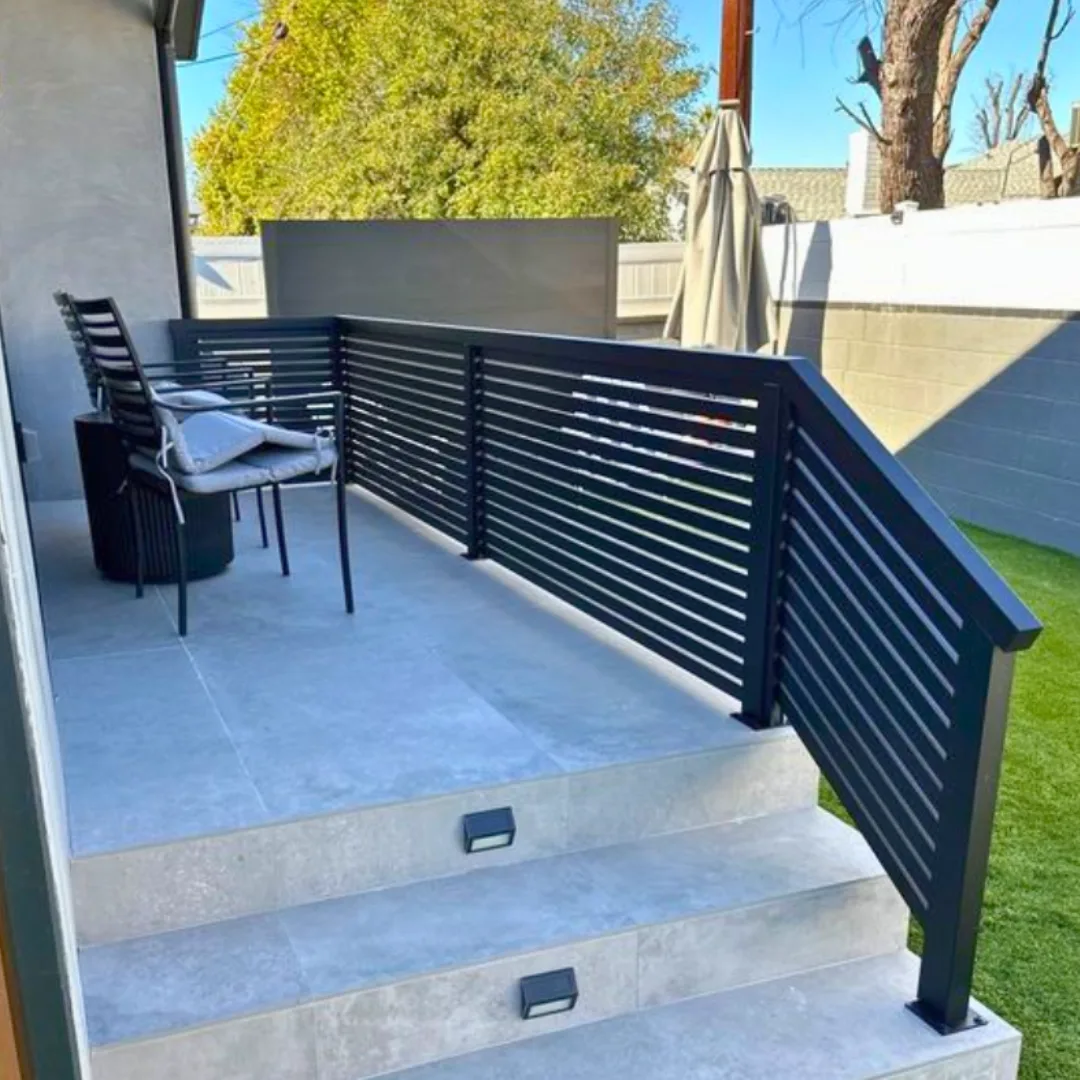
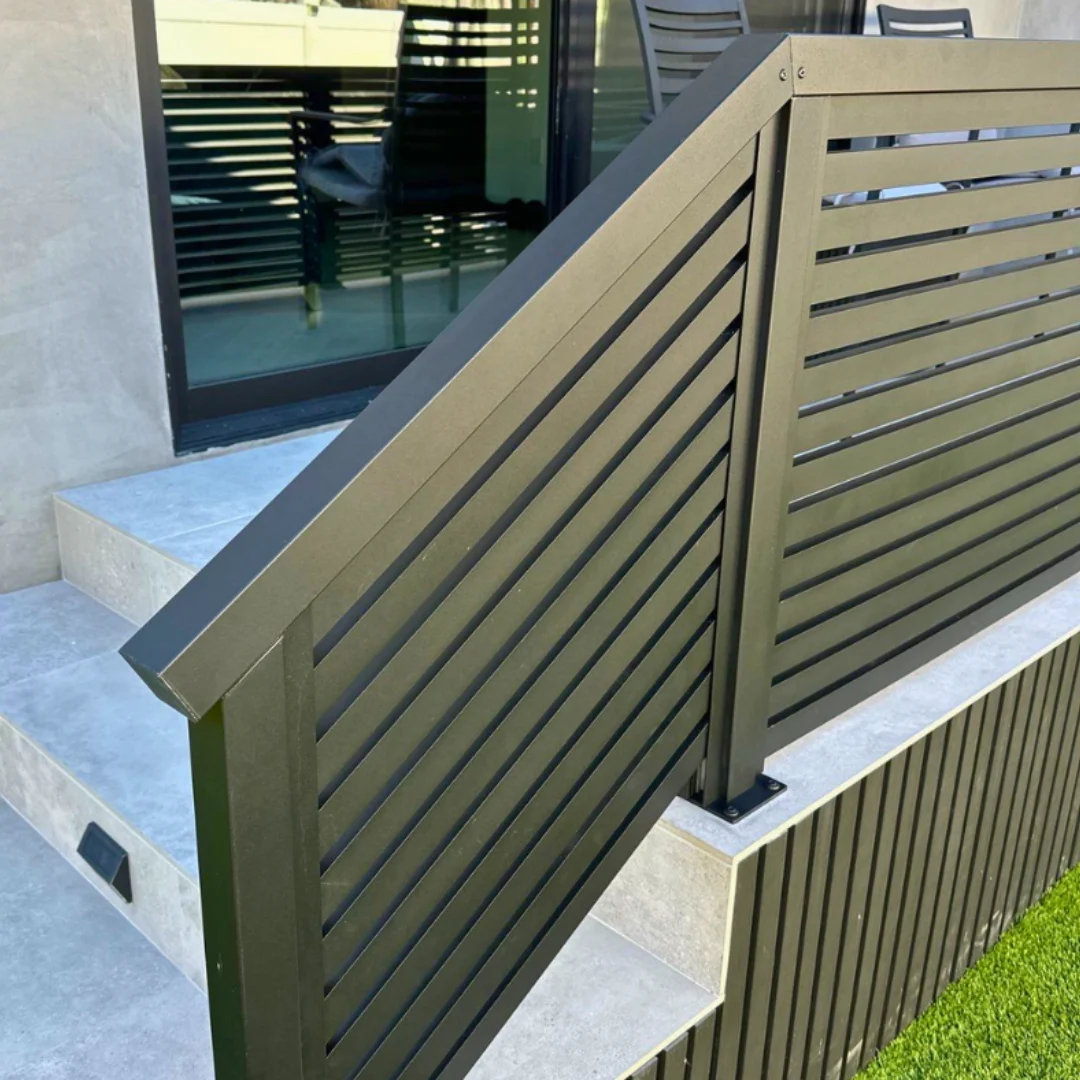
A horizontal all-aluminum railing can sit between pickets and cable in design. It creates stronger lines and can use more aluminum, but it avoids cable tensioning hardware. Code and climbability considerations should be reviewed for the project.
Where Cable Is Worth the Premium
Ocean, canyon, pool and skyline views are where cable has the strongest value. If the railing faces a blank wall or service area, spending for maximum openness may not create the same benefit.
Cable Railing vs Wood Railing Cost and Maintenance
Wood is usually one of the lowest upfront railing options. The comparison changes when maintenance and long-term exterior exposure are included.
Initial Price
Wood posts and rails can cost less than aluminum cable, particularly when built at the same time as a wood deck. Cable hardware can also be paired with wood posts to reduce material cost.
Maintenance
Exterior wood needs paint, stain or sealer depending on species and desired appearance. Post bases and horizontal surfaces are vulnerable to moisture, checking and rot.
Cable Tension in Wood Posts
Wood end posts can deflect under cable tension if they are not properly sized and braced. Moisture changes can also affect connections over time.
Aluminum Frame Longevity
Powder-coated aluminum does not rot and does not need periodic staining. Cable still requires tension checks and stainless hardware maintenance.
Fire-Conscious Material Selection
Aluminum is a noncombustible base material. For California properties trying to reduce combustible exterior materials, aluminum framing can be preferable to wood near buildings. The complete assembly and location still need project-specific fire and code review.
Long-Term Cost
A cable railing that costs more upfront can be reasonable when the owner values low frame maintenance, open views and long-term architectural consistency. The comparison should include expected refinishing of wood, not only day-one construction cost.
California Cable Railing Code Basics for 2026 Projects
California's 2025 Building Standards Code became effective January 1, 2026. That makes 2025 Title 24 the current statewide code cycle for most 2026 projects, subject to local amendments and project-specific applicability.
The 2025 California Building Code states that required guards generally must not have openings that allow passage of a 4-inch-diameter sphere from the walking surface to the required guard height, subject to listed exceptions. Cable systems have to control the completed opening under the applicable rules. Simply placing cables four inches apart on center does not automatically prove compliance.
Guard Height
Many commercial and multifamily guard conditions use a 42-inch minimum height. Residential requirements can differ depending on the applicable code and condition. The approved plans and local jurisdiction should control the actual project.
Cable Deflection
Cable is flexible. Opening compliance is evaluated on the complete installed assembly, which is why post spacing, cable spacing and cable tension are interrelated. A loose cable can create a larger effective opening than the same cable at proper tension.
Structural Loads
Guards and handrails are structural components. Common IBC and ASCE design criteria include concentrated and distributed loading requirements that must transfer through posts and anchors into the supporting structure. Project engineering should identify the applicable loads.
Residential Versus Commercial
One- and two-family projects can fall under residential code provisions while commercial and multifamily work uses California Building Code requirements. Do not reuse one project's railing detail on another occupancy without review.
Local Amendments
Los Angeles can apply city-specific requirements and plan-check interpretation. A supplier's standard system detail does not replace local approval where permits or engineering are required.
Code Is More Than Cable Spacing
Guard height, openings, stair geometry, handrails, glass if used, anchorage, accessibility and pool conditions can all affect the final system. Cable spacing is only one part of code compliance.
Cable Guardrail vs Handrail: Why Los Angeles Stair Quotes Need Both
Homeowners often use handrail and railing as the same word. Building codes distinguish them, and that distinction can add material to a stair project.
Guard
A guard protects an elevated edge. Cable railing on the outside of a stair can be the guard, with posts, top rail and cable infill rising to the required guard height.
Handrail
A handrail is a graspable rail used for support while walking. It has separate height, clearance, continuity and gripping requirements.
One Top Rail May Not Perform Both Jobs
A wide rectangular cable-railing top rail can be too large or too high to qualify as the required graspable handrail. A separate aluminum handrail may need to mount inside the guard or to the adjacent wall.
Cost Effect
The separate handrail adds extrusion, brackets, returns and labor. On long exterior stairs, this can be a meaningful line item even though the cable guard is already present.
Landings and Extensions
Handrails can have continuity and extension requirements at stairs or ramps. Those lengths extend beyond the measured sloped guard footage.
Quote Language
Ask whether the proposal includes guardrail only or guardrail plus required handrails. This avoids discovering after fabrication that an additional rail system is needed.
ADA Handrail Requirements That Can Affect Commercial Railing Cost
Federal ADA requirements apply to accessible stairs and ramps in covered facilities. California also has state accessibility requirements. Cable guard design should be coordinated with those handrail provisions where applicable.
Handrail Height
The U.S. Department of Justice 2010 ADA Standards require the top of applicable handrail gripping surfaces to be 34 inches minimum and 38 inches maximum above walking surfaces, stair nosings and ramp surfaces.
Clearance
The same standards require at least 1-1/2 inches between the handrail gripping surface and adjacent surfaces.
Continuity
Handrails generally need to remain continuous through each stair flight or ramp run, with specific rules and exceptions. Inside rails on switchback or dogleg stairs have additional continuity requirements.
Gripping Surface
Round and non-round handrails have dimensional requirements. A cable-railing top cap should not automatically be called ADA compliant without checking its gripping profile.
Extensions and Returns
Accessible handrails can require extensions beyond stair flights and ramp runs. Extensions must be included in material length and bracket count.
Commercial Project Cost
A commercial cable-railing project can therefore include a 42-inch guard plus a separate 34-to-38-inch graspable handrail. That second rail line helps explain why a commercial stair can cost much more per foot than a residential level deck.
Do You Need a Permit for Cable Railing in Los Angeles?
There is no single answer for every railing replacement. Permit requirements depend on whether the railing is part of a deck, balcony, stair, structural alteration, new construction, commercial project or simple like-for-like repair.
New Deck or Balcony
New elevated construction normally requires building review, and the railing or guard is part of that permitted assembly. Plans should show guard height, attachment and structural design.
Railing Replacement
Replacing an existing guard can still involve code and permit review, especially when posts, mounting, deck framing or the guard design are changing. A property owner should not assume that removing old iron and installing cable is cosmetic work only.
Structural Attachment
If the project requires new blocking, concrete work, fascia reinforcement or structural modification, the permit question becomes more important. Cable end posts can introduce concentrated attachment loads that differ from the old railing.
Commercial and Multifamily
Commercial buildings and multifamily properties usually involve more formal plan review, accessibility and inspection. Shop drawings or structural calculations can be required as part of the railing submittal.
LADBS
The Los Angeles Department of Building and Safety states that the type of permits required depends on the building project and provides plan-review and inspection services. The safest approach is to check the actual property and scope rather than relying on a generic online statement that railings never need permits.
Permit Cost
The budget can include city fees, drawings, engineering, plan-check responses and inspection coordination. These costs should be identified separately from the fabricated railing so the homeowner understands the full project.
Confirm the project with LADBS or the applicable local authority before final fabrication. A cable railing manufactured to the wrong height or attachment cannot be fixed cheaply after a plan reviewer or inspector rejects the condition.
Cable Railing Around Pools: Cost and Safety Questions
Cable railing can look excellent around a raised pool deck or terrace, but pool barriers are subject to safety requirements that should be evaluated before a horizontal cable system is selected.
Barrier Function
If the railing is part of the required pool enclosure, opening limits, height, gates, latches and climbability concerns may apply. The design should be reviewed as a pool barrier, not only as a deck guard.
Horizontal Elements
Horizontal cable can create foothold questions in some pool-barrier or local interpretations. Do not assume that a cable guard approved at a balcony is automatically appropriate as a pool enclosure.
Self-Closing Gates
Pool access gates can require self-closing and self-latching hardware. A cable gate needs a structural frame that remains square while carrying cable infill and gate hardware.
Chlorine and Chemicals
Pool chemicals and saltwater systems can increase corrosion exposure on stainless fittings and aluminum finishes. Rinsing and material compatibility matter even when the property is far from the ocean.
Wet Deck Anchors
Post bases around a pool are repeatedly exposed to water. Drainage around base plates and anchor penetrations should prevent water from collecting beneath covers or entering the substrate.
Glass Versus Cable Around Pools
Glass can provide a non-climbable transparent barrier in some designs, while cable provides more airflow. The correct solution depends on the applicable pool code, architecture and budget.
Cable Railing Openings, Deflection and Child-Safety Planning
Cable railing is popular because the infill is thin and open. That same flexibility means the system must be designed and maintained so openings remain within the applicable limits.
Four-Inch Sphere Rule
The general California Building Code guard-opening rule uses a four-inch-diameter sphere, subject to exceptions. With rigid pickets, spacing is easy to measure. With cable, the installer must consider deflection as well as initial spacing.
Cable Center Spacing Is Not the Whole Answer
Placing cables exactly four inches apart can still create an opening larger than four inches if the cables deflect significantly. Many cable systems therefore use closer nominal spacing and controlled post spacing to limit movement.
Post Spacing
Long spans between intermediate posts increase cable deflection. Adding posts costs more but helps maintain openings and creates a stiffer guard.
Tension Maintenance
Cables can loosen from temperature cycles, hardware settlement or post movement. Periodic inspection is part of keeping the system functioning as designed.
Furniture Placement
Even a code-compliant guard can be made easier to climb if furniture, planters or benches are placed directly beside it. Homeowners should consider the entire deck layout around children.
Stair Openings
Stairs have additional geometric conditions at treads, stringers and triangular openings. The cable design should be reviewed from the approved stair geometry rather than copied from a level balcony.
Safety and Appearance Are Not Opposites
A well-designed cable system can preserve views while meeting applicable safety criteria. Achieving both requires more engineering and installation discipline than simply pulling wire between posts.
Engineering, Guard Loads and Why the Post Connection Controls the System
Railing engineering is often most critical at the post base. A strong post and top rail do not help if the anchor or deck framing below cannot carry the required load.
Concentrated Load
Guard and handrail design commonly considers a concentrated load at the top rail under the applicable structural code. That load creates a large bending moment at the base of the post.
Uniform Load
Commercial and other guard conditions can also use distributed load criteria. The engineer determines which load cases apply and whether they act concurrently.
Cable Tension Is Additional Internal Force
End posts resist railing guard loads and the horizontal pull created by the tensioned cable array. Cable tension should be included in the frame design rather than treated as weightless decoration.
Wood Deck Connection
Bolts and blocking need to transfer post load into the joist system. Fastening a post only to a rim board without adequate blocking can create excessive movement.
Concrete Anchors
Anchor diameter, embedment, spacing and edge distance affect capacity. Concrete strength and cracking condition also matter. The engineer or approved system detail should identify the required anchor configuration.
Steel Connections
Steel edge beams can provide excellent support, but welded or bolted brackets need corrosion protection and coordination with the aluminum post.
Engineering Cost
Engineering is usually a small percentage of a premium railing project compared with the cost of replacing a failed or rejected installation. For custom balconies, rooftops and commercial work, it should be treated as part of the project rather than an optional add-on.
The limiting part of a railing is frequently the attachment to wood or concrete, not the visible top rail. Compare post bases, anchors and blocking when comparing railing contractors.
How Long Does a Cable Railing Project Take in Los Angeles?
Project duration depends on whether the railing is a simple replacement or part of a permitted deck, balcony or remodel.
Footage, stairs, corners, substrate and mounting.
Post layout, cable lines, handrails and finish.
Engineering, permit or HOA review where required.
Posts, rails, coating and cable hardware preparation.
Anchors, frame, cable tension and final inspection.
Measurement
A contractor should identify level runs, stair angles, corners and mounting conditions before final fabrication. Existing decks can require investigation of framing beneath finish boards.
Engineering and Permits
When required, this stage can be longer than fabrication. Plan-check corrections may affect post locations or attachment details, so material should not be finalized too early.
Powder Coating
Standard black can be faster than custom colors. Specialty batches or finish samples can extend production time.
Site Preparation
Existing railing removal, blocking repair and waterproofing can be completed before new material is installed when properly sequenced.
Installation
Level cable railing can install relatively quickly once posts are set. Stair cable, balconies and concrete mounting require more time per foot.
Final Tension and Inspection
The system should be checked after all cable lines are tensioned. Post alignment, openings, fasteners, handrails and finish should be verified before completion.
Where Los Angeles Site Conditions Change Cable Railing Cost
Globus Gates serves Los Angeles and surrounding Southern California markets. The railing material itself does not know the ZIP code, but access, elevation, coastal exposure and architecture can make projects in different neighborhoods behave differently.
Coastal + hillside
Salt exposure, ocean views, wind and hillside access make cable attractive while increasing attention to finish, stainless hardware and structural attachment.
Coastal + tight lots
Limited staging and salt exposure can increase installation logistics. Cable preserves views and airflow on compact balconies.
Steep access
Elevated decks, retaining conditions, stairs and hand-carried material can increase labor beyond a flat backyard project.
Custom architecture
Large balconies, premium finishes, glass comparisons, hidden mounting and design-team coordination can push railing above standard market averages.
Large decks
Long level runs can create fabrication efficiency, while pool edges, multiple stairs and existing wood framing add project-specific scope.
View-driven coastal decks
Cable is especially valuable where ocean views matter. Coastal hardware and fresh-water maintenance should be included in ownership planning.
Short Urban Balcony
A small West Hollywood or dense Los Angeles balcony can have a high cost per foot because mobilization, engineering, custom corners and permit work are divided across very little footage.
Large Estate Deck
A long repetitive deck can lower fabrication cost per foot, but a premium property may add custom powder colors, hidden brackets, glass sections, lighting or multiple staircases.
How to Choose a Cable Railing Contractor in Los Angeles
Cable railing is a life-safety installation with visible finish work. The contractor should be able to discuss both the structural connection and the architectural detail.
Ask What System Is Being Installed
Identify post material, top rail, cable diameter or system, fittings, post spacing and powder finish. “Cable railing” is not a complete specification.
Ask Who Designs the Post Attachment
The contractor should explain whether the project follows tested manufacturer details, engineering, approved plans or project-specific calculations.
Ask About Existing Deck Framing
For replacement work, determine how the contractor verifies blocking and deck condition before setting new posts.
Ask About Cable Tension
The installer should have a defined method for tensioning and final checking rather than tightening cables by appearance alone.
Ask About Coastal Hardware
Near the ocean, confirm stainless grade, isolation from aluminum and cleaning guidance.
Ask About Permits
Clarify whether the contractor handles permit research, engineering, drawings and inspections or whether those are owner responsibilities.
Ask to Separate Stairs
A professional quote should identify stair footage and any separate handrails because stairs have different hardware and labor.
Ask About Warranty
Separate frame finish, cable hardware and installation workmanship. A powder-coat warranty does not automatically cover cable tension or existing deck framing.
Review Real Installations
Look at corners, post bases, stair transitions and cable alignment in completed project photographs, not only wide-angle marketing views.
How to Compare Cable Railing Quotes
Most pricing confusion disappears when every bidder receives the same railing takeoff and is required to identify the same scope.
Our pricing can be well below typical market pricing for comparable aluminum railing work. Send us the project dimensions and scope so you can compare an actual Globus Gates quote against the market numbers instead of relying only on public cost guides.
- Total level railing footage
- Total stair railing footage
- Finished guard height
- Post material, size and wall thickness
- Intermediate post spacing
- End and corner post design
- Top rail profile and finish
- Number of cable lines
- Cable material and fitting type
- Corner termination strategy
- Top-mount, fascia-mount or core-mount posts
- Structural anchors and deck blocking
- Separate graspable handrails
- Railing gates and hardware
- Existing railing demolition
- Concrete, framing and waterproofing repairs
- Powder-coat color and specification
- Engineering and shop drawings
- Permit and inspection responsibilities
- Scaffolding, lift or difficult access
- Cleanup and disposal
- Material, finish and labor warranties
Compare Total Installed Scope
A quote at $170 per foot that includes framing reinforcement and permit drawings can be less expensive than a $140-per-foot quote that adds those items later.
Compare Cable Hardware
Concealed tensioners, marine-grade fittings and stair terminals can have different costs. If one proposal simply says stainless cable, ask for more detail.
Compare Post Spacing
Two contractors can use the same black aluminum post but place posts at different spacing. The cheaper quote may simply contain fewer structural components.
Compare Stair Scope
Confirm whether a separate handrail is included and whether cable fittings are designed for the actual stair angle.
Compare the complete installed guard, not the cable itself. Posts, mounting, substrate, tension hardware, handrails, finish, engineering and labor determine whether two prices represent the same result.
Cable Railing Maintenance, Retensioning and Long-Term Cost
Cable railing is low maintenance compared with painted wood or carbon steel, but it is not maintenance free.
Wash the Frame
Powder-coated aluminum should be washed with fresh water and mild detergent. Avoid abrasive cleaners that can polish textured powder.
Clean Stainless Cable
Remove dirt, salt and contamination. Coastal properties need more frequent cleaning than inland decks.
Inspect Cable Tension
Look for cable lines that appear visibly loose or create larger openings than surrounding runs. Retension according to the railing-system instructions.
Check End Fittings
Inspect tensioners, fixed terminals and locking hardware. A loose fitting can affect an entire cable run.
Check Post Bases
Movement at a base plate can reduce cable tension and indicate a structural issue. Repeatedly tightening the cable is not the correct repair if the post or substrate is moving.
Coastal Tea Staining
Stainless hardware can develop surface staining in marine environments. Early cleaning is easier than allowing deposits to remain for years.
Powder-Coat Damage
Touch up small scratches according to the coating guidance. Bent or heavily impacted posts should be evaluated structurally rather than cosmetically repaired.
Long-Term Value
Aluminum cable railing has a high upfront cost but avoids recurring wood stain and carbon-steel rust maintenance. For owners who value views and modern architecture, lifecycle cost can be more favorable than the first invoice suggests.
Los Angeles Cable Railing Project Checklist
- Measure every level railing run separately
- Measure each stair flight separately
- Count 90-degree and angled corners
- Identify every end and wall termination
- Confirm project city and authority having jurisdiction
- Confirm residential, multifamily or commercial occupancy
- Confirm required guard height from plans or code review
- Identify separate required handrails
- Choose aluminum-post cable or another frame material
- Select black or custom powder color
- Determine cable line count from the approved system
- Confirm end, corner and stair fitting strategy
- Choose top-mount, fascia-mount or core-mount posts
- Inspect deck framing or balcony substrate
- Identify waterproofing at every post location
- Check for post-tension concrete before drilling
- Plan any railing gates and self-closing hardware
- Separate demolition and disposal cost
- Confirm engineering responsibility
- Confirm LADBS or local permit responsibility
- Plan scaffolding or lift access for elevated work
- Confirm coastal stainless hardware where applicable
- Compare complete installed price, not cable price only
- Keep hardware, powder and drawing records after installation
A contractor who receives this information can produce a much more reliable quote than one who receives only “I need about fifty feet of cable railing.” Accurate takeoff reduces allowances, change orders and unnecessary site visits.
Cable Railing Cost Sources and Globus Gates Railing Resources
This guide combines current 2026 cable-railing cost references, official California and federal code sources, and the current Globus Gates railing service information. Market numbers are planning benchmarks, not Globus Gates pricing.
Pricing and code sources were reviewed on August 14, 2026. Recheck cost data, local requirements and applicable code.
Frequently Asked Questions About Cable Railing Cost in Los Angeles
These questions address the cost, code, installation and maintenance searches homeowners use immediately before comparing railing contractors.
How much does cable railing cost per linear foot in Los Angeles in 2026?
Current 2026 market data places aluminum cable railing around $150 to $240 per linear foot installed, while Angi reports $9,000 to $15,000 for a professionally installed 50-linear-foot cable system, which is roughly $180 to $300 per foot. A custom Los Angeles project can reasonably use about $150 to $300 or more per linear foot as an early planning range. Final cost depends on stairs, corners, post spacing, mounting, substrate, finish, engineering and installation.
How much does 50 feet of cable railing cost?
Angi currently reports about $9,000 to $15,000 for a professionally installed 50-linear-foot cable railing system. HomeGuide's current aluminum cable range of $150 to $240 per foot would place 50 feet around $7,500 to $12,000. The exact project total depends on material, corners, stairs, mounting and field conditions.
How much does 100 feet of aluminum cable railing cost?
Using current HomeGuide aluminum cable pricing of $150 to $240 per linear foot installed, 100 feet is approximately $15,000 to $24,000. Complex custom projects can move higher, especially with stair runs, high balconies, difficult access, engineering or structural repairs.
Why is aluminum cable railing so expensive?
Cable railing uses more components and labor than it appears to. The system includes aluminum posts, top rails, end and corner posts, stainless cable, many fittings, tensioners, base plates, structural anchors and final cable tensioning. End posts also have to resist the combined pull from every cable line.
Does stair cable railing cost more than level deck railing?
Usually yes. Stair cable railing requires rake-angle measurements, angled cable fittings, different post geometry, more terminations and transitions at landings. A separate graspable handrail may also be required, adding another rail, brackets and installation labor.
Is cable railing cheaper than glass railing?
Cable railing can be less expensive than premium frameless glass, but the ranges overlap. Current cable systems commonly fall around $150 to $300 per linear foot installed, while current glass systems can range roughly from $150 to $600 or more depending on framing and glass design. Cable also allows more airflow and usually requires less surface cleaning.
How far apart should cable railing posts be?
Post spacing depends on the approved railing system, post stiffness, top rail, cable spacing, tension and structural design. Wider post spacing can increase cable deflection and post loads. Do not select spacing only to reduce post count. Follow tested manufacturer details, approved plans or project engineering.
How far apart should railing cables be?
Cable spacing must be designed so the completed guard satisfies the applicable opening requirements after cable deflection is considered. California's current building code generally uses a 4-inch sphere opening limitation for required guards, subject to exceptions. Four-inch cable centers by themselves do not automatically prove compliance.
What height should a cable guardrail be in California?
Guard height depends on the applicable code, occupancy and project. Many commercial and multifamily applications use a 42-inch minimum guard height, while residential requirements can differ. Use the current approved plans and local code review rather than ordering posts from a generic height assumption.
What height should an ADA handrail be?
The U.S. Department of Justice 2010 ADA Standards require the top of applicable handrail gripping surfaces to be 34 inches minimum and 38 inches maximum above walking surfaces, stair nosings and ramp surfaces. California accessibility requirements can also apply.
Do I need a permit to replace a cable railing in Los Angeles?
Permit requirements depend on the scope. New decks, balconies, structural alterations and many commercial or multifamily projects require building review. A railing replacement can also involve structural attachment, framing or code changes. Confirm the actual property and project with LADBS or the applicable local authority before final fabrication.
Is cable railing good for Malibu and coastal Los Angeles?
Yes, cable railing is popular for coastal properties because it preserves ocean views and airflow. Powder-coated aluminum posts do not develop red rust like carbon steel, but stainless cable and fittings still need proper grade selection, dissimilar-metal detailing and regular fresh-water cleaning to remove salt deposits.
Does cable railing need maintenance?
Yes. The aluminum frame should be cleaned, stainless cable and fittings should be washed, and cable tension should be inspected periodically. Loose cable can create larger openings, while movement at a post base can indicate an attachment problem that should be corrected rather than hidden by additional cable tension.
Can cable railing be installed on an existing wood deck?
Yes, when the deck framing is suitable. Cable-railing posts need structural blocking or framing that can transfer guard loads. Existing deck boards or decorative fascia are not enough by themselves. Older decks should be checked for rot, inadequate blocking and water damage before new posts are installed.
Can cable railing be installed on a concrete balcony?
Yes, but the anchor design depends on concrete thickness, strength, cracking condition and edge distance. Post-tension tendons, waterproofing and embedded utilities can affect drilling locations. Surface mount and core mount are both possible when supported by an approved detail.
Does Globus Gates install cable railing in Los Angeles?
Globus Gates currently offers cable railing, aluminum stair railing and custom railing installation for Los Angeles and Southern California projects. Its railing service page shows real balcony, deck and rooftop cable installations with black posts and horizontal stainless cable. Project pricing and final system design are based on the actual site and scope.
Final Thoughts: Cable Railing Price Makes Sense Only After the System Is Defined
Cable railing can look like the simplest railing on the property because the infill is only a series of thin stainless lines. The budget tells a different story. Every line has tension hardware. Every cable run pulls on the end posts. Every corner changes forces. Every stair introduces angle-specific fittings. Every post has to transfer guard loads into a real structural substrate.
That is why current 2026 cable-railing prices span such a large range. A material kit, a standard level aluminum cable guard and a custom Los Angeles balcony with fascia posts, stair handrails, engineering and waterproofing are not the same purchase.
For early planning, current market data supports roughly $150 to $240 per linear foot for installed aluminum cable railing, while current professional-system totals can reach roughly $180 to $300 per foot or more. Those numbers become useful only after level footage, stair footage, corners, mounting and substrate are identified.
Our project pricing is often significantly lower than the broader market references used throughout this guide. Submit your measurements, photos and preferred railing style to receive pricing based on the real project rather than a national market average.
The strongest Los Angeles cable-railing project begins with the view and the safety requirement at the same time. Use cable where openness matters. Size and space posts around the approved system. Treat the deck, concrete or steel below the base plate as part of the railing. Add a separate graspable handrail where the stair requires one. Coordinate permits and engineering before custom fabrication.
When those details are defined, cable railing stops being a vague premium upgrade and becomes a measurable architectural system. That is the point where homeowners can compare bids fairly and where a contractor can deliver clean lines without sacrificing the structure behind them.