
Custom Aluminum Fence in California: Design Ideas, Materials & Maintenance Guide (2026)
California homeowners and contractors face a unique set of demands when choosing a fence:
coastal salt air in San Diego, wildfire ember zones in the foothills, HOA design standards
in Orange County, and seismic movement across the entire state. Custom aluminum fencing has
emerged as the go-to solution — combining rust-free durability, design flexibility, and near
zero maintenance — making it the fastest-growing fencing category across California in 2026.
This guide walks you through the best aluminum fence design ideas for California properties,
the key material specs that separate architectural-grade systems from builder-grade panels
(including why 6063-T6 alloy matters), local code and HOA considerations, and a maintenance
plan that keeps your fence looking factory-fresh for decades. Whether you’re fencing a
hillside lot in Los Angeles, a pool enclosure in San Jose, or a commercial perimeter in
San Diego, Globus Gates builds every system to measure — from design consultation
to factory-direct installation.
Table of Contents
Why Custom Aluminum Fencing Is the Top Choice in California
California’s climate doesn’t forgive poor material choices. From the salt-laden coastal air of San Diego and Long Beach to the scorching dry summers of the Inland Empire and the wildfire ember zones across Los Angeles and Ventura County, a fence must do more than look good it must perform across decades of demanding conditions. Custom aluminum fencing meets every one of these challenges head-on: it doesn’t rust, won’t warp from heat cycles, resists moisture corrosion without annual sealing, and unlike wood or vinyl holds its structural integrity in areas designated as Wildland-Urban Interface (WUI) zones under California’s CAL FIRE guidelines. When you add design flexibility that satisfies even the strictest HOA boards in Orange County, it becomes clear why aluminum has overtaken wrought iron and wood as California’s most-installed residential and commercial fencing material in 2026.
Built to Survive California’s Coastal and Fire Zones
Standard aluminum panels marketed at big-box stores use 6061 or lower-grade alloys that bend under impact and pit when exposed to chloride-heavy coastal air. Architectural-grade aluminum fencing like the systems manufactured by Globus Gates uses 6063-T6 extruded aluminum alloy, a specification that delivers a tensile strength of approximately 145 MPa while remaining 100% resistant to oxidation without paint degradation. In WUI-designated zones, aluminum’s non-combustible classification (it does not ignite or propagate flame) means it can meet local fire ordinance setback requirements that automatically disqualify wood fencing. For pool enclosures a major installation category across Southern California aluminum also satisfies California Building Code Section 3109 safety barrier requirements out of the box, eliminating the need for costly add-on compliance modifications.
HOA Compliance and Design Flexibility in One System
One of the most common pain points for California homeowners is navigating Homeowners Association architectural guidelines that specify exact fence heights, color palettes, picket spacing, and visibility requirements. Custom aluminum fencing solves this by offering virtually unlimited configuration options flat-top panels, spear-top ornamental pickets, horizontal slat privacy systems, or mixed-material designs that combine aluminum frames with tempered glass or powder-coated steel inserts all available in over 40 powder coat color options, including the RAL blacks, whites, and bronze tones most commonly approved by California HOA boards. At Globus Gates, every fence system is built-to-order at the factory in Los Angeles, meaning your exact panel dimensions, post heights, and color spec are manufactured precisely rather than trimmed on-site from oversized stock a process that eliminates the field-cut exposed aluminum edges that corrode prematurely in coastal environments.
Our Products
Aluminum Fence Design Ideas for California Properties in 2026
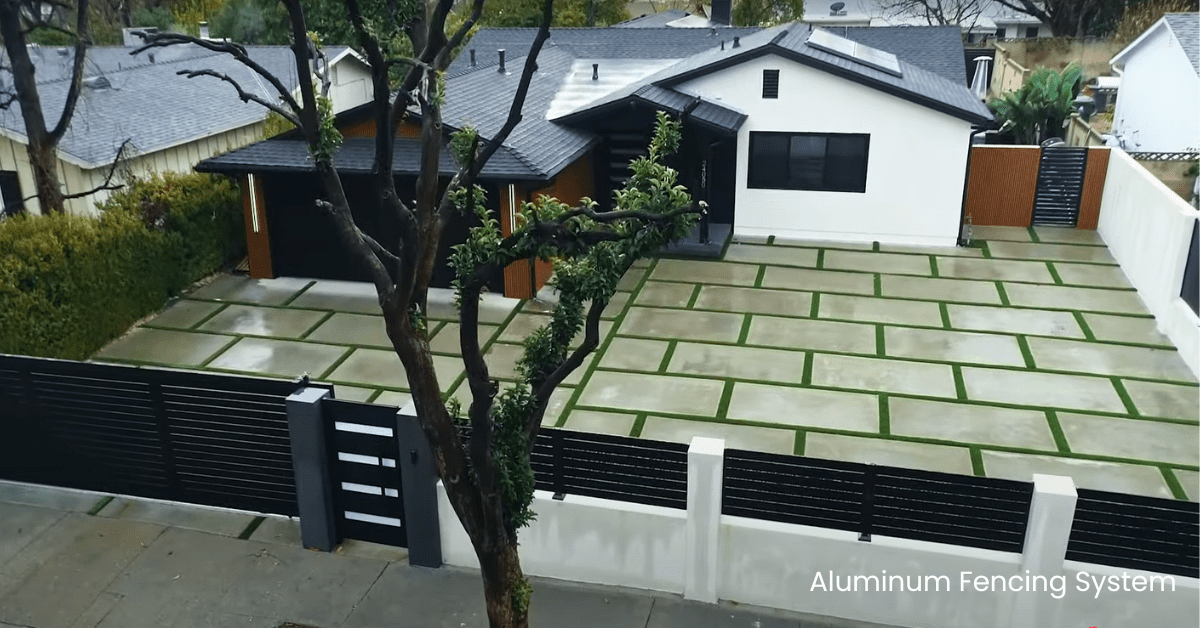
California properties span an enormous range of architectural styles Spanish Colonial and Mediterranean villas in Pasadena, mid-century modern ranches in Palm Springs, coastal contemporary homes in Malibu, and dense urban townhouses in San Francisco and the right aluminum fence design should feel like it was drawn by the architect, not bolted on as an afterthought. The good news is that modern custom aluminum systems are engineered to complement all of them. The key is choosing a profile, picket orientation, and finish that echoes the home’s dominant lines: vertical pickets for classical and transitional styles, horizontal slats for modern and contemporary builds, and open ornamental panels for Mediterranean or estate aesthetics where visibility and elegance matter more than privacy. Below are the four aluminum fence design directions that dominate California installs in 2026, along with the specific property types and HOA contexts where each performs best.
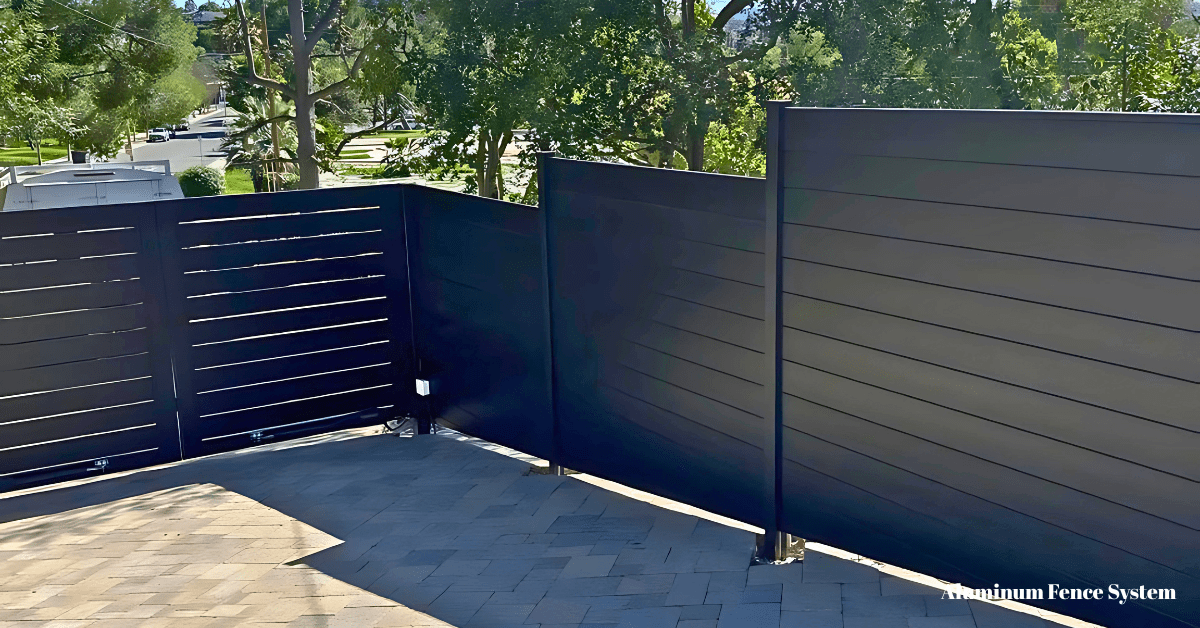
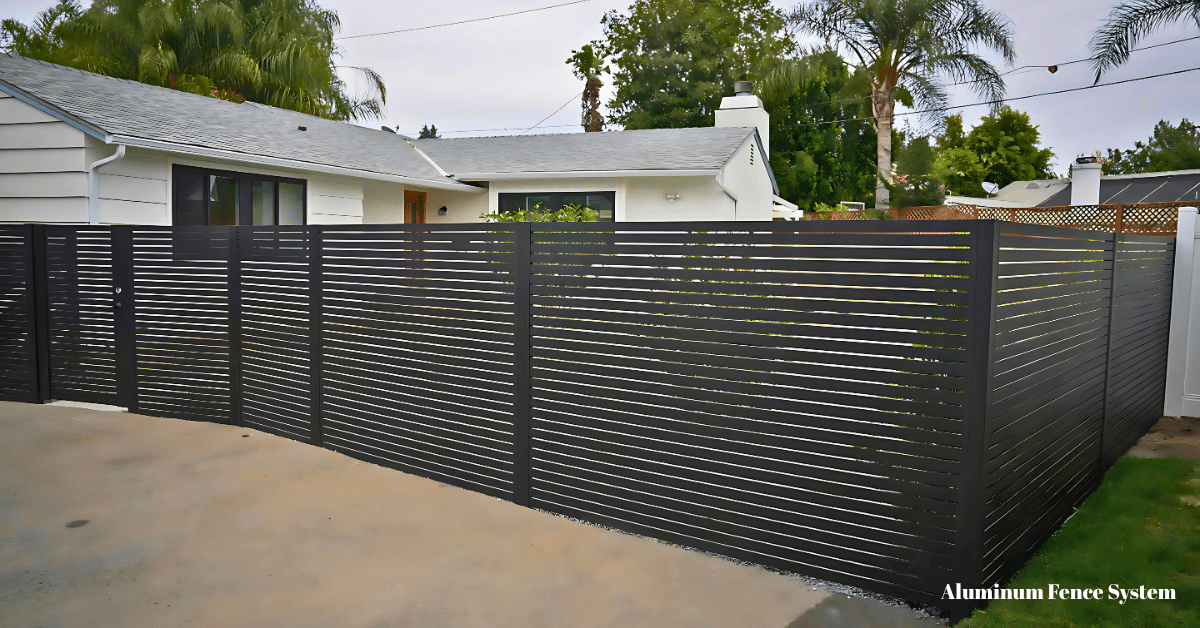
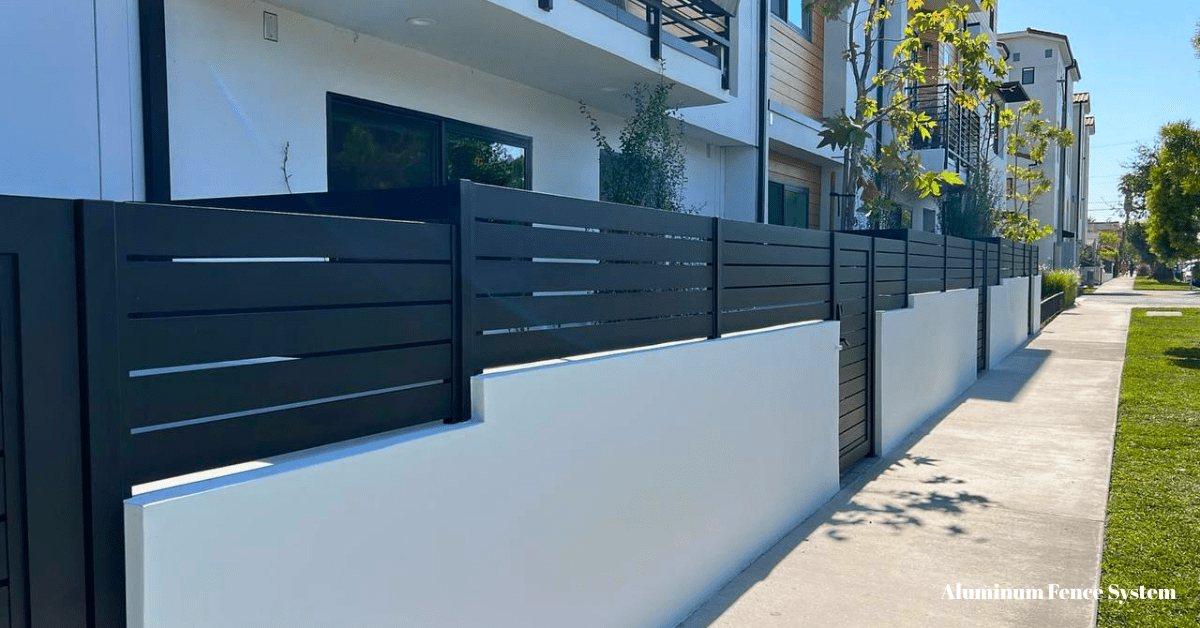
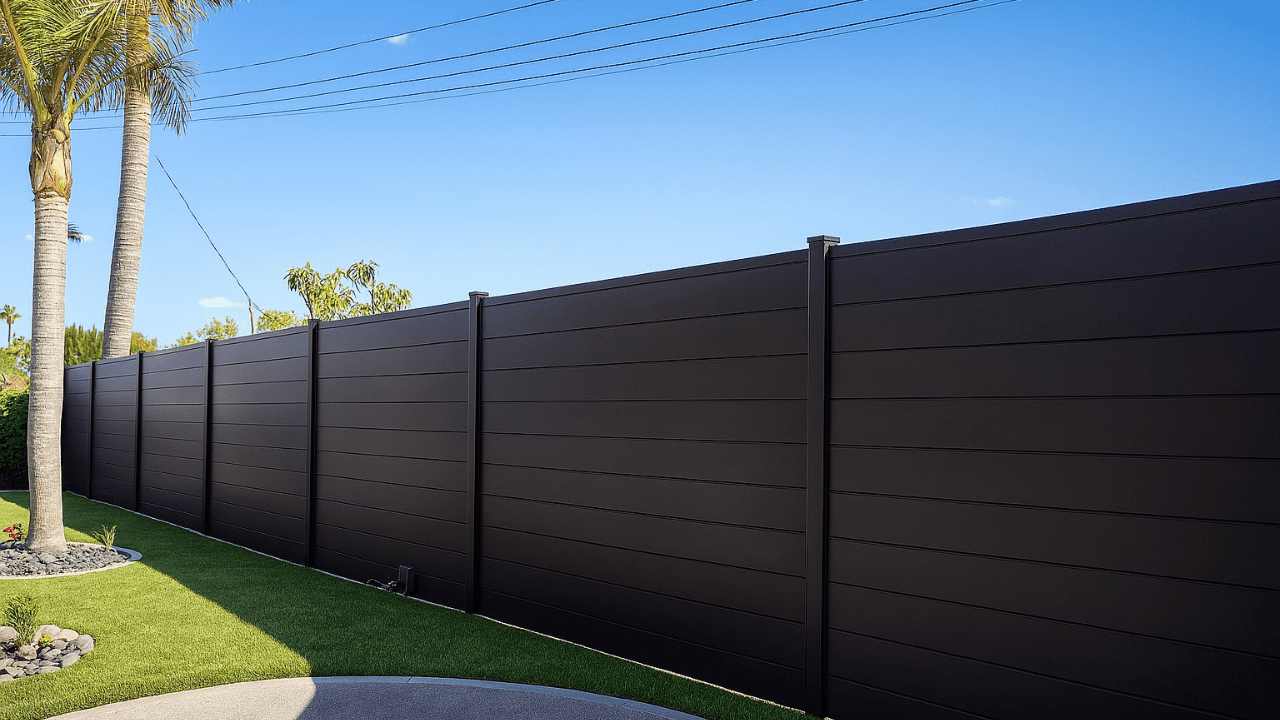
Horizontal Slat Aluminum Fencing for Modern California Homes
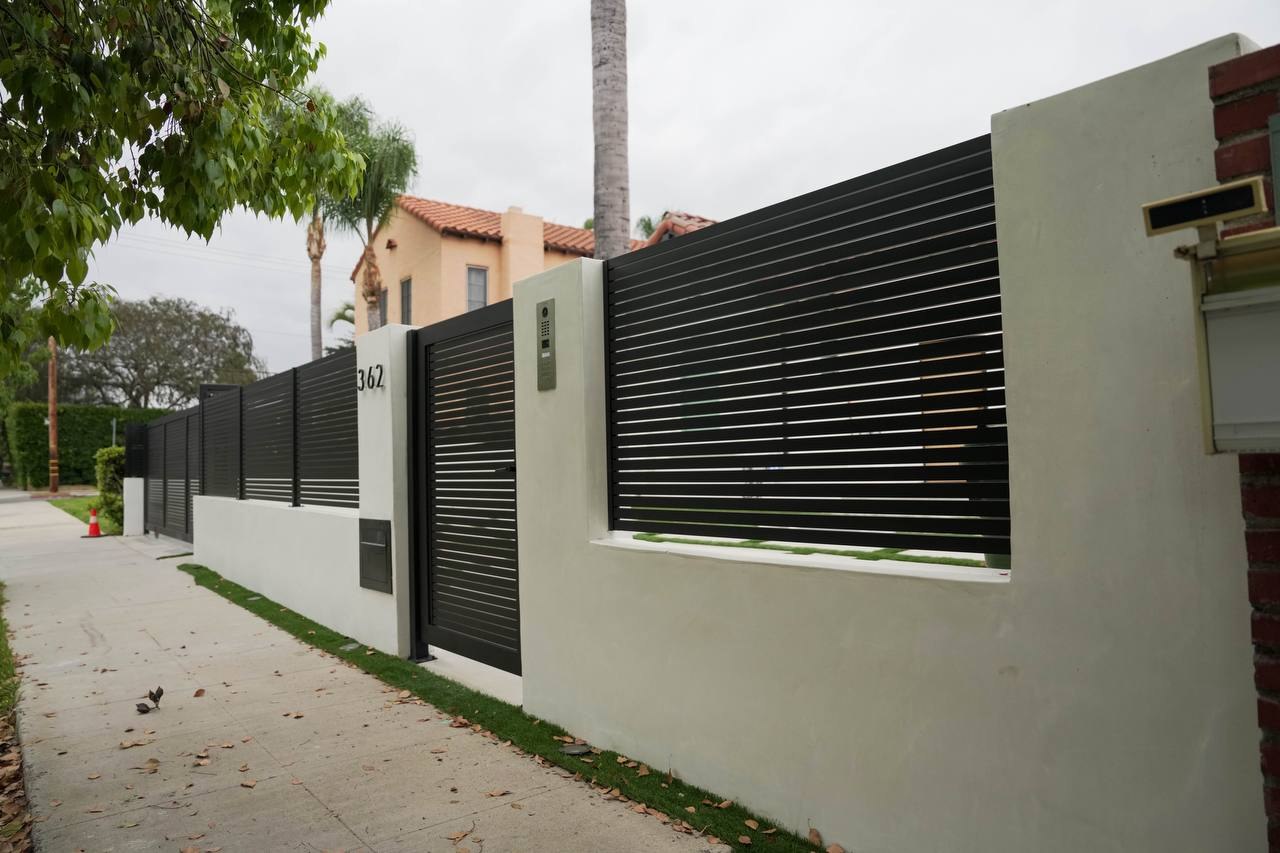
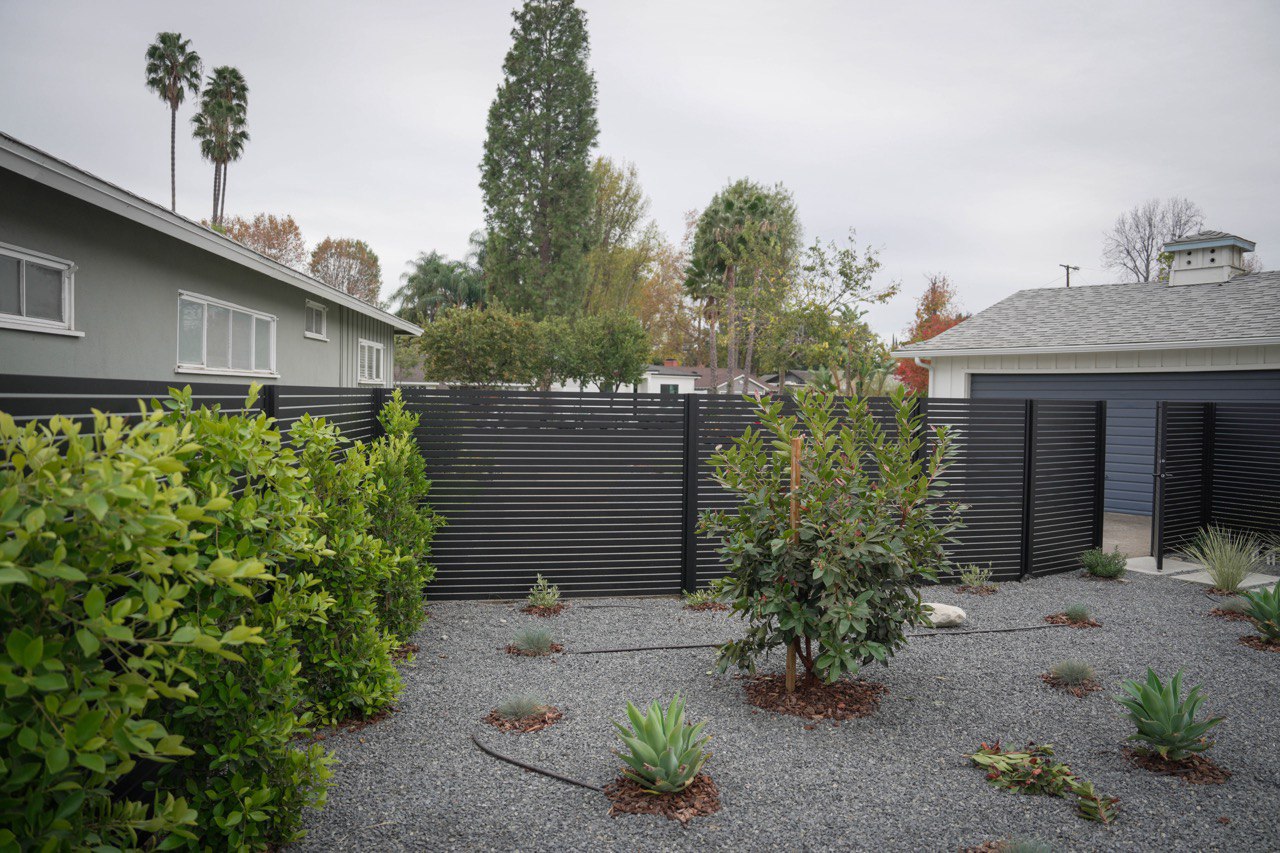
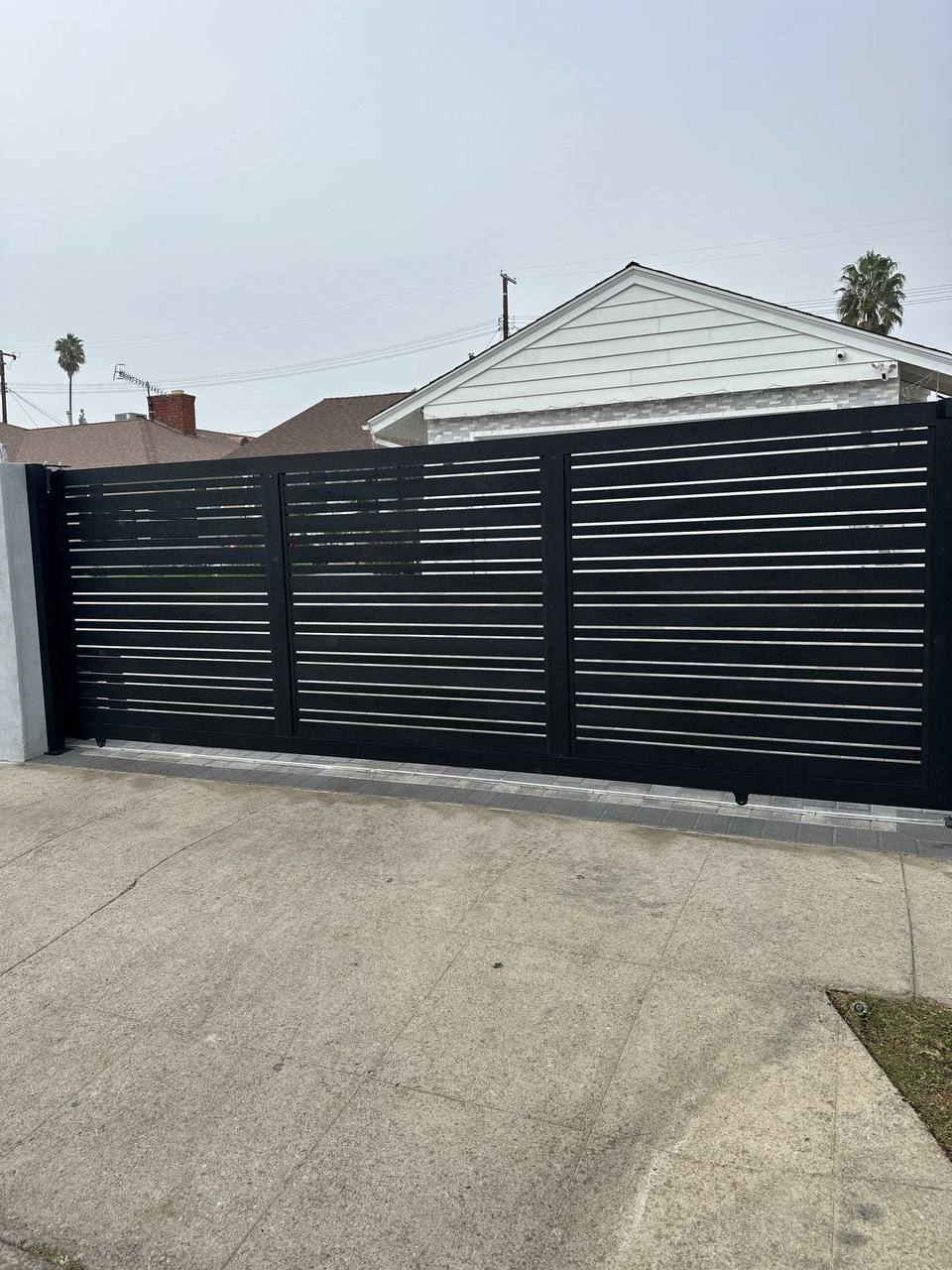
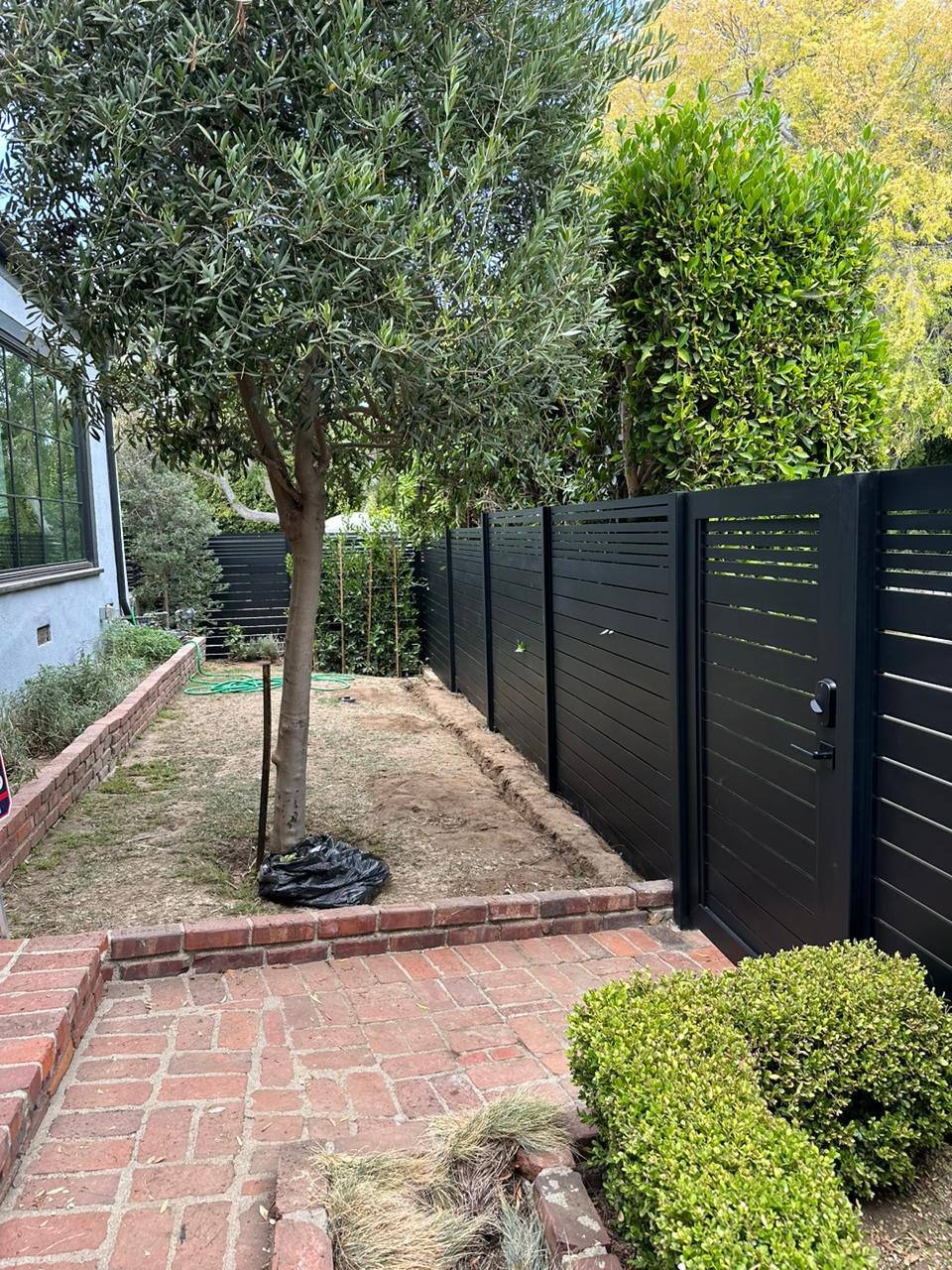
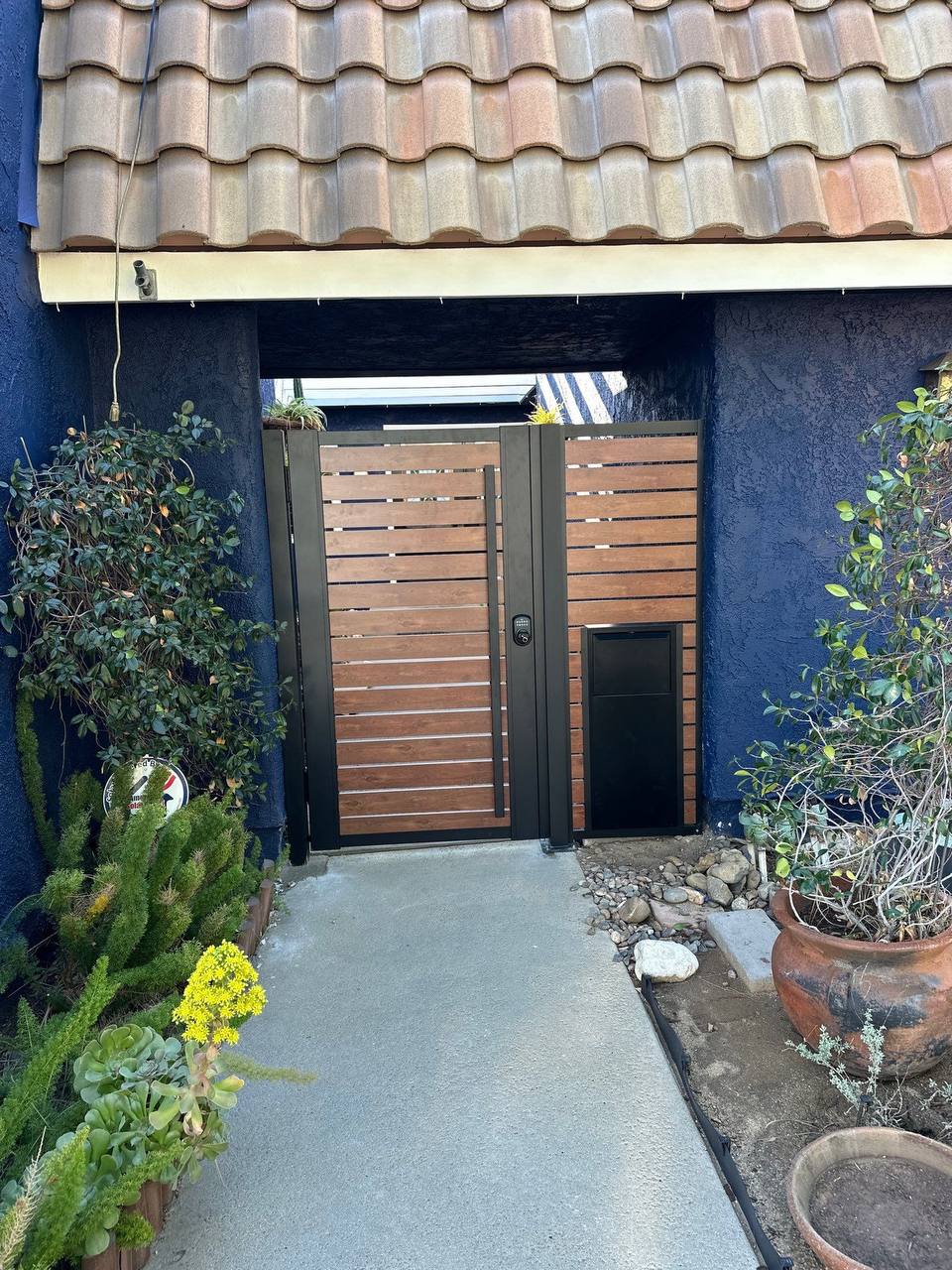
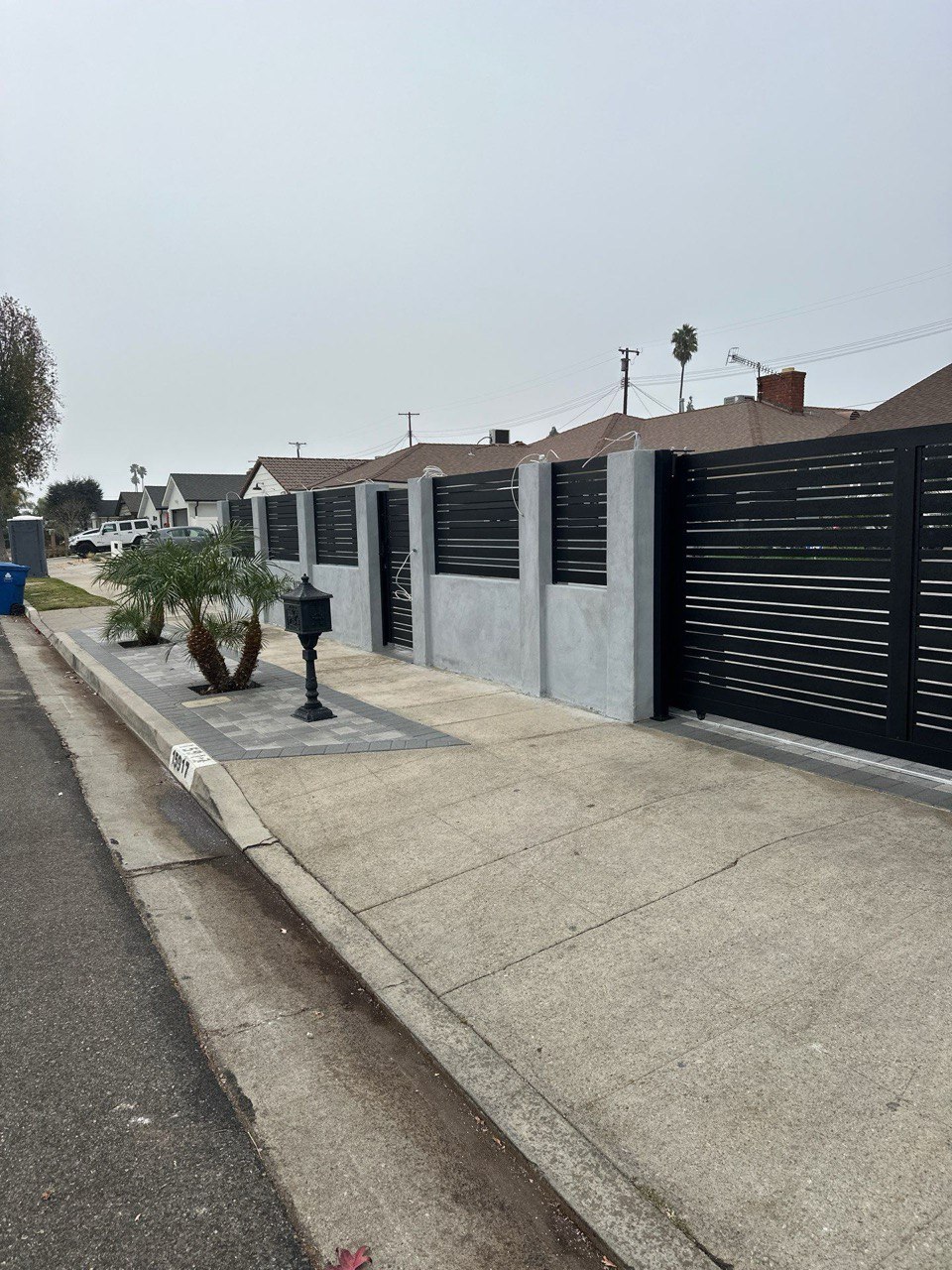
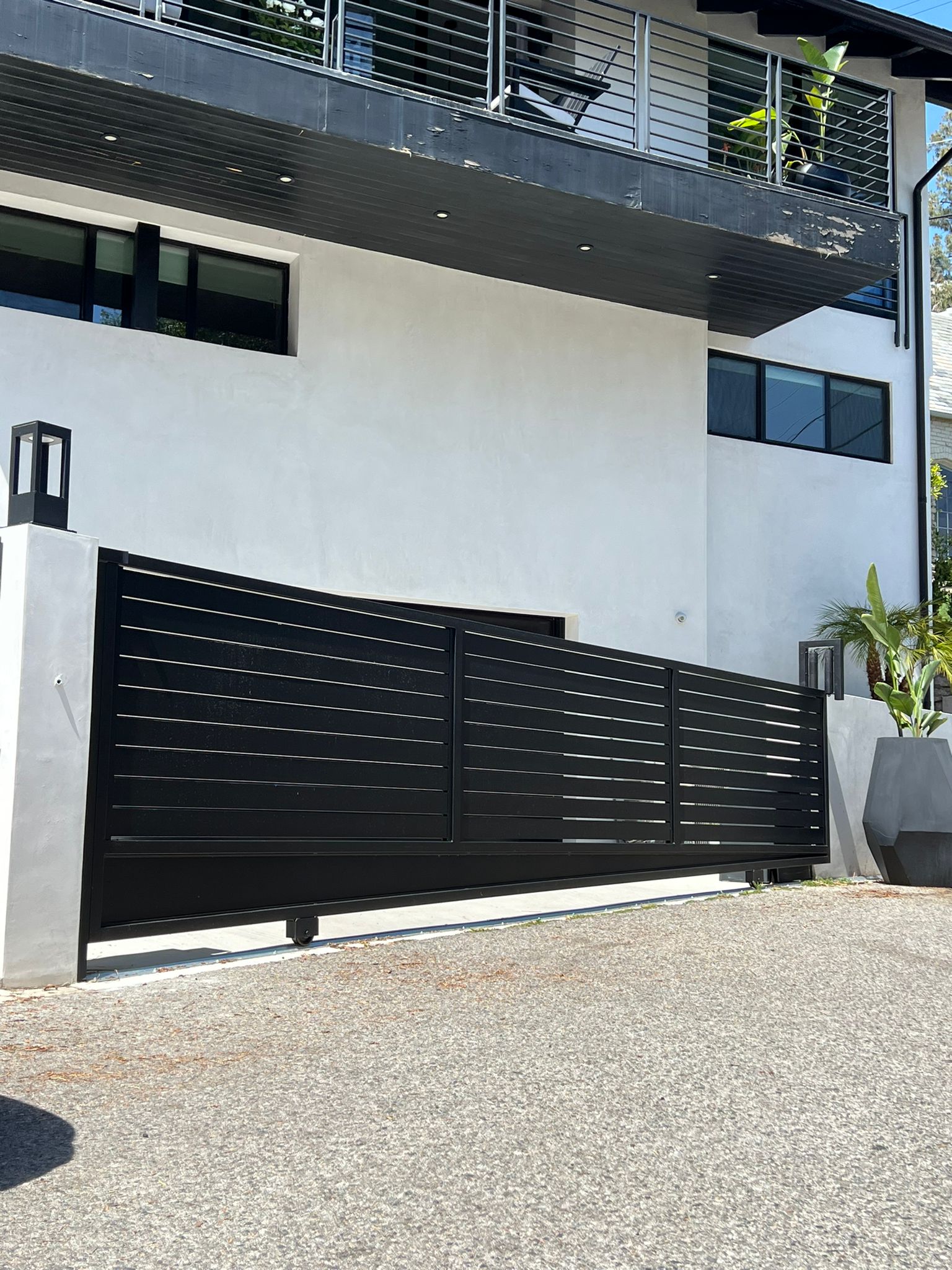
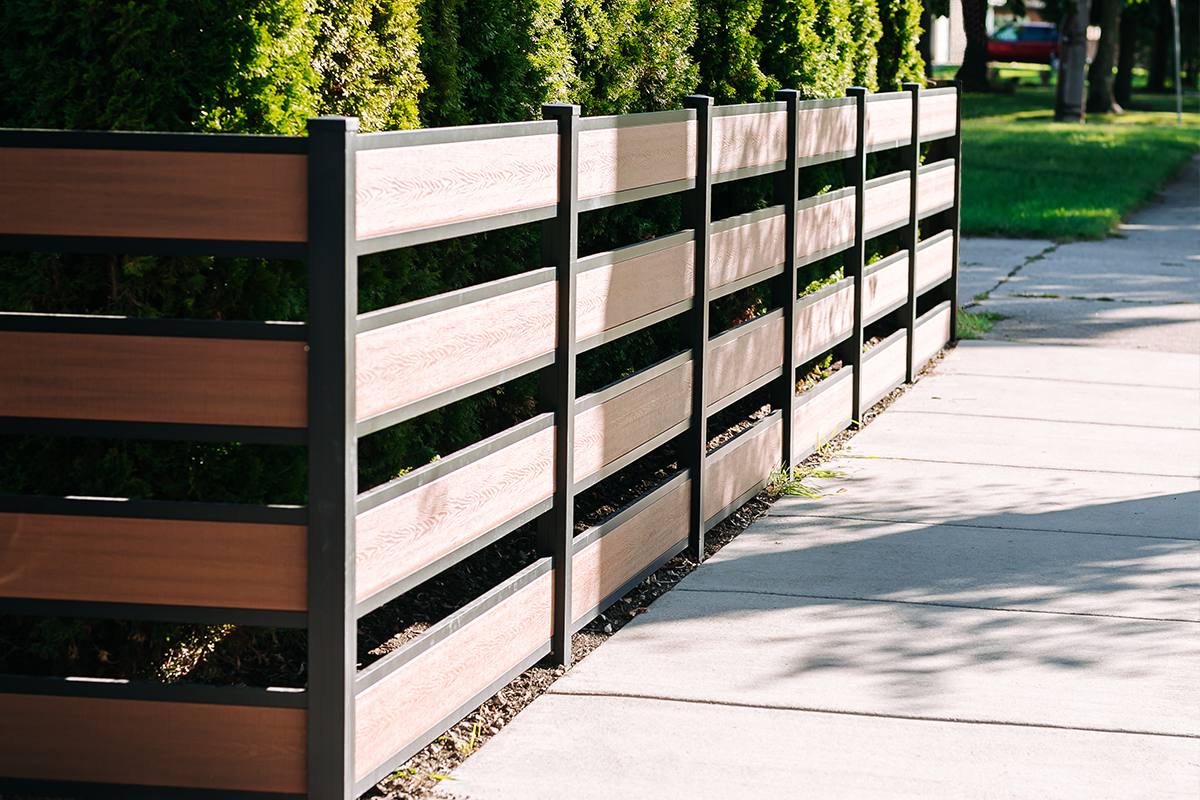
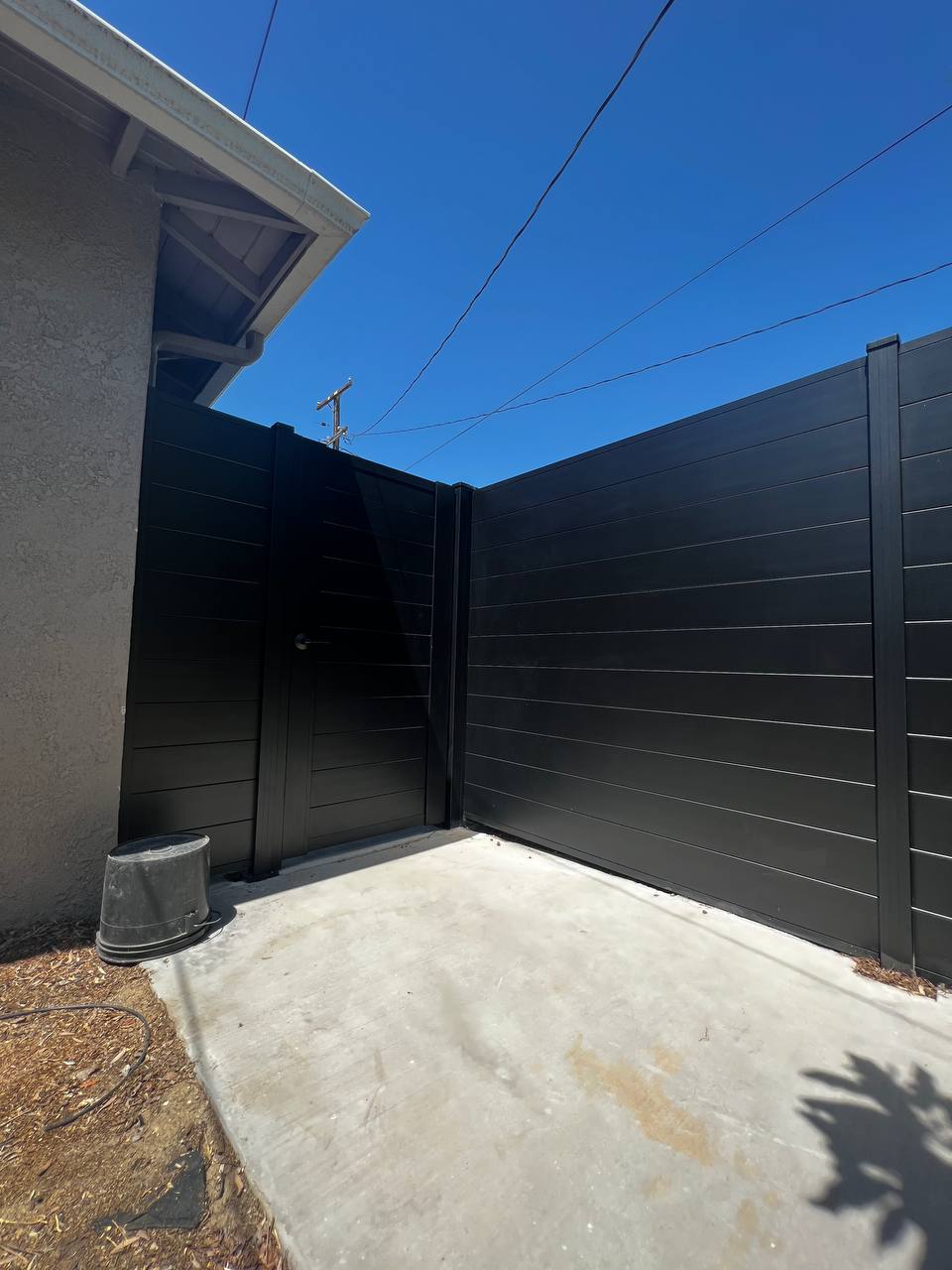
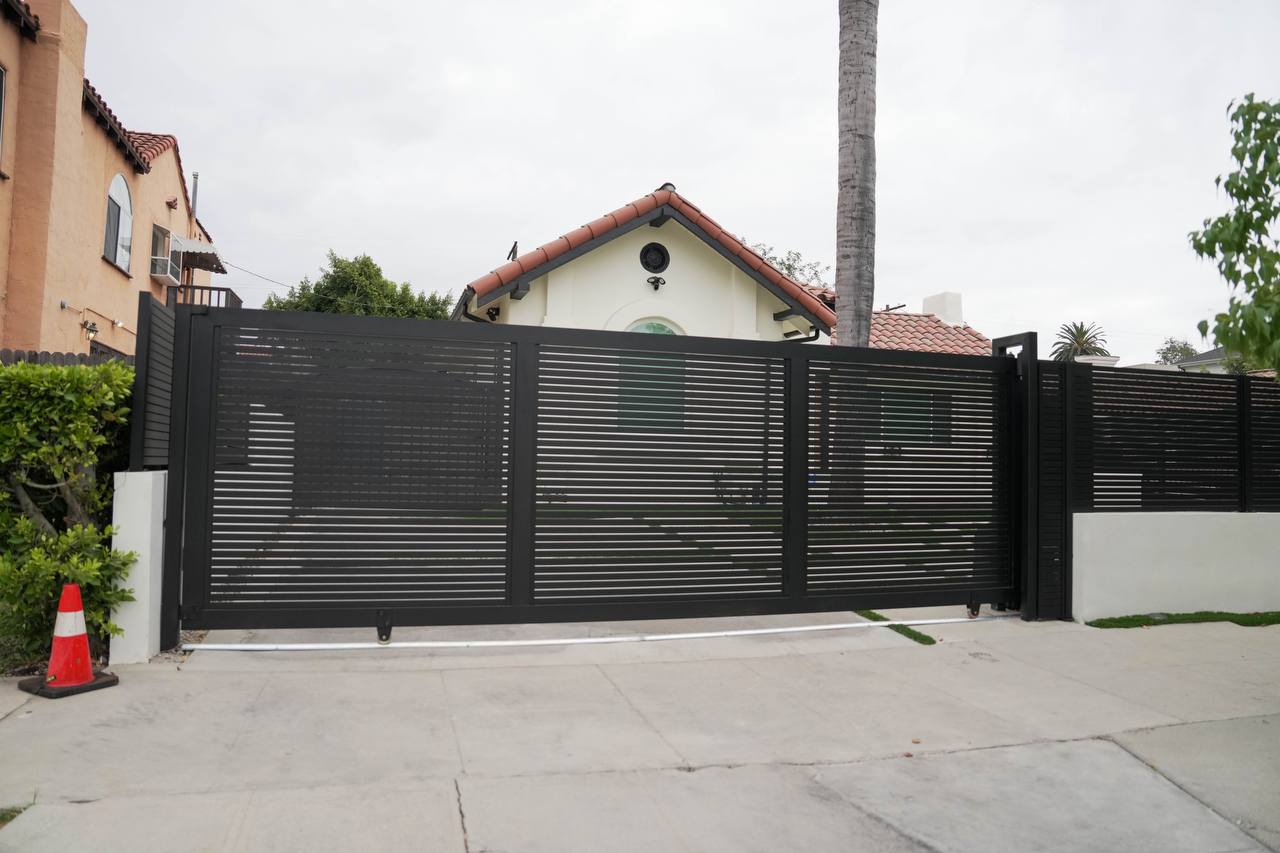
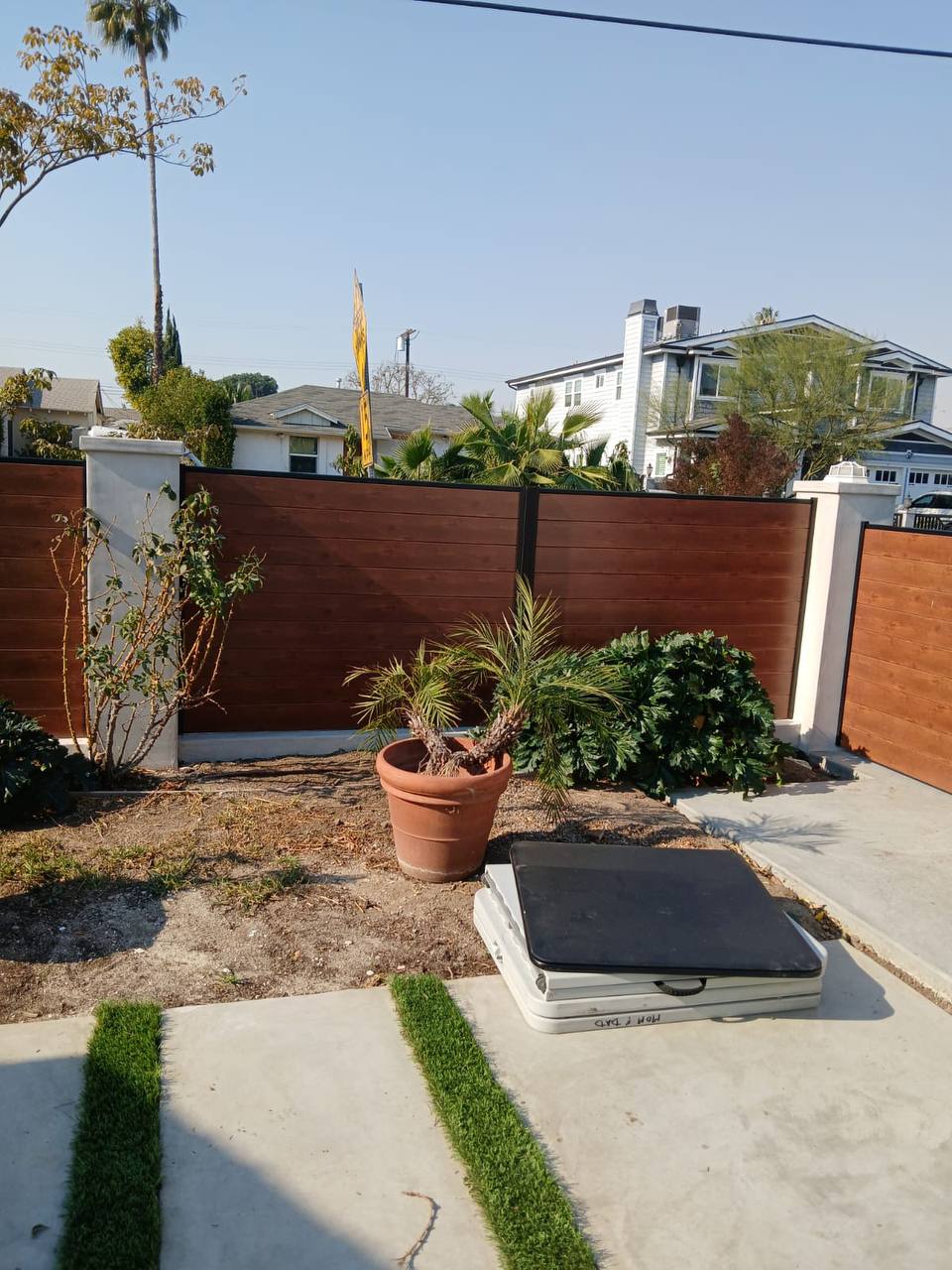
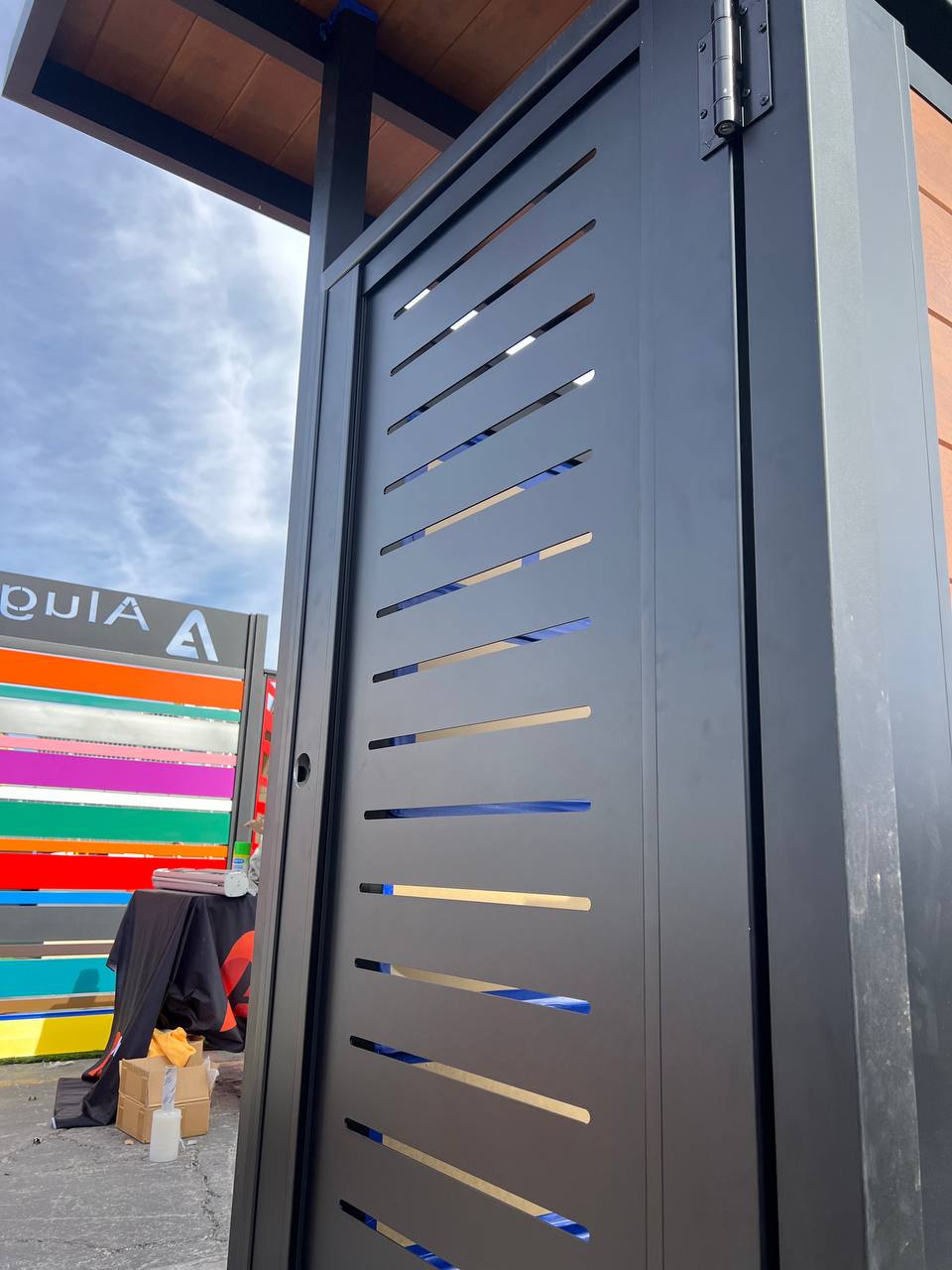
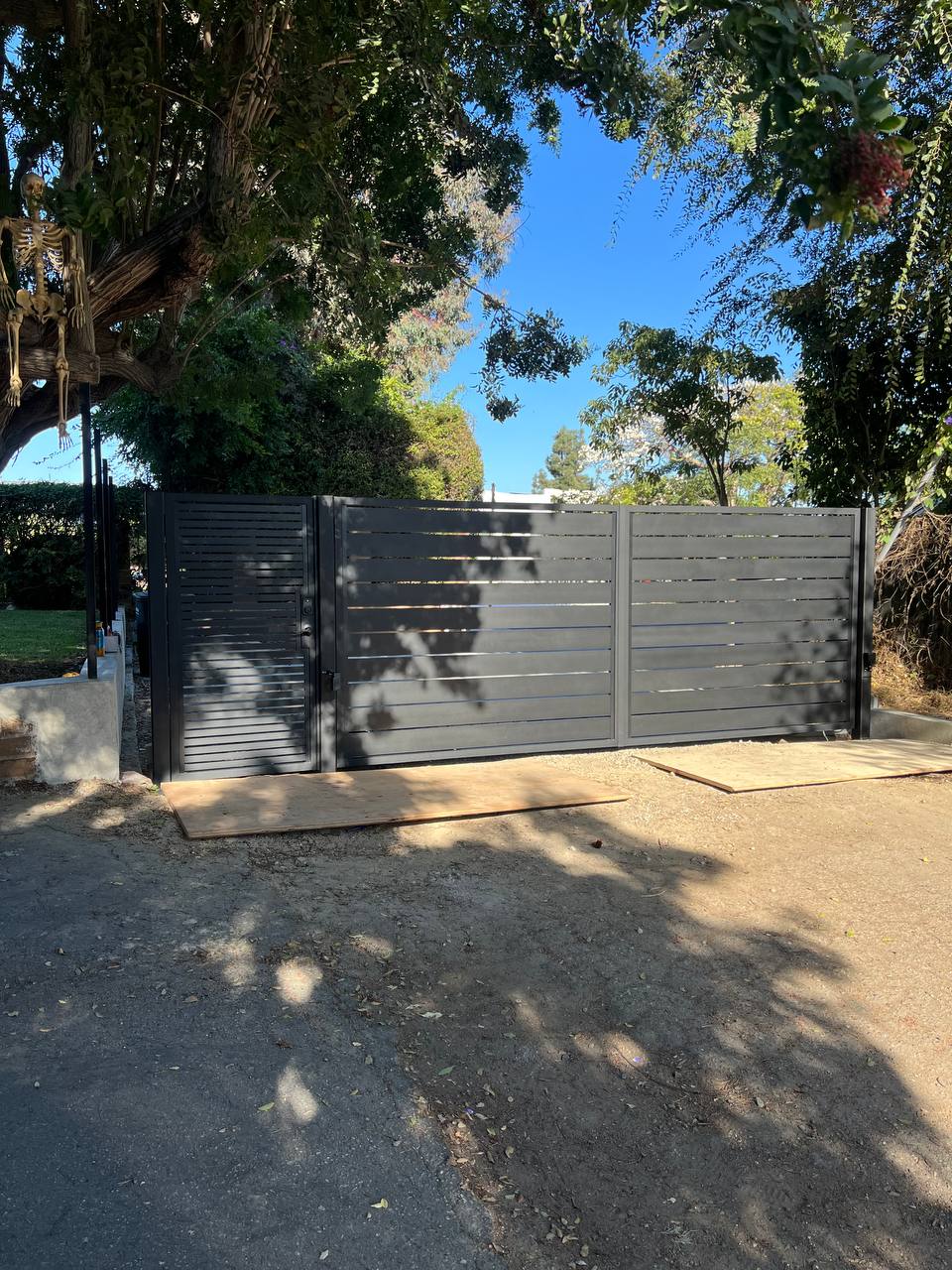
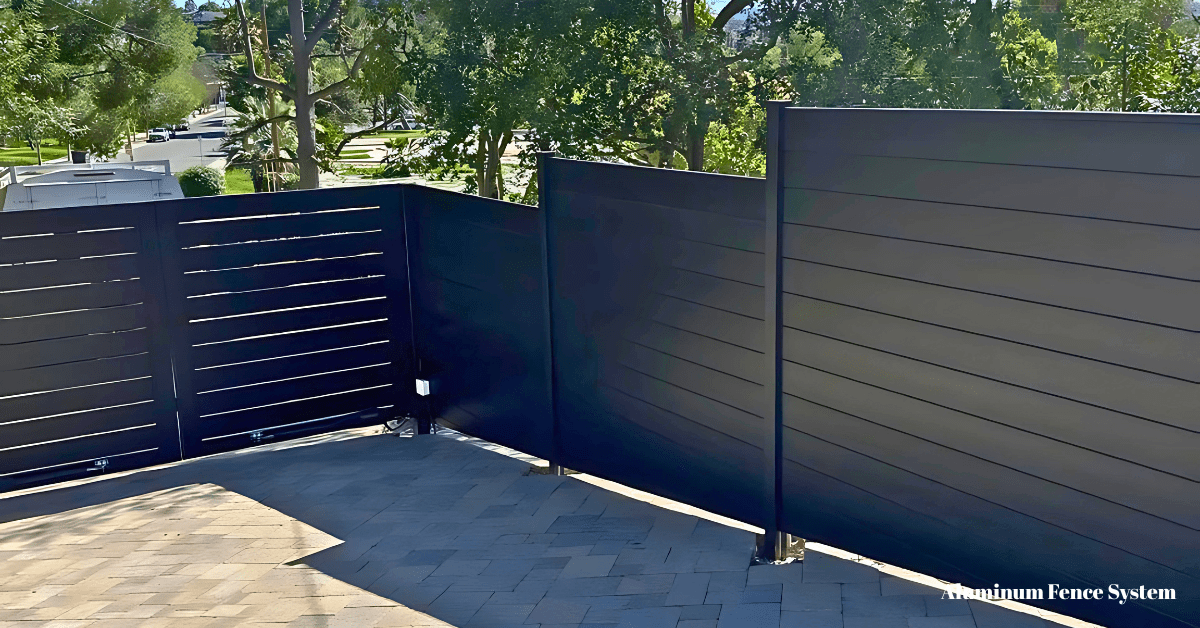
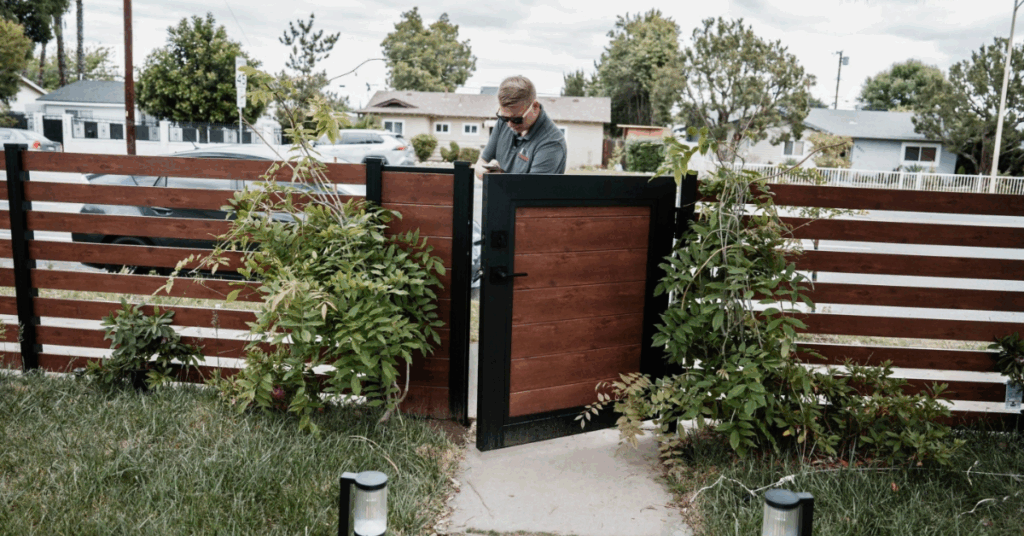
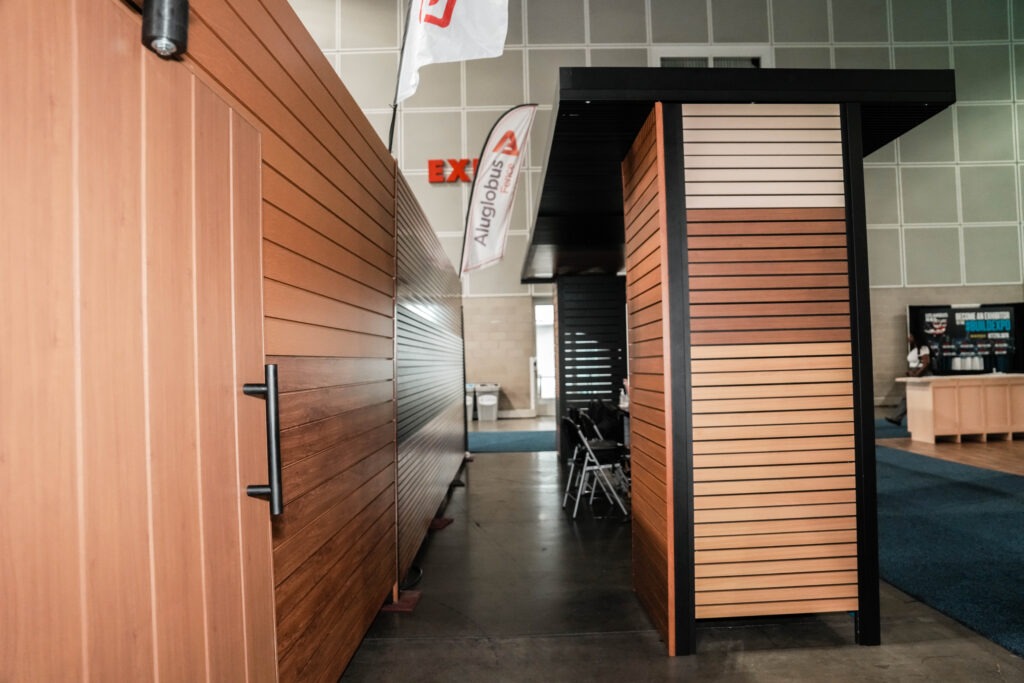
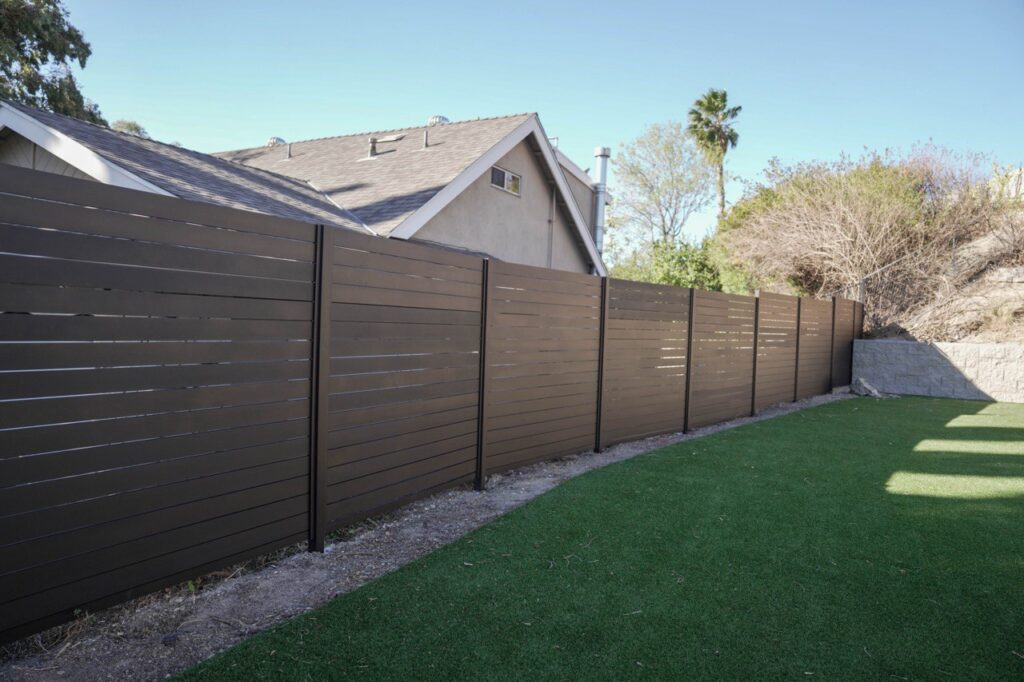
Horizontal slat fencing has become the defining aesthetic of California’s contemporary residential market, driven largely by the clean, linear language of modern architecture in neighborhoods like Silver Lake, Venice Beach, and San Jose’s Willow Glen. In this system, flat aluminum slats typically 2 to 4 inches wide run parallel to the ground, mounted on vertical posts with uniform gaps between each slat that can be adjusted from fully open (decorative, low privacy) to near-closed louver spacing (semi-private without the solid-wall look). The result is a fence that photographs beautifully, reads as architectural rather than utilitarian, and satisfies most HOA “open fence” visibility requirements while still defining the property boundary clearly. For hillside lots with grade changes a very common scenario in the Hollywood Hills, Malibu, and East Bay foothills horizontal slat panels can be raked or stepped along the slope without the awkward triangular gaps that dog traditional picket designs, because the slat spacing adjusts continuously along the panel frame.
Ornamental Spear-Top Aluminum Fencing for Estate and Mediterranean Properties
For California properties with traditional, Spanish Colonial, Tuscan, or estate architectural vocabulary, the ornamental spear-top aluminum panel remains the benchmark design delivering the visual weight and craftsmanship of historic wrought iron at a fraction of the maintenance burden. Spear-top systems feature vertical pickets with hand-finished pointed caps at the top rail, available in flat spear, fleur-de-lis, or ball-top profiles, powder-coated in Gloss Black or Textured Bronze the two finishes that most closely mimic the look of hand-forged iron without the rust cycle that plagues real iron in California’s coastal microclimates. This style dominates installs in gated communities in Calabasas, Rancho Santa Fe, and Hillsborough, where HOA boards often specifically reference ornamental iron or aluminum as the approved fencing typology in their CC&Rs. Pool enclosures in these communities also benefit from spear-top designs because the vertical pickets meet California Building Code Section 3109’s maximum 4-inch gap requirement without any modification, while the pointed top rail acts as a natural climb deterrent that satisfies the code’s anti-climb provisions without adding unsightly barrier extensions.
Aluminum Fence Materials: What to Look for in California
Not all aluminum fence panels are built to the same standard, and the difference between an architectural-grade system and a big-box builder panel becomes obvious within three to five years in California’s demanding environments. The specification that matters most is the alloy grade: 6063-T6 extruded aluminum is the industry benchmark for structural fencing, offering a tensile strength of approximately 145 MPa, excellent resistance to chloride corrosion in coastal climates, and a smooth surface profile that accepts powder coat bonding without pre-treatment degradation. Beyond the alloy, look at wall thickness architectural panels use a minimum 0.080-inch wall on rails and pickets, versus the 0.060-inch walls common in imported builder-grade panels that dent under moderate impact. Post sizing matters equally: a 2×3-inch or 2.5×2.5-inch post set in concrete at a minimum depth of 24 inches (or one-third the post height, whichever is greater) is the correct specification for California’s seismic zone requirements, and any contractor quoting smaller posts or shallower footings is cutting a corner that will cost you in a 4.0+ magnitude event.
Powder Coat Finishes: Color, Durability, and California UV Resistance
California’s UV index is among the highest in the continental United States particularly in San Diego, the Coachella Valley, and the Sacramento Central Valley and standard TGIC polyester powder coat finishes fade and chalk within five to seven years under sustained UV exposure without a UV-stabilized topcoat. The correct specification for a California aluminum fence is a TGIC-free super durable polyester powder coat applied at a minimum 2.5–3.5 mil dry film thickness, cured at 400°F, which delivers a warranty-grade finish rated for 20+ years of UV resistance per AAMA 2604 standards. Globus Gates applies powder coat in-house at their Los Angeles facility across a catalog of over 40 colors, with the most popular California finishes being Matte Black (RAL 9005), Textured Bronze (RAL 8019), Architectural White (RAL 9003), and Graphite Grey (RAL 7016) all of which appear on the approved color lists of major HOA management companies across Southern California. Custom RAL color matching is available for projects requiring an exact architectural specification, with a typical lead time of 10–14 business days above standard production.
Aluminum Fence Maintenance Guide for California Homeowners
Aluminum Fence Maintenance Guide for California Homeowners
One of aluminum’s most compelling advantages over wood, wrought iron, and even vinyl is the near-zero annual maintenance requirement but “near-zero” is not the same as “no maintenance,” and California’s specific environmental conditions create a handful of recurring tasks that protect your investment over the long term. In coastal areas within two miles of the ocean (roughly everything from Malibu to Dana Point along the PCH corridor), salt aerosol deposits accumulate on fence surfaces and in post-base gaps, and a quarterly rinse with fresh water and a mild pH-neutral detergent is sufficient to prevent the surface pitting that occurs when salt residue is left to interact with the powder coat layer over multiple seasons. In wildfire-prone regions, post-fire debris particularly ash and particulate matter with high alkalinity should be washed from aluminum surfaces within 48 hours of a fire event, as alkaline ash accelerates powder coat breakdown faster than salt exposure. For the rest of California’s inland and valley properties, an annual inspection covering post-base concrete integrity, gate hinge torque, and latch alignment is all that is needed to keep a properly specified aluminum fence performing for 30 or more years without repainting, staining, sealing, or structural replacement.
Installation Advancements and Support from Orange County Suppliers
Advancements in fence hardware installation in Orange County have focused largely on improving efficiency, durability, and user convenience while maintaining aesthetic standards. Modern innovations include self-aligning hinges and adjustable gate hardware that simplify the installation process and accommodate slight imperfections in fence posts or terrain unevenness common in the area. These technologies reduce the risk of gate misalignment and sagging, enhancing long-term performance. Many Orange County suppliers provide pre-packaged hardware kits tailored to specific fence materials and styles, bundling essential components like latches, hinges, anti-sag kits, and mounting brackets to streamline procurement and installation. This approach benefits both professional contractors and DIY homeowners by ensuring compatibility and reducing ordering errors. Additionally, local fencing companies often offer on-site consultations and training sessions to educate clients and subcontractors about best installation practices, emphasizing corrosion prevention and weatherproofing to extend hardware life—an essential consideration in Orange County’s coastal climate.
Product Categories
At Globus Gates, we offer a diverse selection of high-end exterior products designed to enhance the beauty, functionality, and value of your property. Our curated product categories include everything from sleek modern gates to durable vinyl fences and architectural wall cladding solutions. Each item is crafted with premium materials and engineered for long-lasting performance in all climates.
Whether you’re looking to secure your property, add privacy, or elevate your home’s design, we have tailored options to fit every style—from contemporary and minimalist to traditional and ornate. Our team of experts is here to help you select the perfect combination of materials, finishes, and designs to match your vision.
Browse through our product categories to find standout solutions.


Reviews
California Fence Permit Requirements and Local Codes
California does not have a single statewide fence permit rule requirements are set at the city and county level, and they vary significantly between jurisdictions, which catches many homeowners off guard mid-project. As a general baseline, most California cities allow residential fences up to 6 feet in height in rear and side yards without a building permit, while front yard fences are typically capped at 3 to 4 feet, with anything taller requiring a zoning variance or discretionary review. However, cities like Los Angeles, San Diego, and San Jose all maintain their own specific overlays: LA’s Fence Ordinance (LAMC Section 46.00) applies different height limits in hillside areas and historic preservation overlay zones (HPOZs), San Diego’s Municipal Code requires permits for any fence exceeding 6 feet regardless of yard location, and many Bay Area cities add design review requirements for fences visible from public right-of-way. Pool enclosure fences are subject to California Building Code Section 3109 regardless of jurisdiction mandating a minimum 60-inch barrier height, self-closing and self-latching gates, and maximum 4-inch picket spacing and require a building permit in every California city without exception. Globus Gates handles permit applications as part of their full-service installation contracts across Los Angeles, Orange County, San Diego, and San Jose, ensuring every install is fully documented and inspected before the final handoff.

Aluminum Fence Cost Guide for California in 2026
Custom aluminum fence pricing in California spans a wide range depending on panel style, height, linear footage, site conditions, and whether the project requires permit processing, concrete demolition, or grading work along the fence line. As a general market benchmark for 2026, architectural-grade custom aluminum fencing installed in California costs between $85 and $175 per linear foot, including materials, powder coat finish, concrete post footings, and standard residential installation labor. Ornamental spear-top panels at standard 4-foot and 5-foot heights sit at the lower end of that range, while horizontal slat privacy systems at 6-foot height with custom spacing and premium RAL finishes sit toward the upper end. Pool enclosure projects carry a modest premium of $15–$25 per linear foot above standard pricing due to the self-latching gate hardware, permit processing, and mandatory inspection coordination. By comparison, equivalent wrought iron systems run $120–$220 per linear foot installed, and require repainting every 5–7 years at an additional $8–$15 per linear foot making aluminum the lower total cost of ownership option over any 15-year horizon in California’s corrosive coastal and UV-intense inland environments. Globus Gates provides free itemized quotes with no obligation, typically delivered within 24–48 hours of an on-site measurement visit.
Why California Homeowners Choose Globus Gates
Globus Gates is a Los Angeles-based, factory-direct aluminum fence manufacturer and installer serving residential, commercial, and HOA clients across Southern California, the Bay Area, and the Central Valley a vertically integrated model that eliminates the distributor markup that inflates pricing at most fence contractors. Every panel is designed in-house, extruded from 6063-T6 alloy, powder coated at the Los Angeles facility, and installed by Globus Gates’ own crews rather than subcontracted labor, giving clients a single point of accountability from design consultation through final inspection sign-off. The company’s catalog covers the full range of California fence applications ornamental picket, horizontal slat, louver privacy, pool enclosure, driveway gate, and commercial perimeter systems all available in custom dimensions and over 40 powder coat colors with a 20-year finish warranty and a lifetime structural warranty on panels and posts. Whether you’re replacing an aging wrought iron fence in Pasadena, adding a pool barrier in Irvine, or enclosing a commercial property in San Jose, Globus Gates delivers a built-to-measure system with the material specs, permit knowledge, and installation experience that California’s climate and code environment demand. Request your free quote at globusgates.com measurement visits are available across Los Angeles, Orange County, San Diego, and the Bay Area, with most residential projects delivered and installed within 3–4 weeks of order confirmation.

Aluminum vs. Wrought Iron vs. Wood Fence in California: A Direct Comparison
California homeowners frequently weigh aluminum against wrought iron and wood before committing to a fencing material, and the decision comes down to three factors: lifetime cost, maintenance burden, and performance in California’s specific climate zones. Wrought iron delivers unmatched visual weight and a traditional aesthetic, but it requires repainting every 5–7 years to prevent the surface rust that accelerates rapidly in coastal salt air and in the seasonal wet-dry cycles of Northern California a recurring cost that erases its initial price advantage within a single decade. Wood fencing remains the most affordable option at installation, typically running $25–$55 per linear foot for cedar or redwood in California, but it warps, splits, and grays under the state’s intense UV load within 3–5 years without annual staining or sealing, and it is categorically prohibited or heavily restricted in WUI fire zones where the majority of California’s new residential development is occurring. Aluminum sits at the optimal intersection: installation cost roughly comparable to mid-grade wrought iron, a maintenance requirement that amounts to an annual rinse and inspection, a non-combustible fire classification that satisfies WUI zone regulations, and a powder coat finish that outlasts paint on iron by a factor of three to four under California UV conditions making it the objectively strongest long-term value among the three materials for the vast majority of California properties.
Best Aluminum Fence Styles by California Region
California’s regional microclimates and dominant architectural vocabularies mean that the most popular aluminum fence styles vary meaningfully from one part of the state to another, and matching your fence design to your region’s aesthetic context is as important as matching it to your property’s architecture. In Los Angeles and the San Fernando Valley, horizontal slat systems in Matte Black and Graphite Grey dominate new installs, driven by the city’s strong contemporary residential market and the prevalence of mid-century modern and California ranch architecture that favors clean horizontal lines. In Orange County and San Diego, ornamental spear-top panels in Textured Bronze and Gloss Black remain the standard in the region’s large gated HOA communities, where CC&Rs frequently reference traditional ornamental iron as the approved style. In the Bay Area particularly San Jose, Oakland, and the Peninsula privacy louver systems at 6-foot height are in high demand due to smaller lot sizes and the dense urban infill development that characterizes much of the region’s housing stock, where privacy from neighbors is a primary driver of fence investment. Along the Central Coast (Santa Barbara, San Luis Obispo, Monterey), the salt air environment makes aluminum’s corrosion immunity especially valuable, and natural finish tones like Driftwood Grey and Sandstone Beige are popular choices that complement the region’s coastal and wine-country architectural palette.

At Globus Gates, our products are thoughtfully engineered to meet the highest standards of design, durability, and functionality. We don’t just offer generic materials — we deliver complete solutions for luxury homes and upscale commercial spaces that demand lasting quality and architectural beauty. From precision-cut aluminum gates and wall cladding panels to modern pergolas, custom fences, and secure garage doors, each product is created to perform in demanding environments while maintaining a clean, refined look. Whether you need privacy, protection, aesthetic enhancement, or a combination of all three, our product line is designed to meet your goals with precision and style. With advanced finishes, customizable configurations, and expert consultation, we ensure that every product fits seamlessly into your property’s design vision and structural needs.



Projects
Beyond repairs and installations, our services also include expert consultations, site assessments, and custom design planning for residential and commercial properties. Whether you’re building from scratch, replacing outdated fencing, or integrating modern elements like automated gate systems or weatherproof finishes, we take a hands-on approach to ensure your project aligns with your vision. Our team works closely with architects, builders, and property managers to address both functional requirements and aesthetic goals, offering scalable solutions for large estates, multi-family developments, and high-traffic commercial zones. We don’t just build — we collaborate, advise, and deliver with unmatched precision.




Start Your Custom Aluminum Fence Project in California Today
Choosing a custom aluminum fence is one of the highest-return property investments a California homeowner or business can make in 2026 combining permanent durability, architectural flexibility, wildfire compliance, and zero ongoing maintenance cost into a single factory-built system that is designed specifically for your property’s dimensions, grade, and HOA requirements. The difference between a fence that lasts 10 years and one that lasts 50 comes down entirely to the specification decisions made at the beginning: alloy grade, wall thickness, powder coat standard, post depth, and the experience of the crew setting it. Globus Gates brings all of those decisions together under one roof from the extrusion floor in Los Angeles to the final inspection sign-off on your property giving California homeowners a direct line to architectural-grade quality without the distributor markups, subcontractor hand-offs, or import-grade material substitutions that define most of the market. If you are ready to move forward, or simply want an accurate number for your project, request a free on-site measurement and quote at globusgates.com available across Los Angeles, Orange County, San Diego, and the Bay Area, with no obligation and a response within 24 hours.
Frequently Asked Questions
What is the best aluminum fence alloy for California's coastal climate?
The correct specification is 6063-T6 extruded aluminum, which offers a tensile strength of approximately 145 MPa and natural chloride corrosion resistance without requiring paint or sealant. This alloy is standard on all Globus Gates panels and outperforms the 6061 and lower-grade alloys used in imported builder-grade panels, which pit and degrade within 5–7 years in salt-air environments within two miles of the California coastline.
How much does a custom aluminum fence cost in California in 2026?
Architectural-grade custom aluminum fencing installed in California costs between $85 and $175 per linear foot for most residential projects, including materials, powder coat finish, concrete post footings, and labor. Pool enclosure projects carry an additional $15–$25 per linear foot for self-latching gate hardware and permit coordination. Wrought iron runs $120–$220 per linear foot installed and requires repainting every 5–7 years, making aluminum the lower total cost of ownership over any 15-year period.
Does Globus Gates handle permits for aluminum fence projects in California?
Yes, Globus Gates manages the full permit application process as part of their complete installation contracts across Los Angeles, Orange County, San Diego, and San Jose. Their team confirms jurisdiction-specific requirements during the free measurement visit, including pool barrier compliance under California Building Code Section 3109, hillside fence ordinances in Los Angeles, and HOA architectural review submissions, at no additional charge to the client.
Can a custom aluminum fence be installed on a sloped lot in California?
Absolutely, raked and stepped panel configurations are standard offerings at Globus Gates and are specifically engineered for California’s hillside properties in areas like the Hollywood Hills, Malibu, Palos Verdes, and the East Bay foothills. Raked panels follow the slope continuously without base gaps, while stepped configurations use level panels that drop in uniform increments your Globus Gates designer will recommend the correct approach based on your lot’s grade percentage and HOA guidelines during the free consultation.
How long does aluminum fence installation take with Globus Gates in California?
For a standard residential project of 150–300 linear feet, the typical timeline from order confirmation to installation completion is 3–4 weeks, covering fabrication, powder coat curing at the Los Angeles facility, delivery, and installation by Globus Gates’ own crews. Commercial and HOA community projects range from 5–8 weeks depending on total linear footage, gate count, and permit processing time. Rush fabrication options are available for time-sensitive projects discuss availability during your free quote consultation.