
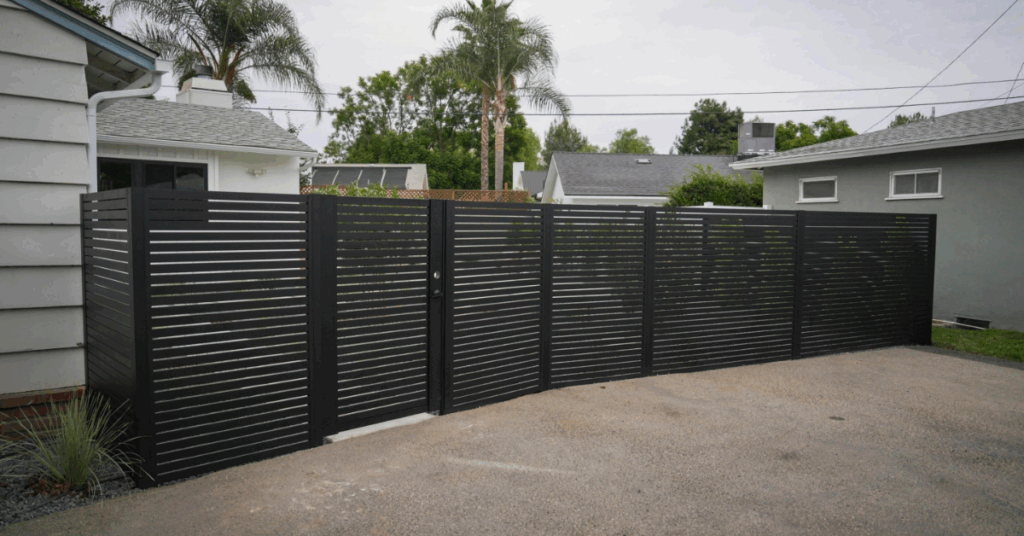
Replacing wood perimeter fencing with aluminum cuts combustible material at the boundary and reduces ember ignition risk. This guide explains fuel load reduction, material and design choices, installation priorities, and maintenance practices to strengthen wildfire resilience while keeping style and privacy.
Why aluminum reduces boundary fuel
Aluminum fences remove the combustible vertical material that wood provides. They do not ignite from embers, and they limit flame spread along the property edge. Select profiles that minimize gaps where windblown embers can lodge. Maintain a clear zone under and beside the fence to limit fuels. Aluminum also withstands intense heat without charring, so perimeter continuity is preserved during and after a fire event. For technical comparisons and local zone guidance see why aluminum fences are ideal for fire zones. Prioritize materials and connectors that meet local fire code and insurance recommendations.
Planning a wildfire safe fence replacement
A replacement plan reduces risk and cost overruns. Start by mapping defensible space and property lines. Choose noncombustible posts and rails and avoid wooden caps and trim. Coordinate material choices with neighbors to create a continuous noncombustible boundary. Consider local code guidance and long term maintenance needs. Review material pros and cons in depth at choosing the right fence material. For fire focused selection tips consult choosing a fire safe fence in high risk fire areas. See local examples of fire resistant projects at fire resistant fencing norco.
Designing your ideal fire safe fence
Design balances safety with style and function. Prioritize clean lines, minimal horizontal ledges, and finishes that shed embers. Use powder coated or baked finishes that resist weather and heat. Incorporate privacy slats or panels that are aluminum or noncombustible, not wood. Think about gates, hardware, and locksets that resist heat deformation. Include materials that reduce long term maintenance and insurance exposure. For inspiration and benefit summaries explore top 10 benefits of a quality fence. Make design choices that meet fire codes while matching your home style.
California B2B strategies for office boundary resilience
Commercial and multi tenant properties need durable perimeter solutions. For B2B procurement, focus on lifecycle cost, maintenance demands, and compliance documentation. Present defensible space plans to property managers and insurance underwriters. Use vendor demos and samples to speed approvals. When locating manufacturing or installation partners, show them project specs and site constraints. For in person coordination use this map to plan meetings and site visits: California location and map. Good documentation shortens approval cycles and protects assets in fire prone regions.
Material comparisons and lifecycle benefits
Comparing wood and aluminum should include lifecycle costs. Wood costs less up front but needs painting, staining, and fire treatments. Aluminum costs more initially but resists decay, insects, and combustion. Consider warranty length, corrosion resistance in coastal zones, and finish options. Aluminum panels frequently come with protective coatings that lower maintenance and preserve appearance. For a direct cost and performance discussion see what is cheaper a wood fence or aluminum fence. Factor insurance discounts and reduced replacement risk into ROI calculations.
Installation best practices for fire prone areas
Proper installation is as important as material choice. Set posts on concrete footings sized for local soil and wind loads. Avoid wooden sleeves or anchors that reintroduce combustible materials. Use stainless steel or galvanized fasteners to resist corrosion. Ensure gates align and close tightly to avoid ember entry points. When grading or building on slopes, adjust post spacing and panel fit for rackability. For practical installation guidance see aluminum fence installation ca. Work with contractors experienced in fire zone installations.
Maintenance to preserve fire resistance
Routine maintenance keeps performance predictable. Inspect fences seasonally for vegetation encroachment, loose fasteners, and accumulated debris. Remove leaf litter and brush from the base and from behind panels. Recoating is rarely needed but touch up scratched finishes to prevent corrosion. Replace damaged panels promptly to avoid weak points. Maintain gate hardware so closures remain secure during high wind events. For seasonal care recommendations review seasonal maintenance tips for aluminum fences. A simple annual checklist sustains long term fire resilience.
Aesthetics and neighborhood cohesion
Fire safe fences can be attractive and neighborhood friendly. Choose profiles and colors that complement local architecture. Use vertical or horizontal slat patterns to harmonize with landscape lines. Combine sightline management with privacy where needed while keeping ember shedding surfaces. Integrate gates, lighting, and plant selection to create cohesive curb appeal. For modern styling ideas that also respect safety see modern yard fence ideas. Thoughtful design helps gain neighbor buy in for coordinated replacements.
Insurance, code compliance and documentation
Documentation saves time and secures coverage. Collect product data sheets, test reports, and installer warranties. Confirm local fire zone classifications and code requirements before ordering. Some insurance programs offer benefits for noncombustible boundaries; verify what documentation they require. Keep track of permits, inspection records, and maintenance logs. For systems tested and approved for underwriting reference insurance approved aluminum fence and gate systems. Clear records reduce disputes and speed claims if needed.
Budgeting and phased replacement
Phased replacement spreads cost and risk. Start with the most exposed or vulnerable sections. Replace fence spans adjacent to wildland or heavy vegetation first. Estimate materials, labor, permits, and disposal for each phase. Seek competitive bids and request fixed scope pricing to avoid surprises. Use local examples and cost guides to calibrate expectations; see fence installation cost guide for homeowners 2026. Phasing lets you improve protection quickly while managing budget constraints.
Coordinating transitions with neighbors
Boundary changes affect adjacent owners and utilities. Communicate early about designs, heights, and material choices. Share maintenance responsibilities in writing to avoid future disputes. Obtain boundary surveys and easement information before work begins. If a neighbor declines to replace a shared fence, prioritize the exposed side and document your efforts. For guidance on repair versus replacement and shared responsibilities see fence replacement vs repair making the right choice. Good communication eases permitting and strengthens block level fire resilience.
Next steps and how to order your safer fence
Ready to reduce your boundary fuel load and gain long term protection? Gather measurements, photos, and any local code notes. Use them to design a noncombustible boundary that matches your home and landscape. Consider finishes and gate hardware that lower maintenance and lengthen lifespan. For a streamlined ordering experience and custom options, visit the supplier shop to begin designing today: Design Your Ideal Fence and Gates. Professional consultation and custom configurations speed compliance and ensure a confident installation.
Final words
Switching wood fences to aluminum removes a common fuel source at property edges. Aluminum gives code friendly, low maintenance protection while keeping design flexibility. Plan the swap, coordinate with neighbors, and choose installers who understand fire zone rules. A strategic fence replacement improves defensible space, supports insurance compliance, and delivers long term value.
Frequently Asked Questions
Yes. Aluminum is noncombustible and will not ignite from embers. It reduces the chance of flame spread along the boundary compared with wooden fences.
It can. Some insurers offer reduced risk ratings when noncombustible materials are used and when documentation shows compliance with fire zone guidance.
With proper finishes and stainless or galvanized hardware, aluminum fences can last decades with minimal maintenance, even in salty or wet environments.
Yes. Prioritize the most exposed sections. Coordinate with neighbors where possible and keep records of communications and work performed.
Keep vegetation trimmed, clear debris from the base, inspect fasteners and panels, and repair damaged sections promptly to avoid weak spots.
Ronnie is the CEO and Co-Founder of Globus Gates, bringing hands-on leadership and industry experience to the company’s aluminum gates, fences, patio covers, wall cladding, and exterior systems. His insights focus on helping homeowners, contractors, designers, and builders understand durable, modern, factory-direct, and non-combustible aluminum solutions built for long-term performance.