
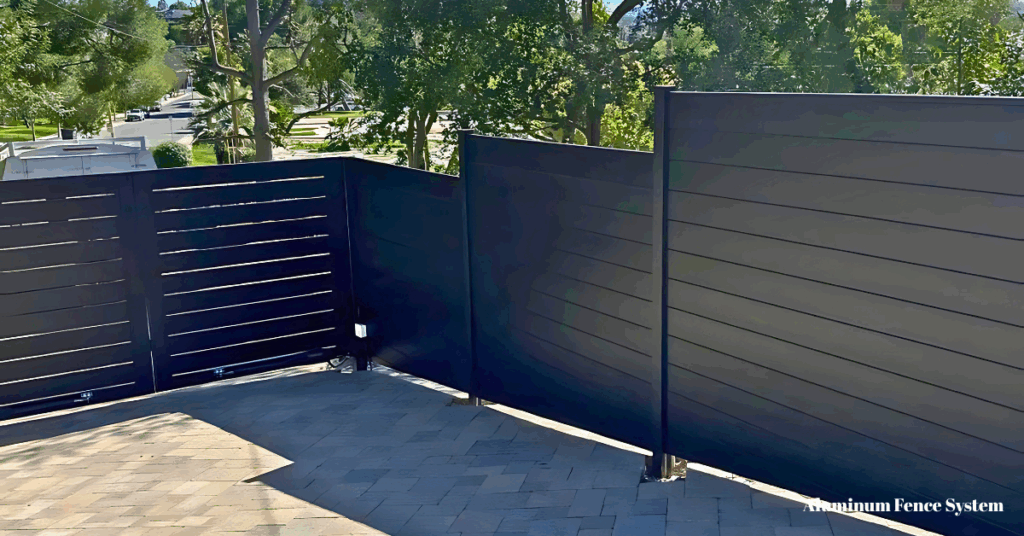
Searching for aluminum fence prices in Los Angeles produces numbers that can be tens or even hundreds of dollars apart. The reason is simple: a four-foot ornamental picket fence and a six-foot architectural privacy fence are both called aluminum fencing, but they use very different quantities of aluminum, posts, hardware, fabrication and labor.
Modern horizontal systems add another layer. Slat width, clear gap, no-gap tongue-and-groove panels, woodgrain finish, wall-topper construction, matching pedestrian gates, driveway gates, masonry, slope and custom post spacing can change the price before installation even begins.
This 2026 guide explains aluminum privacy fence cost in Los Angeles for the types of systems Globus Gates installs, including open ALU20-style slats, wider ALU40-style profiles, full-privacy T&G panels, wood-look aluminum, wall toppers and integrated gates. It also separates material cost from the real installed project scope.
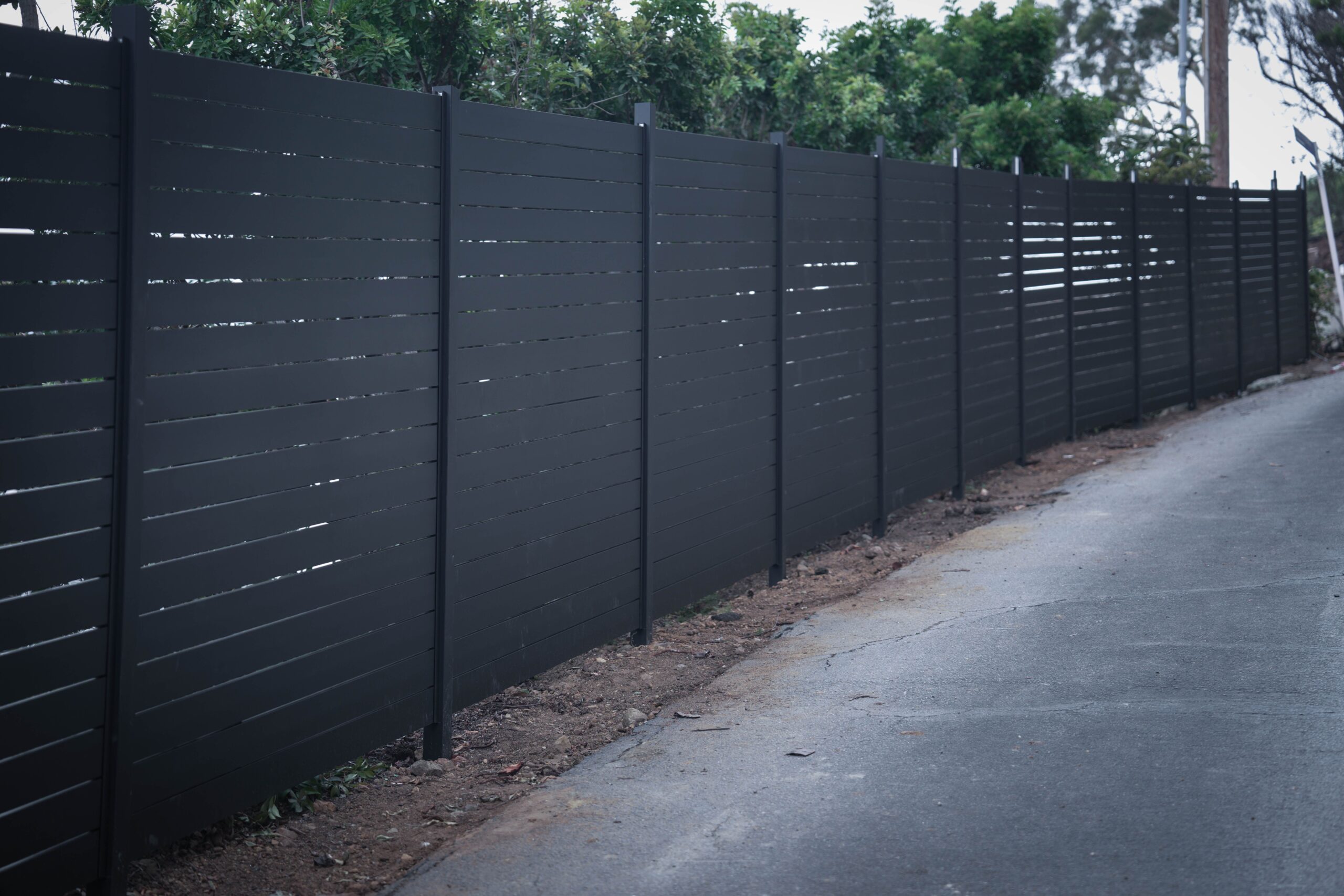
How Much Does an Aluminum Privacy Fence Cost in Los Angeles in 2026?
For modern architectural aluminum, a useful early budget is broader than the national ornamental-fence averages shown on many cost websites.
For a professionally installed modern aluminum fence in the Los Angeles market, plan approximately $65 to $110+ per linear foot for more open or semi-private architectural systems, approximately $85 to $140+ per linear foot for high-coverage horizontal slat systems, and approximately $120 to $180+ per linear foot for full-privacy or heavily customized systems. Gates, demolition, masonry, difficult slopes, custom finishes and unusual foundations are usually additional cost drivers.
These are not fixed Globus Gates prices. They are broad planning allowances based on current public 2026 cost references, current Southern California pricing published across Globus Gates content, and the additional material and fabrication required by premium privacy systems.
Traditional four-foot ornamental aluminum can appear online at much lower prices. Angi currently lists Los Angeles aluminum fencing around $30 to $65 per linear foot for its general category. HomeGuide lists national privacy aluminum around $75 to $130 installed, with solid privacy systems toward the upper end.
Those numbers are useful market context, but a six-foot horizontal privacy fence with wide extrusions, tight gaps, architectural powder coating, masonry conditions and custom gates should not be budgeted from a low-cost ornamental picket example.
Less aluminum per linear foot and lower wind surface.
More material, tighter spacing and stronger architectural screening.
Maximum material quantity, solid wind surface and premium structural demand.
Why Aluminum Fence Price Ranges Online Are So Different
“Aluminum Fence” Covers Several Different Products
National cost guides often combine ornamental pickets, pool fences, split-rail systems and privacy panels into one category. Those products do not use the same amount of aluminum.
A traditional ornamental fence may be four feet tall with narrow vertical pickets and large open spaces. A modern horizontal privacy fence may be six feet tall with wide slats separated by only three-eighths or one-half inch.
Linear Foot Pricing Hides Height
One linear foot of a four-foot fence contains much less material than one linear foot of an eight-foot fence. The same per-foot quote can therefore describe very different square footage.
Privacy Increases Material Quantity
As the clear opening between slats becomes smaller, more profiles are needed to cover the same height. A no-gap T&G panel uses a nearly continuous aluminum surface.
Los Angeles Labor and Site Conditions Matter
Hillside access, masonry walls, existing concrete, narrow side yards, demolition, hauling, hand excavation and street parking can change installation time substantially.
Gates Distort Simple Per-Foot Comparisons
A 100-foot property line with no gates is different from a 100-foot project containing two pedestrian gates and a motorized driveway gate. Gate frames, hinges, locks, posts, operators and safety systems should be priced as separate assemblies.
A low online ornamental-fence average is not evidence that a custom six-foot privacy system is overpriced. Compare the same height, aluminum profile, gap, finish, posts, gate count and installation scope.
Aluminum Fence Cost by Privacy Level
| Fence Type | Typical Coverage | 2026 Early Planning Range | Why the Cost Changes | Best Use |
|---|---|---|---|---|
| Open architectural slat | Low to moderate | $65–$95+ / LF | Fewer profiles and more airflow | Front yards, boundaries, landscape separation |
| Semi-private horizontal | Moderate to high | $75–$110+ / LF | More profiles, tighter gaps and stronger posts | Side yards, patios, pool-adjacent screening |
| High-coverage ALU40-style | High | $85–$140+ / LF | Wide slats, small gaps, custom bays and finish | Modern backyard privacy |
| Full-privacy T&G | Maximum | $120–$180+ / LF | Continuous aluminum surface and high wind load | Privacy walls, premium residential boundaries |
| Custom mixed-profile / specialty | Project specific | Quote based | Custom fabrication, decorative layouts and special support | Architect-led and estate projects |
These ranges assume professionally installed architectural aluminum and are intended only for early budgeting. They are not a published Globus Gates price list.
Why Tighter Gaps Cost More
Suppose a six-foot-tall panel uses narrow slats. Reducing the gap means adding more profiles to fill the height. The post and footing may also need to resist greater wind pressure.
Why Full Privacy Is More Than “No Gap”
T&G systems interlock, creating a continuous face. That can improve visual privacy but also changes the structural behavior of the entire fence.
The Globus Gates aluminum fence slat-spacing guide explains how spacing changes privacy, airflow and material quantity.
ALU20 Narrow-Slat Fence Cost Factors
ALU20-style systems create a slim horizontal line. Because the visible profile is narrower, the finished fence contains more horizontal courses than a wider ALU40-style system at the same height.
Gap Selection
Three-eighths-inch and one-half-inch gaps are common privacy-oriented layouts. Larger openings reduce material use and create more airflow.
Visual Detail
Narrow profiles create a refined rhythm. The installation must maintain consistent spacing because small errors repeat across every course.
Cost Direction
A narrow profile is not automatically cheaper. A six-foot panel can require more individual pieces, spacers and handling than a wider slat system.
Best Budget Use
ALU20 works well where the homeowner wants a modern look with some openness rather than the maximum possible privacy.
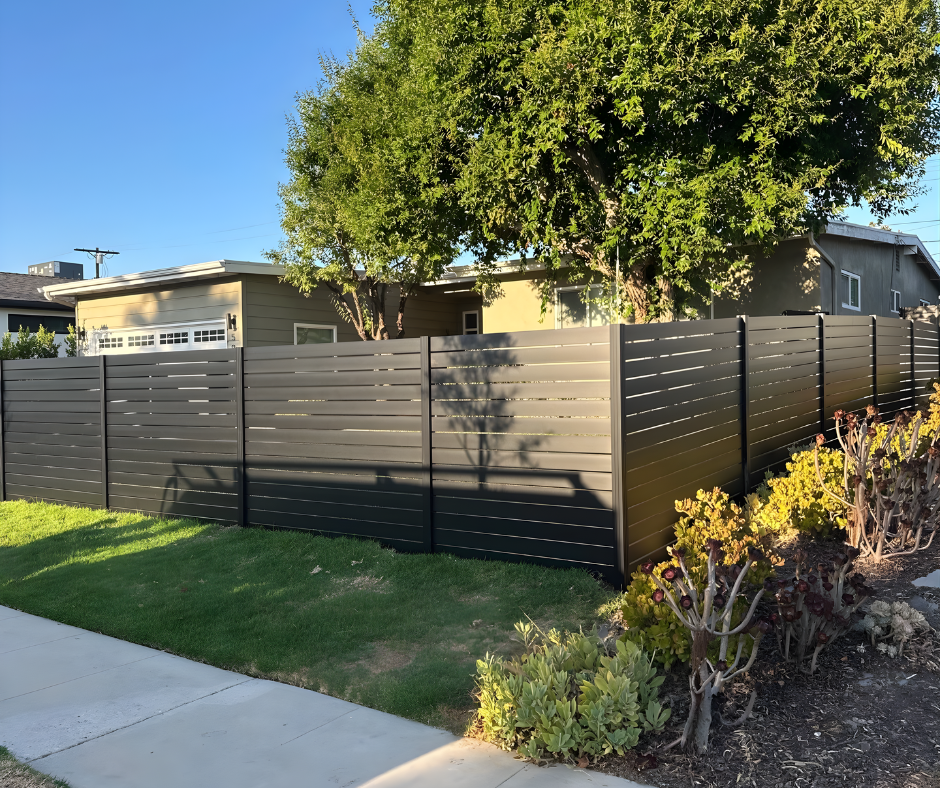
ALU40 Wide-Slat Fence Cost Factors
ALU40-style systems use a wider architectural face. The larger profile creates a bolder privacy panel with fewer courses than a narrow slat fence.
Material Efficiency
A wider profile can reduce the number of individual slats required per panel, but each extrusion is larger and more substantial.
Privacy
With a small clear gap, ALU40 provides strong screening while preserving some airflow. It is a common balance between open fencing and full T&G privacy.
Bay Width
Longer unsupported spans can increase deflection. Post spacing should come from the actual profile, height, wind exposure and installation method, not from a desire to reduce the post count.
Architectural Value
Wide horizontal lines pair well with modern stucco, large-format pavers, black windows and matching aluminum gates.
Full-Privacy T&G Aluminum Fence Cost
Tongue-and-groove aluminum removes the visible clear gap between profiles. The result is a continuous privacy surface.
More Aluminum per Linear Foot
Unlike an open slat layout, the entire panel height is covered. This increases material quantity and reduces airflow.
Higher Wind Surface
A full panel catches more wind. Posts, footings, wall anchors and bay widths must be selected accordingly.
Gate Integration
Matching full-privacy gates also create high wind surface. The gate frame, hinges and posts should be designed around the final infill rather than the empty frame.
Early Budget
For premium Southern California work, full-privacy architectural aluminum can move into the $120 to $180+ per linear-foot planning range before major masonry, complex demolition or automatic driveway gates.
Woodgrain Aluminum and Custom Color Cost
Wood Look Without a Wood Fence Structure
Woodgrain aluminum uses a decorative finish over the aluminum profile to create the appearance of timber while maintaining an aluminum fence system.
Why It Costs More
Woodgrain requires an additional decorative finishing process, finish coordination and more careful handling. The exact premium depends on the profile, color and quantity.
Black Frame With Woodgrain Infill
Using black posts and channels with wood-look slats can reduce the amount of specialty finish while creating deliberate contrast.
Custom Powder Colors
Custom colors can require minimum powder quantities, setup, samples and additional lead time. Exact RAL or manufacturer powder codes should be approved before production.
Premium finish upgrades should be listed separately in a quote so the homeowner can see how much of the budget comes from the fence system and how much comes from finish selection.
How Fence Height Changes Cost
Four-Foot Fence
Shorter fencing uses less aluminum and creates less wind surface. It is commonly used for pools, landscape boundaries or open front-yard conditions where local rules allow it.
Five-Foot Fence
Five feet can provide more screening without the full material quantity of a six-foot privacy fence.
Six-Foot Fence
Six feet is a common residential privacy target. Most premium horizontal cost comparisons should be normalized to this height before comparing price per linear foot.
Seven- and Eight-Foot Fence
Tall panels require more slats and may require stronger posts, deeper foundations, engineering or zoning relief depending on the property.
Wall Plus Fence
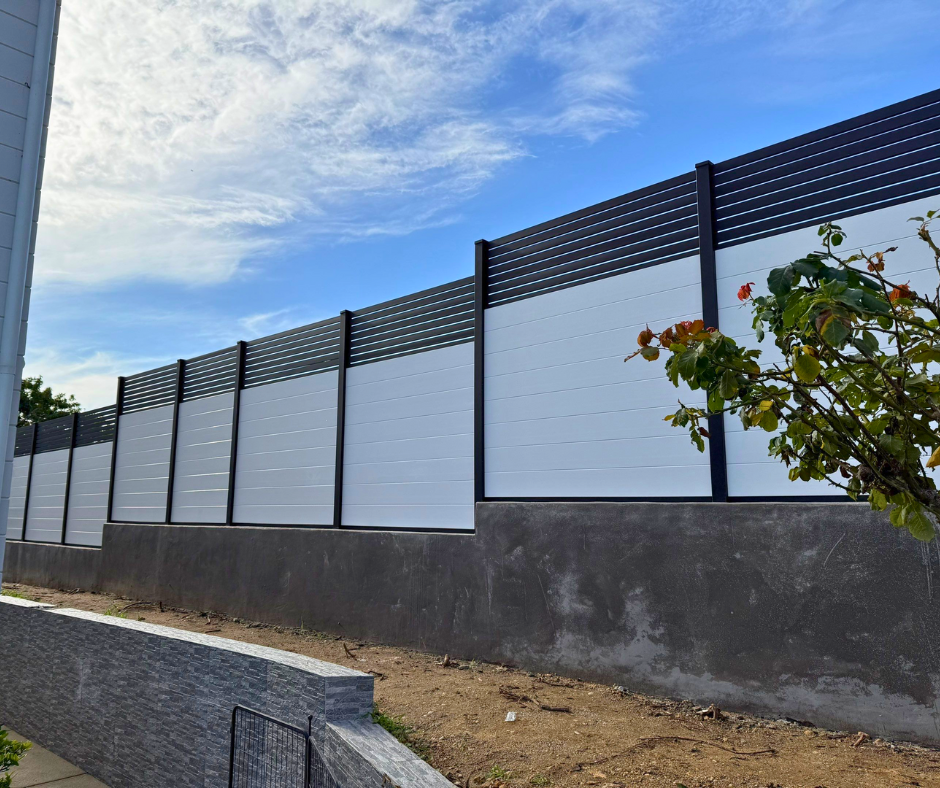
A short masonry wall with an aluminum topper can reach the desired visual height using less aluminum than a full-height freestanding panel, but the wall must be suitable for the post and anchor loads.
Posts, Post Spacing and Structural Cost
Posts are one of the biggest reasons two fences with identical slats can have different prices.
Closer Post Spacing
More posts increase aluminum, concrete, anchors and labor. They can also reduce individual panel span and deflection.
Wider Bays
Wider bays can reduce post count but may require stiffer slats, deeper channels or larger posts.
Embedded Posts
Embedded posts require excavation and concrete footings. Soil, depth, access and underground utilities affect labor.
Surface-Mounted Posts
Base-plated posts require adequate concrete or reinforced masonry beneath the plate. Thin pavers and unknown wall caps are not automatically suitable.
Corner and End Posts
Corners, terminations, gates and changes in elevation create different load conditions from a straight-run intermediate post.
Do not value-engineer a privacy fence by removing posts without checking the structure. The post count should follow the selected system, wind surface and site conditions.
Aluminum Wall Topper Cost in Los Angeles
Wall toppers can be an efficient way to add privacy above an existing masonry boundary without replacing the wall.
Why Wall Toppers Are Not Simply Cheaper Fence Panels
The aluminum area may be smaller, but installation can require layout on uneven masonry, drilling, structural anchors, base plates, waterproofing and repair of stucco or caps.
Existing Wall Condition
A cracked, hollow, unreinforced or narrow wall can require reinforcement before the topper is installed.
Horizontal Versus Vertical Toppers
Horizontal slats create privacy and continuity. Vertical battens can create a more open pattern and may be useful when climbability or front-yard visibility is a concern.
Quote Wall Toppers Separately
Do not apply a ground-mounted per-foot fence range to a wall-topper project without reviewing the masonry.
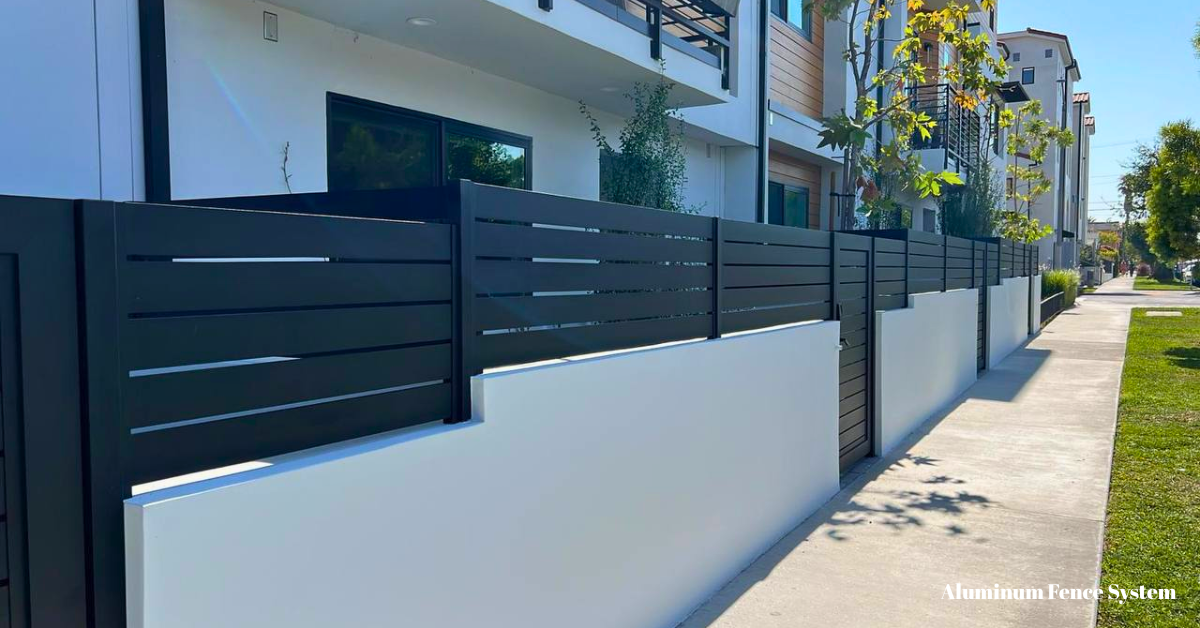
How Pedestrian and Driveway Gates Change the Fence Budget
Pedestrian Gates
A pedestrian gate replaces a simple fence bay with a moving framed assembly. The project now needs a gate frame, hinge side, receiver side, hinges, lock or latch, stops and alignment.
Self-closing or pool-barrier gates add hardware and adjustment requirements. Taller privacy gates also catch more wind than open decorative gates.
Double-Swing Driveway Gates
A driveway gate can represent a large share of the project cost because it uses two structural leaves, heavy-duty posts, hinges, center stops and optional automation.
The fence slats may visually match the driveway gate, but the gate frame should be priced as a moving structural system rather than as fence material by the linear foot.
Sliding Gates
Sliding gates add a long framed leaf, wheels or cantilever hardware, guide rollers, track or carriage foundations, receiving hardware and clear back-run space.
Automation
Automatic gates add the operator, electrical power, access control, safety devices, loops or photo eyes, commissioning and maintenance.
For a realistic fence budget, list every gate separately from the fence footage. A quote that hides gates inside one blended per-foot number is harder to compare.
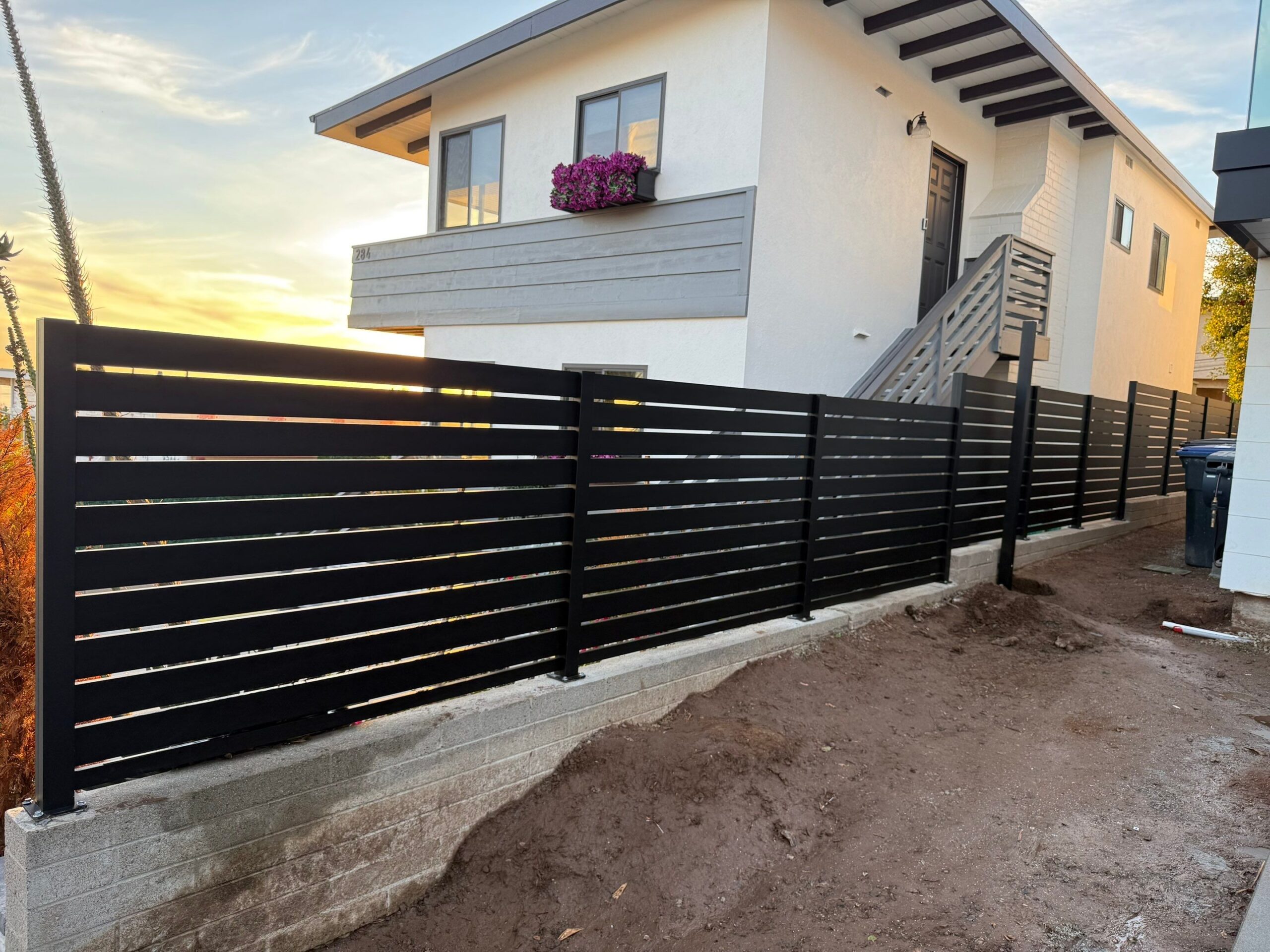
Sloped Properties, Stepped Panels and Retaining Walls
Stepped Horizontal Fence
Horizontal privacy fences commonly remain level from post to post and step as the grade changes. Steeper terrain can require shorter bays to control the gaps beneath each panel.
Variable Post Heights
Every elevation change creates a different post cut, footing elevation and panel measurement. This increases layout and field labor compared with a flat straight run.
Retaining Walls
When a fence sits on a retaining wall, the wall condition, reinforcement and top width must be reviewed before posts are anchored.
Rock and Difficult Excavation
Rocky soil, existing footings, tree roots and buried concrete can slow post excavation and increase equipment or labor costs.
Drainage
Fence construction should not trap hillside runoff behind a wall or redirect water toward the house. Drainage conflicts discovered after posts are set are expensive to correct.
Old Fence Removal, Hauling and Site Preparation
Existing Wood or Vinyl Fence
Removal includes labor, hauling and disposal. Concrete from old posts can add substantial weight and excavation time.
Existing Metal Fence
Cutting welded steel or removing embedded iron posts can be more labor intensive than removing lightweight panels.
Vegetation
Hedges, vines, tree roots and irrigation lines can block the new fence line. Clearing should happen before final dimensions are released for fabrication.
Utility Conflicts
Gas, electrical, communication, pool, drainage and irrigation lines can cross the planned post locations. Public utility locating does not identify every private line on the property.
Access
Material carried through a narrow side yard or stairs takes longer than a project where trucks and equipment can reach the fence line directly.
Demolition and site preparation should be identified as separate quote items rather than hidden in the fence material price.
Concrete, Footings, Anchors and Masonry Cost
Ground-Mounted Posts
Post holes need enough depth and width for the fence height, post size, wind surface and soil. Full-privacy panels generally demand more from the footing than open fencing.
Surface-Mounted Posts
A base plate shifts the question from hole depth to the strength and thickness of the existing slab or wall.
Decorative pavers can hide the concrete beneath them, so the finished surface should not be assumed to provide structural capacity.
New Masonry Columns
Columns can add architectural value while increasing concrete, block, rebar, stucco, cap and waterproofing cost.
Core Drilling and Anchors
Wall toppers and post bases may require core drilling, chemical anchors or expansion anchors selected for the actual masonry.
Finish Repair
Stucco, paint, cap stone and pavers disturbed during installation should be identified in the scope so the final project does not look unfinished.
How Installation Labor Affects Aluminum Fence Cost
Labor is not simply the number of hours needed to screw panels between posts. A premium horizontal fence depends on precise line, level, gap and post alignment.
Layout
The crew establishes property line, finished height, bay spacing, gate openings and elevation changes before excavation.
Post Installation
Posts must remain plumb while concrete cures. A small error becomes visible across long horizontal lines.
Panel Assembly
Slats, channels, spacers and caps must be installed consistently. Woodgrain orientation and mixed-profile patterns add another level of detail.
Field Cutting
Corner panels, short bays and slopes create custom cuts. Exposed aluminum should be treated appropriately and cut edges should be concealed or finished as intended by the system.
Gates
Hanging, adjusting and locking gates takes more time than fixed panels. Automatic gates also require specialized electrical and safety work.
Current national cost sources commonly treat labor as a major share of installed aluminum-fence cost. Los Angeles site access and custom privacy work can move labor above basic national assumptions.
7-Stage Powder Coating and Why Finish Quality Affects Price
Globus Gates uses architectural aluminum systems with a multi-stage pretreatment and powder-coating process. Finish quality should be evaluated as part of the material system, not only as a color.
Pretreatment
Cleaning and pretreatment prepare the aluminum surface before powder is applied. Inconsistent preparation can reduce coating performance even when the powder brand is good.
Architectural Powder
AAMA 2604-oriented super-durable powder systems are intended for stronger exterior color and weather performance than basic interior-grade coatings.
Texture and Gloss
Matte, fine-texture and other finishes can change the appearance of fingerprints, scratches and sunlight.
Cutting After Coating
Field cuts should be minimized and planned. Factory fabrication allows more surfaces to receive the intended finish before installation.
Color Matching
New fence, gates, railings and cladding should use documented powder codes when exact coordination matters.
Fire-Prone and Coastal Los Angeles Properties
Noncombustible Base Material
Aluminum is noncombustible as a base material, making it useful for projects where owners are reducing combustible exterior materials near structures.
The complete property still includes plants, mulch, furniture, gates, coatings, walls and neighboring materials. Aluminum alone does not make a property fire safe or code compliant.
Zone Zero Planning
In fire-conscious California design, noncombustible aluminum can support a Zone Zero material strategy near the building when the project is reviewed against current requirements.
Coastal Exposure
Aluminum does not develop red rust like carbon steel, but salt, pollution, hardware and dissimilar metals still require appropriate material selection and maintenance.
Globus Gates has published coastal aluminum-fence planning around approximately $70 to $110 per linear foot in Manhattan Beach, illustrating how location and finish expectations can move pricing above commodity fence averages.
Los Angeles Fence Permits, Height and Zoning Cost
Los Angeles fence rules are property-specific. The City currently has properties governed by different zoning frameworks, including Chapter 1 and Chapter 1A of the Los Angeles Municipal Code.
Frontage Yard Rules
Under Chapter 1A, frontage-yard fence and wall heights depend on the applied Frontage District. The property zoning should be checked in ZIMAS rather than relying on a universal front-yard number.
Side and Rear Yards
Chapter 1A separately regulates side and rear yard fences and walls. Certain fences over eight feet can require additional discretionary approval depending on the applicable zoning and neighboring use.
Building Permit Versus Zoning Compliance
A fence can be subject to zoning rules even when a particular scope does not require full building plan review. LADBS and City Planning should be checked for the actual property.
Pool Barriers
Pool fencing has separate safety requirements for height, openings, gates and self-closing or self-latching hardware.
Corner Lots and Visibility
Driveway visibility, street corners and frontage conditions can limit where a solid privacy fence is appropriate.
Budget Effect
Permit drawings, zoning research, plan review, survey work and changes requested by the authority having jurisdiction can add cost and time. These items should be identified before custom fabrication begins.
Use the property address to confirm the applicable zoning before selecting final fence height. A rule quoted for one Los Angeles property may not apply to another property under a different zoning framework or overlay.
Sample 50-, 100- and 150-Foot Aluminum Fence Budgets
The table below converts the early planning ranges into project totals. It assumes a straightforward fence run before major gates, demolition, masonry reconstruction or unusual permitting.
| Fence Length | Open / Semi-Private $65–$110 | High-Coverage $85–$140 | Full Privacy $120–$180 | Major Items Not Included |
|---|---|---|---|---|
| 50 linear ft. | $3,250–$5,500+ | $4,250–$7,000+ | $6,000–$9,000+ | Major gates, demolition, wall reconstruction, complex access |
| 100 linear ft. | $6,500–$11,000+ | $8,500–$14,000+ | $12,000–$18,000+ | Automatic driveway gates, electrical, extensive masonry |
| 150 linear ft. | $9,750–$16,500+ | $12,750–$21,000+ | $18,000–$27,000+ | Hillside work, large demolition, custom engineering |
These examples are arithmetic planning scenarios, not estimates or offers. A measured site plan and selected system are required for actual pricing.
Why Larger Projects Are Not Always Cheaper per Foot
Long straight runs can create fabrication and labor efficiency, but longer projects may include more corners, elevation changes, gates and access constraints.
Why Small Projects Can Cost More per Foot
Mobilization, design, freight, gates and custom fabrication are spread across fewer linear feet on a small project.
Five Globus Gates Aluminum Fence System Examples
ALU20-Style Slat Fence
A slim horizontal profile creates a refined modern pattern. Gap selection controls privacy, airflow and material quantity.
Explore aluminum fence systemsALU40 Black Slat Fence
Wider slats create stronger visual weight and high privacy with fewer horizontal courses than a narrow profile.
Explore ALU40 systemsALU60 T&G No-Gap Fence
Interlocking tongue-and-groove profiles create full privacy and a continuous aluminum face.
Explore T&G systemALU40 Woodgrain Slat Fence
Woodgrain finish adds warmth while keeping the primary slat system aluminum.
Explore woodgrain systemMixed Profiles, Wall Toppers and Integrated Gates
Custom systems can combine slat widths, privacy levels, masonry, wall toppers, gates and matching finishes around the property architecture.
Explore custom aluminum fences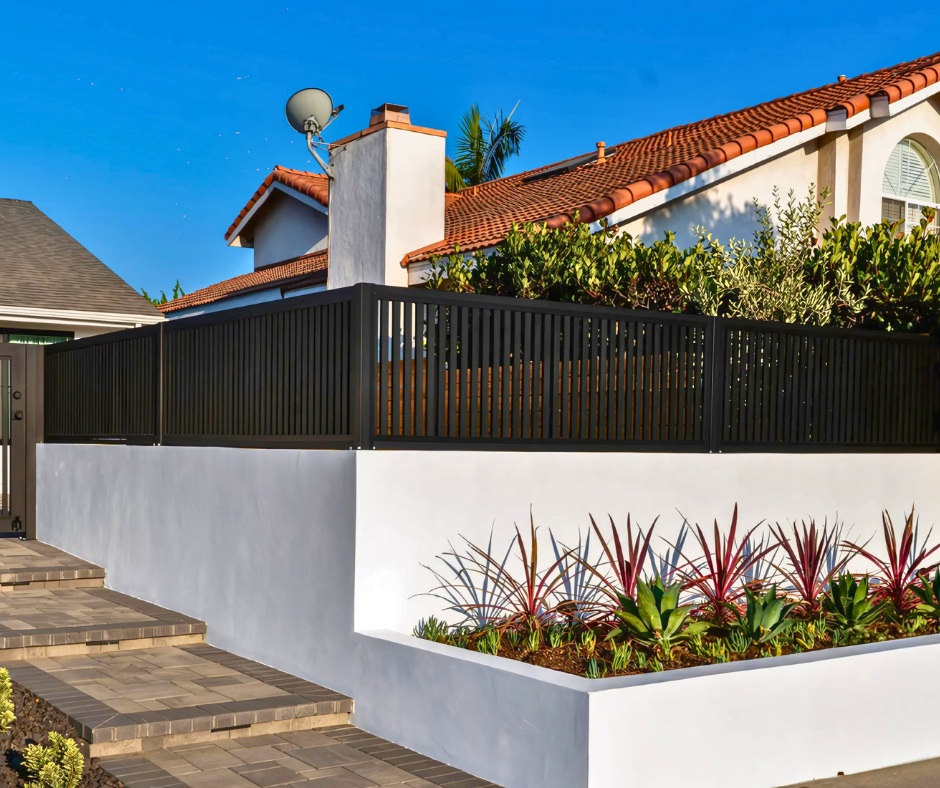
Horizontal Aluminum Fence Cost in Los Angeles: What Changes the Price?
A horizontal aluminum fence is one of the most searched modern fence styles in Southern California, but “horizontal fence cost” is still too broad unless the profile, gap, height and support system are defined.
Horizontal Aluminum Fence Price Per Linear Foot
For a six-foot architectural horizontal fence, a practical 2026 Los Angeles planning range is roughly $75 to $140+ per linear foot for semi-private through high-coverage slat designs. That range can move lower for shorter, more open fencing and higher for premium woodgrain, T&G, custom posts, masonry conditions or difficult hillside installation.
The main cost driver is how much aluminum is required to fill six feet of height. A fence with a large open gap uses fewer slats. A high-privacy fence with a one-half-inch or three-eighths-inch gap uses more slats. A no-gap horizontal T&G fence uses the most continuous material and creates the greatest wind surface.
Horizontal Aluminum Fence Material Cost Versus Installed Cost
Material pricing normally includes profiles, posts, channels, caps and hardware. Installed cost adds layout, post holes or anchors, concrete, field cuts, handling, alignment, gates, cleanup and project management. A material-only online price should never be compared directly with a turnkey Los Angeles fence installation quote.
Why Long Horizontal Lines Require More Installation Precision
Horizontal slats amplify small errors. A post that is slightly high or low can make every course appear to rise or fall. A gate that is out of level can break the visual line across the entire front elevation. This is one reason premium horizontal aluminum fence installation carries more labor than a basic prefabricated picket panel.
Horizontal Fence on Concrete Versus Soil
Ground installation usually requires excavated concrete footings. Surface-mount installation can be faster when there is verified reinforced concrete, but decorative pavers or thin slabs may not be sufficient. A wall-topper condition adds masonry anchors and waterproofing concerns. The support method should be confirmed before the final fence price is compared.
Horizontal Fence Cost for Front Yard Versus Backyard
Backyard fencing commonly targets six-foot privacy and therefore uses more aluminum. Front-yard fencing may be shorter or more open depending on zoning and sightline rules. The same ALU40 profile can therefore produce very different price-per-linear-foot totals depending on the required finished height.
Aluminum Louver Fence Cost in Los Angeles: Privacy With Airflow
Louvered aluminum fencing is a specialty privacy system designed to block direct sightlines while preserving controlled airflow. It often costs more than flat slats because the blades are deeper, angled and supported by a more specific frame or channel system.
2026 Louver Fence Price Range
Globus Gates currently publishes a Los Angeles louvered aluminum fence reference of approximately $85 to $150 per linear foot installed, depending on horizontal or vertical louver orientation, height, layout and site conditions. That range is useful for early planning, not as a fixed quotation.
Why Louver Fence Pricing Is Different From ALU40 Slats
A flat horizontal slat is primarily a linear extrusion with a controlled gap. A louver blade creates depth and angle, so the installer must keep every blade aligned. The framing must hold that geometry through wind and thermal movement. Corners, gates and changes in height can require more custom fabrication.
Louver Fence Versus Full-Privacy T&G Cost
T&G is a fully closed surface and is often selected when direct visual privacy is the priority. Louver fencing can provide strong privacy while allowing more air through the boundary, which can be useful around pool equipment, air-conditioning equipment, outdoor kitchens and courtyards.
Horizontal Louver Versus Vertical Louver
Orientation changes sightlines and frame design. Horizontal louvers emphasize width and coordinate with modern slat gates. Vertical louvers emphasize height and can work well with narrow property lines or contemporary vertical architecture. Neither direction is universally cheaper because the final support and panel dimensions control fabrication.
Where Louvered Aluminum Fencing Makes Sense
Los Angeles homeowners often consider louvers for mechanical screening, side yards, pool areas, outdoor shower zones, multifamily service areas and premium street-facing privacy where a completely solid wall would feel too heavy.
Aluminum Fence Cost Per Square Foot vs Per Linear Foot
Fence contractors normally price by linear foot because the property line is measured horizontally. For comparing different heights, however, square-foot math can reveal whether two quotes are actually similar.
Why Linear Foot Pricing Can Hide Height
A four-foot fence and an eight-foot fence each occupy one linear foot of property line, but the eight-foot fence contains twice the visible area. If both are quoted only by the linear foot, the taller fence can look disproportionately expensive even when the price per square foot is comparable.
Simple Conversion Formula
Divide the installed price per linear foot by the finished fence height in feet. A six-foot privacy fence at $90 per linear foot is approximately $15 per square foot of visible fence. The same six-foot fence at $120 per linear foot is about $20 per square foot. An eight-foot fence at $140 per linear foot is about $17.50 per square foot.
| Installed Price / LF | 4 ft. Fence | 5 ft. Fence | 6 ft. Fence | 8 ft. Fence |
|---|---|---|---|---|
| $75 / LF | $18.75 / sq. ft. | $15.00 / sq. ft. | $12.50 / sq. ft. | $9.38 / sq. ft. |
| $100 / LF | $25.00 / sq. ft. | $20.00 / sq. ft. | $16.67 / sq. ft. | $12.50 / sq. ft. |
| $140 / LF | $35.00 / sq. ft. | $28.00 / sq. ft. | $23.33 / sq. ft. | $17.50 / sq. ft. |
| $180 / LF | $45.00 / sq. ft. | $36.00 / sq. ft. | $30.00 / sq. ft. | $22.50 / sq. ft. |
Why Square-Foot Pricing Still Does Not Tell the Whole Story
Posts, gates, mobilization and corners are not proportional to visible square footage. A 30-foot fence with two gates can cost more per square foot than a 200-foot straight run because the gate frames and setup cost are spread across fewer feet.
Best Use of the Square-Foot Calculation
Use it to normalize height when comparing quotes. Then return to the itemized linear-foot bid to compare posts, gates, footings and site work.
Aluminum Pool Fence Cost in Los Angeles: Privacy, Climbability and Gate Hardware
Pool fencing is a separate cost category because the fence may need to satisfy safety requirements in addition to privacy and architecture.
Open Aluminum Pool Fence
Traditional vertical aluminum pool fencing can be less expensive than full privacy because it uses less material and creates less wind surface. The opening dimensions and height still need to comply with applicable pool-barrier rules.
Privacy Fence Around a Pool
Horizontal aluminum slats are popular around modern pools because they screen neighboring properties and create a clean backdrop. The designer must consider climbability, slat spacing, nearby walls and gate configuration. A horizontal privacy fence that looks appropriate elsewhere on the property may require modification if it is part of the required pool barrier.
Self-Closing and Self-Latching Gate Cost
Pool gates require reliable closing and latching behavior where applicable. Adjustable hinges, hydraulic closers or purpose-built self-closing hinges add hardware and installation time. The latch position and opening direction should be planned before the gate frame is fabricated.
Pool Deck Mounting
Surface-mounted posts may be possible on reinforced concrete decks, but pool plumbing, electrical conduits, drainage and waterproofing make drilling more sensitive. Thin pavers or coping should not be treated as structural concrete without verification.
Glass, Aluminum and Mixed Pool Fences
Some Los Angeles properties combine glass near the pool view with aluminum privacy fencing at side or rear boundaries. That can optimize privacy and view rather than using one material around the entire pool.
When searching aluminum pool fence cost Los Angeles, compare the complete safety barrier, including gates and mounting, not only the panel price.
Commercial Aluminum Privacy Fence Cost in Los Angeles
Commercial aluminum fencing can use the same architectural profiles as residential work but often has different height, access-control, engineering and durability requirements.
Multifamily and Apartment Privacy Fencing
Apartment projects may need screening around parking, trash areas, mechanical equipment, courtyards and pool decks. Repeated fence bays can improve fabrication efficiency, while commercial gate hardware and code requirements can increase cost.
Restaurant and Hospitality Screening
Outdoor dining areas often use aluminum privacy screens or louvers because the finish coordinates with patio covers and is easier to maintain than stained wood. Wind, egress and fire access should be reviewed before closing a patio perimeter.
Commercial Driveway Gates
High-cycle access changes the gate budget. Operators, loops, access controls, safety devices, posts and gate frames are selected around duty cycle and vehicle use rather than residential convenience.
Dumpster and Equipment Enclosures
Full-privacy T&G or louver panels can conceal equipment, but gate width and service access are important. Large enclosure gates should be framed for repeated use and wind.
Engineering and Submittals
Commercial projects can require shop drawings, structural calculations, color samples, product data and coordination with architects or general contractors. These services add value and cost beyond the installed linear-foot fence.
Prevailing Wage and Restricted Work Hours
Some public or institutional projects have labor requirements, restricted installation hours or site-safety procedures that can materially affect cost. Commercial bids should state the assumed work conditions.
Why Aluminum Fence Cost Changes Across Los Angeles Neighborhoods
Aluminum does not become more expensive because a house is in one neighborhood instead of another, but the site conditions common to different parts of Los Angeles can change installation cost significantly.
Estate properties often use tall privacy runs, masonry pilasters, custom woodgrain, multiple pedestrian gates and automated driveway gates. Architectural coordination can be a larger cost driver than raw footage.
Steep grades, retaining walls, limited staging and hand-carried materials increase labor. Footings and wall connections should be evaluated before pricing a standard panel system.
Larger Valley properties can have long straight runs that improve production efficiency, but pools, gates, mature landscaping and large side yards add detail.
Coastal exposure increases attention to powder coating, stainless hardware and cleaning. Tight lot access and salt exposure can move projects above inland commodity pricing.
Coastal wind, hillside conditions, fire-conscious material selection and local planning overlays can all affect the final fence and gate scope.
Older masonry, mature landscaping and architectural context often favor custom wall toppers, gates and finish coordination rather than simple freestanding panels.
Short runs can still be expensive per foot because access is tight, staging is limited and privacy expectations are high. Mobilization is spread over less footage.
Premium architectural fencing is often selected for corrosion resistance and low maintenance. Local Globus Gates content already places Manhattan Beach aluminum around $70 to $110 per linear foot.
This is why searches like aluminum fence contractor near me Los Angeles, privacy fence Beverly Hills or horizontal aluminum fence Malibu should lead to a measured site review instead of a universal ZIP-code price list.
How to Lower Aluminum Privacy Fence Cost Without Weakening the Fence
There are legitimate ways to reduce a modern aluminum fence budget. The best savings come from simplifying design and logistics, not from removing the structure that keeps the fence straight.
Use the Widest Gap That Still Meets the Privacy Goal
A homeowner who does not need full visual closure may be satisfied with a one-half-inch or larger gap rather than three-eighths-inch spacing or T&G. Fewer slats reduce material and wind surface.
Use Standard Black Instead of Woodgrain or Custom RAL
Standard architectural black usually avoids specialty finishing setup. On a long fence run, the finish choice can create meaningful savings without changing the structural system.
Preserve Good Masonry
If an existing reinforced wall is suitable, a wall topper can add privacy without rebuilding the entire boundary. The wall must be verified before assuming this is the economical option.
Simplify Corners and Elevation Changes
Every short bay, diagonal transition and special post requires more fabrication. A clean layout can reduce field cuts and improve appearance at the same time.
Coordinate Gates Early
Moving a gate opening after posts or panels are fabricated creates expensive rework. Confirm walkway, trash-bin and driveway access before final production drawings.
Remove the Old Fence Before Installation When Appropriate
Owner-performed demolition can reduce labor on simple wood fences, provided property lines, utilities and site safety are understood. Demolition should not damage walls or concrete needed for the new system.
Do Not Save Money by Stretching Post Spacing
Reducing the number of posts without verifying span capacity can create deflection, movement and warranty disputes. Structural post spacing is not an aesthetic option.
Do Not Use a Light Pedestrian Frame for a Motorized Driveway Gate
Gate-frame savings can become operator and service costs later. The moving gate should be designed around its opening, infill and automation.
20-Year Aluminum Fence Cost of Ownership: Upfront Price vs Maintenance
The most important financial argument for aluminum is not that it is the cheapest fence on installation day. It is that the material can reduce recurring maintenance compared with wood and corrosion-prone steel.
Wood Fence Ownership Costs
Wood privacy fences can require staining, painting, board replacement, termite treatment and post repair. Southern California sun dries exposed boards, irrigation can keep posts wet, and vegetation can trap moisture against the fence.
Steel and Iron Ownership Costs
Steel can be extremely strong but scratches and coating failures can expose carbon steel to corrosion. Welded repairs and repainting add maintenance over time, particularly near the coast.
Aluminum Ownership Costs
Powder-coated aluminum primarily needs washing and inspection. It does not develop red rust like steel and does not require the recurring stain cycle associated with wood. Gates still require moving-hardware service, and coastal properties need more frequent cleaning.
Replacement After Impact
No fence is immune to vehicle or construction damage. A modular aluminum system can make individual slats, caps or hardware easier to replace than a custom welded monolithic panel, provided the original profile and finish remain available.
Document the System
Keep the profile name, powder code, shop drawings and hardware specifications. This reduces future service time and improves the chance of matching replacement material.
Value Over Time
When comparing aluminum fence vs wood fence cost, include at least one maintenance cycle in the wood budget and expected finish service in the steel budget. A higher initial aluminum privacy fence cost can be reasonable when the owner values long service life, low maintenance and consistent architectural appearance.
What Should Be in the Specification for a Premium Aluminum Privacy Fence?
Aluminum Alloy and Temper
Globus Gates publishes 6063-T6 architectural-grade aluminum across its current fence and gate system pages. Alloy and temper influence extrusion behavior, fabrication and structural properties. Buyers should ask whether the quote identifies the actual aluminum specification.
Extrusion Wall Thickness
Two slats can have the same visible four-inch face and very different wall thickness. The same is true for posts. A quote should distinguish visible dimensions from the actual extrusion construction.
Post Profile and Post Wall Thickness
The post carries panel wind loads into concrete or masonry. An architectural privacy fence should identify post size and spacing, especially on six-foot, eight-foot, louvered or no-gap T&G systems.
Channels, Spacers and Fasteners
The system is more than slats. Side channels, reducers, spacers, brackets, covers, post caps and corrosion-resistant fasteners affect installation quality and future serviceability.
Powder-Coat Performance
Globus Gates publishes AAMA 2604 super-durable powder-coat positioning. The written quote should identify whether standard black, woodgrain or a custom RAL finish is included and whether the finish is applied before or after fabrication steps.
Gate Frame Specification
Matching gate infill does not describe the gate frame. A motor-ready driveway gate needs frame members, hinge or roller support and operator attachment that are appropriate for the moving leaf.
Why Specification Detail Protects the Budget
When every bidder describes the same material, post, gap and finish, the homeowner can compare price fairly. When one contractor quotes “aluminum privacy fence” and another lists the complete extrusion system, the totals may not represent the same product at all.
DIY Aluminum Fence Cost vs Professional Installation in Los Angeles
Homeowners researching DIY aluminum fence cost can save labor when the project is simple, but a Los Angeles privacy fence is not always a good first-time fence project. Height, masonry, slopes and gates can quickly remove the apparent savings.
Where DIY Can Make Sense
A short straight run on flat ground, a wall-to-wall panel, a simple wall topper on verified concrete or a modular fence kit with clear drawings can be realistic for an experienced homeowner or contractor.
Where Professional Installation Adds Value
Long horizontal lines, hillside steps, masonry anchors, eight-foot panels, pool barriers and motorized gates require precise layout and often specialized tools. The installer also coordinates concrete cure time, panel alignment and finish protection.
DIY Material Cost Is Not the Whole DIY Budget
Add auger rental, concrete, anchors, saw blades, drill bits, temporary bracing, hauling, delivery, extra material for mistakes and disposal. If a post is set out of position, the cost of correcting the concrete can exceed the labor saved.
DIY Gates Are a Different Risk Category
Pedestrian and driveway gates need squareness, hinge geometry and lock alignment. Automatic vehicular gates add safety standards, electrical work and operator commissioning. A DIY fence does not imply that DIY automation is appropriate.
Contractor-Supplied Material With Local Installation
Some buyers purchase a factory-direct aluminum system and use a licensed local contractor for installation. This can separate material sourcing from field labor while preserving a defined profile system.
How to Compare DIY and Installed Pricing
Compare the completed scope, not the kit price. A professional quote may include posts, concrete, site layout, gates, hauling and warranty that are absent from an online material cart.
Fence + Gate + Wall Topper Packages: How to Budget the Entire Property
Many Globus Gates projects are not one straight fence. The property can combine a front wall topper, side-yard privacy fence, pedestrian entrance, driveway gate and rear pool boundary. The most accurate budget separates each condition.
Front Elevation
The front may contain masonry columns, a driveway opening, a pedestrian gate and shorter fence panels. Even with fewer linear feet, this area can contain the highest-cost assemblies.
Side Yard
A side yard often uses full-height privacy slats and one utility gate. Narrow access can add labor, but the straight run is usually simpler than the front entry.
Rear Property Line
Long rear runs can benefit from repetitive fabrication. Tree roots, existing retaining walls and neighbor access can still affect installation.
Pool Area
Pool-barrier sections require separate review for height, openings and gates. A glass section may be combined with aluminum privacy fencing depending on view priorities.
Driveway Gate
Manual or automated driveway gates should be budgeted as their own system. Include gate frames, posts, hinges or rollers, stops, operator, safety devices, electrical power and access control.
Why a Blended Per-Foot Number Can Hide the Real Cost
A 140-foot property with a $25,000 total budget averages about $179 per linear foot if the total is divided by footage. That number can look extremely high until the homeowner sees that the project includes an automated driveway gate, pedestrian gate, masonry and privacy fence. Itemization gives a much clearer picture.
Price by profile, height, gap, posts and installation.
Price by aluminum area plus wall anchoring and repair.
Price as framed moving assemblies with lock hardware.
Price frame, support, movement and automation separately.
How to Compare Aluminum Fence Quotes in Los Angeles
Compare the Same Fence Height
A four-foot fence and a six-foot fence should never be compared only by linear-foot price. Confirm finished height above grade and whether wall height is included.
Compare the Same Profile
List the slat width, depth, wall thickness, alloy, temper, gap and orientation. A wide ALU40-style slat is not the same material quantity as a narrow ornamental picket.
Compare the Same Privacy Level
Open, semi-private, high-coverage and no-gap T&G systems use different amounts of material and create different wind loads.
Compare Posts and Foundations
Confirm post size, post spacing, embedded versus surface-mounted construction, footing dimensions, base plates and anchors.
Compare Powder Coating
Ask about pretreatment, powder specification, color, texture, woodgrain process and finish warranty.
Compare Gates Separately
List every pedestrian, double-swing and sliding gate with its frame, hinges, lock, posts and automation scope.
Compare Site Work
Identify demolition, hauling, vegetation removal, grading, masonry repair, drilling, paver work and access constraints.
Compare Permit and Design Scope
Clarify who verifies zoning, creates drawings, handles permits and responds to plan-check comments when those services are required.
Compare the Warranty
Separate material, finish, hardware and installation coverage. A long material warranty does not automatically cover concrete, gates or field labor.
Match height, slat, gap and finish.
Match posts, footings, walls and anchors.
Match gates, demolition and permits.
Review complete installed value, not one line item.
How Long Does an Aluminum Fence Project Take?
Measurement and Design
A straightforward replacement can move quickly. Custom walls, gates, slopes and matching architectural details require more measurement and layout time.
Fabrication and Powder Coating
Custom dimensions, woodgrain or non-stock colors can extend production compared with standard black material already in inventory.
Permit and HOA Review
Projects requiring zoning review, permits, HOA approval or neighbor coordination should account for that time before fabrication is locked.
Site Preparation
Old fence removal, wall construction, concrete work and utility conflicts can be completed before the aluminum panels arrive when the sequence is coordinated correctly.
Installation
Simple straight runs may install rapidly once posts are ready. Large custom projects with multiple gates, slopes and masonry can require several mobilizations.
Lead time should be discussed as separate stages rather than one promised installation date. Design, fabrication, permit review and field work are controlled by different dependencies.
Maintenance and Long-Term Cost of Aluminum Privacy Fencing
Routine Cleaning
Wash powder-coated aluminum with water, mild soap and non-abrasive tools. Salt, sprinkler minerals and pollution should not remain on the finish indefinitely.
Post and Anchor Inspection
Check for movement at base plates, anchors, wall caps and concrete. Fence panels often reveal a support problem through changing gaps or alignment.
Gate Hardware
Hinges, locks, closers, rollers and operators need more maintenance than fixed fence panels because they move.
Finish Repair
Impact damage and deep scratches should be addressed before the exposed area collects contamination. Touch-up appearance may differ from factory-cured powder.
Wood Versus Aluminum Ownership
Wood can have a lower entry price in some markets but requires periodic staining, sealing, painting or board replacement. Aluminum shifts more of the cost to the initial installation and less to recurring finish maintenance.
Replacement Planning
Document the powder code, profile name and project drawings. Future panel or gate repairs are easier when the original system can be identified.
Los Angeles Aluminum Fence Cost Planning Checklist
- Measure the total fence length in linear feet
- Confirm the desired finished height at each property section
- Identify front, side, rear, pool and wall-topper locations
- Select open, semi-private, high-coverage or full privacy
- Choose ALU20-style, ALU40-style, T&G or a custom profile layout
- Select black, woodgrain or custom powder color
- Record every corner, elevation change and end condition
- Identify all pedestrian and driveway gate openings
- Decide whether driveway gates will be manual or automated
- Review post spacing and foundation conditions
- Inspect existing masonry before planning wall toppers
- Check slope through the full fence line
- Identify demolition, hauling and vegetation removal
- Locate public and private utility conflicts
- Verify zoning, height, pool and HOA requirements
- Separate fence, gates, masonry and site work in the quote
- Compare coating specification and finish warranty
- Keep a contingency for hidden concrete and wall conditions
Cost Sources and Related Globus Gates Guides
Frequently Asked Questions About Aluminum Privacy Fence Cost in Los Angeles
These questions target the specific pricing searches homeowners use when comparing horizontal aluminum fence, T&G privacy panels, wall toppers, gates and installation in Southern California.
How much does an aluminum privacy fence cost in Los Angeles in 2026?
For 2026 early planning, professionally installed modern architectural aluminum in Los Angeles can range from about $65 to $110 or more per linear foot for open or semi-private systems, about $85 to $140 or more for high-coverage horizontal slats, and about $120 to $180 or more for full-privacy T&G or heavily customized systems. Specialty louvered systems can be around $85 to $150 or more. Gates, demolition, masonry, slopes, finish, engineering and permit requirements can add to the total.
How much does a 100-foot aluminum privacy fence cost in Los Angeles?
Using broad planning allowances, 100 feet can be roughly $6,500 to $11,000 or more for open or semi-private architectural aluminum, $8,500 to $14,000 or more for high-coverage horizontal slats, and $12,000 to $18,000 or more for full privacy. Pedestrian gates, driveway gates, demolition, masonry and difficult terrain should be added separately.
How much does a 6-foot aluminum privacy fence cost per linear foot?
A six-foot modern aluminum privacy fence in Los Angeles often falls around $75 to $140 or more per linear foot for horizontal slat systems, depending on slat width, gap, post spacing, finish and site conditions. No-gap T&G systems can move into roughly the $120 to $180 or more range because they use more aluminum and create greater wind surface.
How much does an 8-foot aluminum privacy fence cost?
Eight-foot aluminum fencing is normally project-specific because it uses about one-third more visible panel area than a six-foot fence and can require stronger posts, larger foundations, engineering or zoning review. It should not be estimated by simply adding a fixed percentage to a six-foot price.
Is ALU40 aluminum fencing more expensive than ALU20?
Not automatically. ALU40 uses a wider profile that costs more per piece but covers more height with fewer slats. ALU20 uses narrower profiles and requires more individual courses in a six-foot panel. Gap size, wall thickness, posts, finish and labor determine which completed system costs more.
Does a smaller gap between horizontal aluminum fence slats increase cost?
Usually yes. Reducing the clear gap means more aluminum is needed to cover the same fence height. It also increases privacy and the percentage of solid wind surface. A three-eighths-inch gap therefore generally uses more material than a one-half-inch gap with the same slat profile.
Why does T&G aluminum privacy fencing cost more?
Tongue-and-groove aluminum creates a continuous no-gap face. It uses more aluminum per linear foot than an open slat system and catches more wind, which can require stronger posts, footings and connections. Matching T&G gates also need structural frames designed around the full-privacy infill.
How much does a louvered aluminum fence cost in Los Angeles?
Globus Gates currently publishes a louvered aluminum fence planning range of about $85 to $150 per linear foot installed in Los Angeles, depending on horizontal or vertical design and project conditions. Louvers use deeper angled profiles and more specialized support than simple flat slats.
How much does an aluminum wall topper cost in Los Angeles?
Wall-topper pricing is project specific because the visible aluminum may be smaller while the mounting work can be more complex. Existing masonry condition, wall reinforcement, cap width, post bases, anchors, waterproofing, height and privacy level all affect the final cost.
Is woodgrain aluminum fencing more expensive than black aluminum?
Woodgrain aluminum generally costs more than standard black because the decorative finish requires additional processing, setup, handling and batch coordination. Custom RAL colors can also add cost and lead time. The exact premium depends on profile, quantity and selected finish.
How much does an aluminum pedestrian gate add to a fence project?
Globus Gates has published regional pedestrian-gate planning ranges around $800 to $2,500, but a Los Angeles custom gate can cost more when it is tall, full privacy, woodgrain, self-closing, built into masonry or uses premium hardware. Price the gate separately from fixed fence footage.
How much does an automatic aluminum driveway gate add?
Globus Gates has published regional manual driveway-gate planning ranges around $3,000 to $9,000, with automation potentially adding roughly $2,000 to $6,000 depending on operator, controls and safety equipment. A Los Angeles driveway gate should be priced from its actual width, frame, movement, posts, slope and automation package.
Do I need a permit for an aluminum fence in Los Angeles?
Permit and zoning requirements depend on the property, height, yard location and applicable Los Angeles zoning framework. Properties can be governed by Chapter 1 or Chapter 1A, and Chapter 1A frontage fence and wall limits depend on the applied Frontage District. Pool barriers, corner lots, hillside properties and over-height fences can have additional requirements. Verify zoning before fabrication.
Is aluminum fencing a good choice for Los Angeles fire-prone areas?
Aluminum is noncombustible as a base material and can support a fire-conscious exterior design, including reducing combustible fence material near a structure. That does not make every aluminum fence installation automatically Zone 0 compliant. The complete assembly, placement, adjacent materials and current requirements still need review.
Is aluminum cheaper than wood fencing over 20 years?
Aluminum often costs more upfront than basic wood, but it avoids many recurring wood expenses such as staining, painting, termite repair and replacement of warped or rotted boards. The better long-term value depends on the initial system, maintenance schedule and how long the owner expects to keep the fence.
What is the best way to lower aluminum privacy fence cost without lowering quality?
Reduce cost by optimizing design rather than removing structural support. Use the widest gap that still meets the privacy goal, choose standard black instead of specialty finish, preserve suitable existing masonry, simplify corners, coordinate gates early and separate demolition from installation. Do not increase post spacing or weaken gate frames simply to lower the quote.
Price the Fence You Actually Want, Not the Cheapest Product Called Aluminum
An online aluminum-fence average can be useful, but only after the fence type is identified. A four-foot ornamental picket fence, a six-foot ALU40-style horizontal privacy fence and a full T&G boundary are different products with different material quantities and structural demands.
For Los Angeles homeowners planning modern architectural fencing, the biggest cost drivers are privacy level, height, profile width, posts, foundations, gates, slope, masonry, finish and site access. Full privacy and automated gates move the project into a different budget category from open decorative fencing.
The most useful quote is therefore not the one with the lowest number per linear foot. It is the one that clearly defines the slat system, gap, finish, posts, concrete, gates, demolition, permits and installation so the homeowner can compare the same completed project.
Set the design and privacy target first, verify the property conditions, and then build the budget around the complete system.