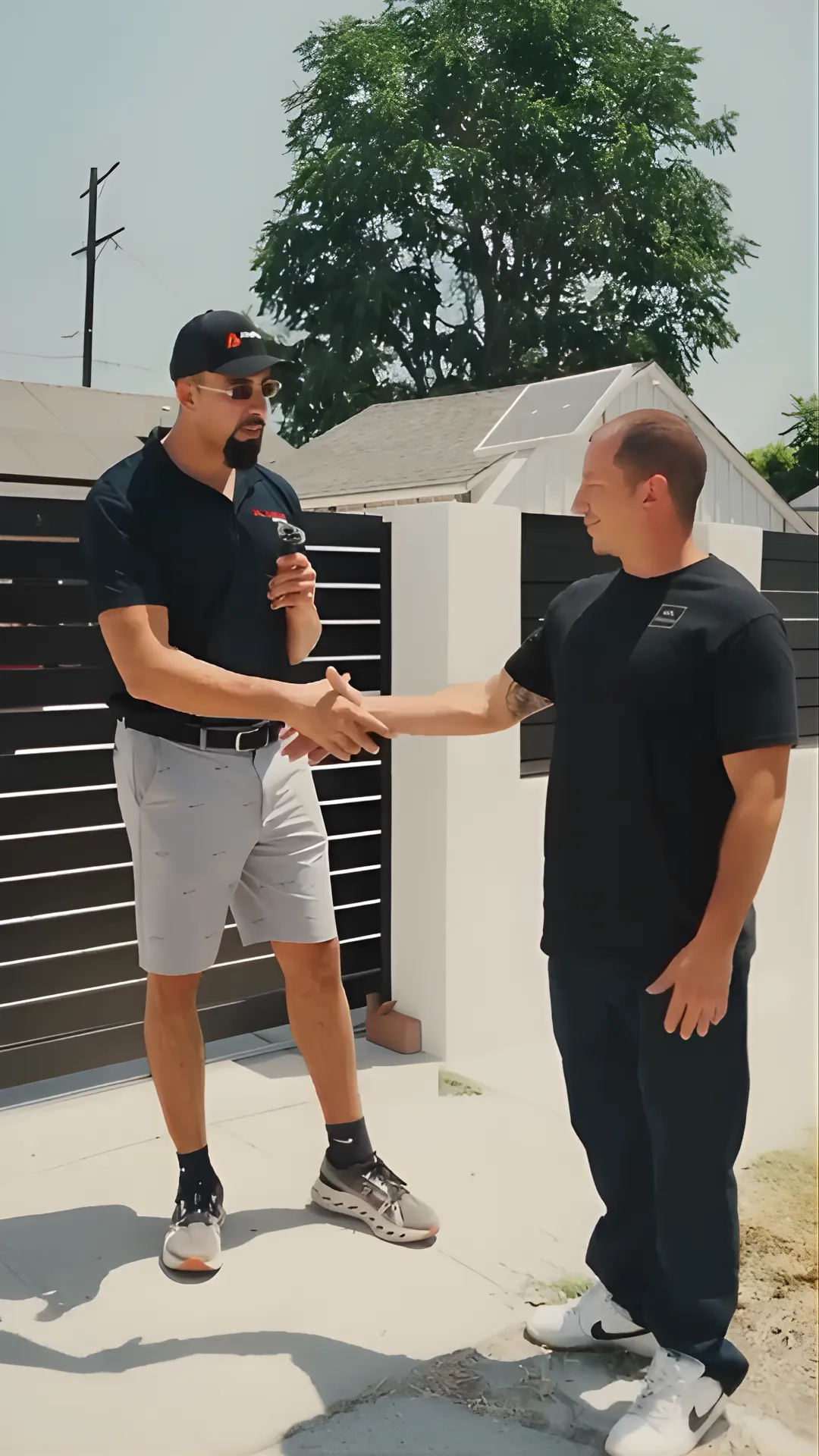


Sliding Gate vs. Swing Gate: Which Driveway Gate Fits Your Home?
A sliding gate rolls sideways along the fence line. A swing gate opens like a door, on one leaf or two. Both can look great and both can be automated, but your driveway usually decides for you. This 2026 guide walks Los Angeles homeowners through space, slope, wind, automation, cost and maintenance so you choose the right gate the first time.
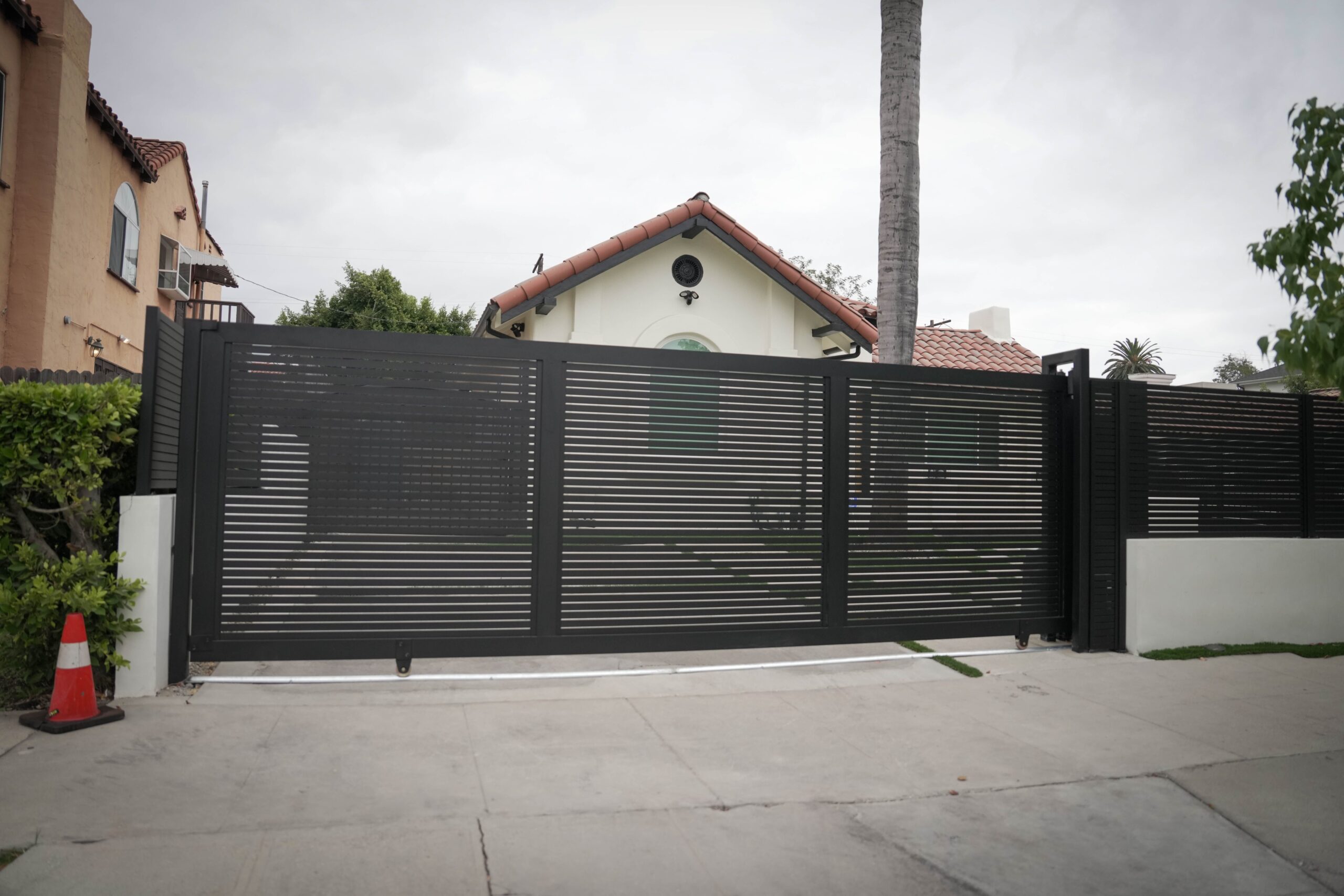
Sliding gate or swing gate: the short answer
Choose a sliding gate when the driveway is short, slopes up toward the house, or when cars park close to the gate. You need clear, fairly level space along the fence for the gate to roll into.
Choose a swing gate when there is room inside the property for the leaves to open, the driveway is reasonably flat, and there is no space beside the opening for a sliding gate to travel. Swing gates are the classic look, and on a flat site they are usually simpler to install.
How sliding gates and swing gates work
Sliding gates
A single panel travels sideways, parallel to the fence. A track sliding gate rolls on wheels along a ground track. A cantilever sliding gate rides on rollers mounted to posts beside the opening, so nothing sits across the driveway. A cantilever gate needs extra counterbalance length, so plan for a longer gate than the opening itself.
Swing gates
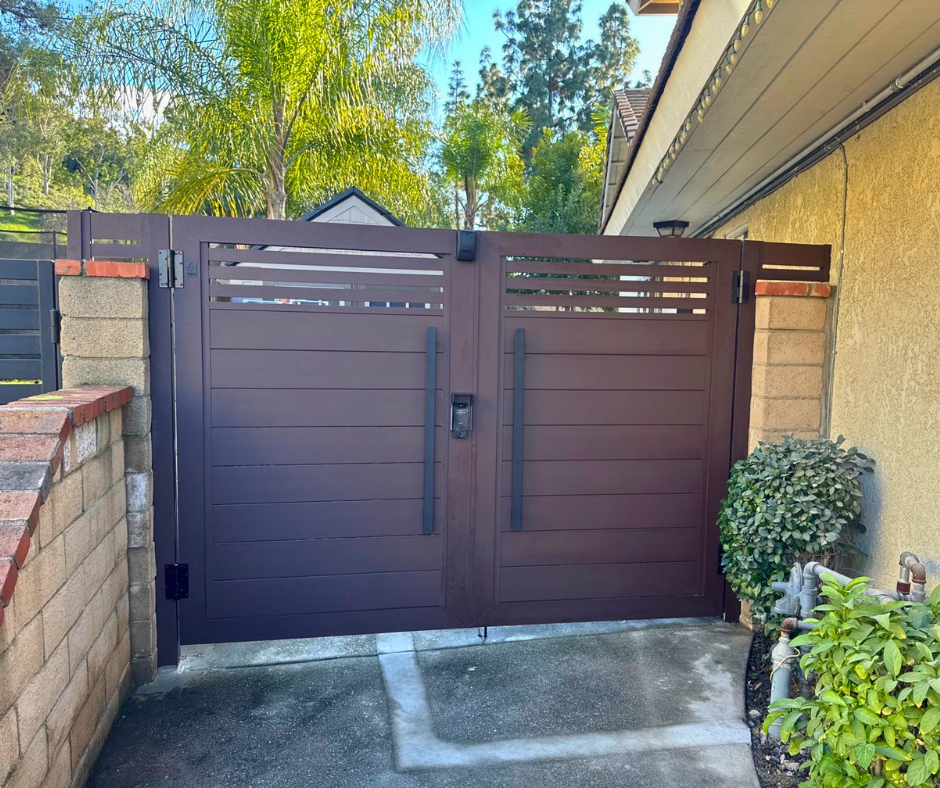
One leaf or two leaves are hinged to posts or walls and open inward (or outward where allowed). A double swing gate splits a wide opening into two shorter leaves, which reduces the swing arc and the load on each set of hinges.
Both types can be built in modern horizontal slat, semi-privacy or full-privacy aluminum to match an existing fence, and both can be manual or fully automatic.
Space: the swing arc vs. the sliding run-off
Space is the number one deciding factor. The two gate types use space in different places.
A swing gate needs a clear arc. Each leaf sweeps an arc as wide as the leaf itself. A 14 ft opening hung as two 7 ft leaves needs roughly 7 ft of clear, flat driveway behind the gate for the leaves to open fully. Parked cars, planters, steps and trash bins inside that arc will stop the gate.
A sliding gate needs a clear run. The gate rolls into the space beside the opening, so you need a straight, unobstructed section of fence line at least as long as the opening. A cantilever gate needs more. Walls, meters, trees, a neighbor’s property line or a side-yard path in that zone can make sliding impractical.
Sloped and uneven driveways
Hillside lots across Los Angeles, the Valley and the foothills make slope a common issue.
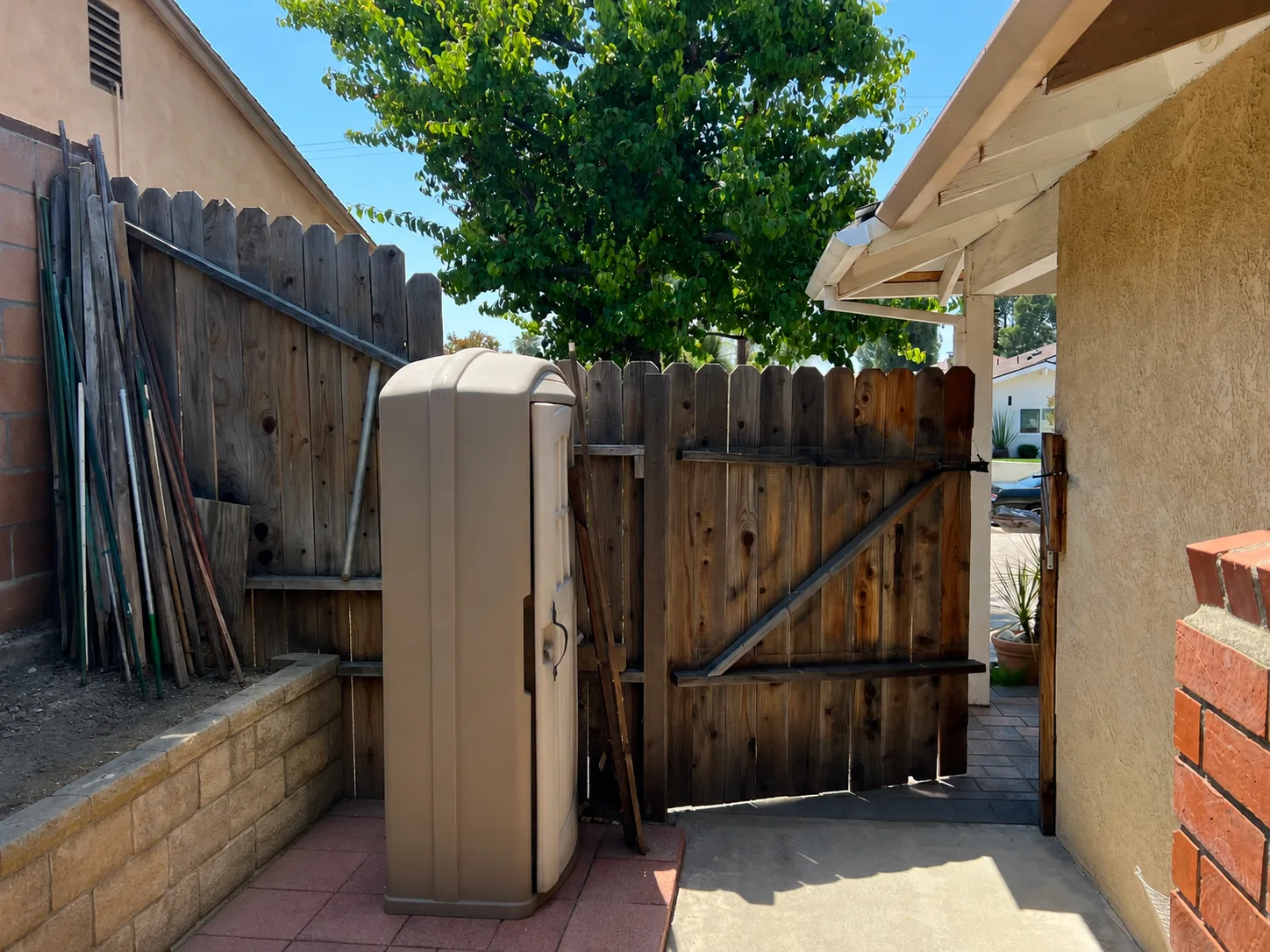
If the driveway rises toward the house, a swing gate opening inward will hit the pavement partway through its arc. Options include rising hinges, a stepped or raked bottom edge, opening outward where the city allows it, or switching to a sliding gate.
A sliding gate handles a driveway that climbs toward the house well, because the gate only travels sideways. It does need the run-off area along the fence to be level (for a track) or the posts set to a consistent line (for a cantilever). A run-off zone that slopes sideways is the main reason a sliding gate gets ruled out.
Wind, full-privacy panels and security
A full-privacy aluminum gate acts like a sail. On a swing gate, the wind load concentrates on the hinges and the operator arm, especially on long single leaves. Santa Ana gusts can push an open swing leaf hard. A sliding gate is supported along its length and is less exposed to wind while it moves.
For security, both types can be built tall, with no climbable horizontal rails on the outside, and fitted with locking operators or magnetic and keyed locks. A closed sliding gate is hard to pry open because it sits in a receiver post. A swing gate relies on a strong center or edge lock and properly sized hinges.
Automation and gate openers
Most driveway gates in Los Angeles are automated. The opener type follows the gate type:
- Slide gate operators drive the gate with a gear rack or chain. One operator moves the whole panel.
- Swing gate operators use articulated arms, linear rams or underground motors. A double swing gate needs an operator for each leaf.
Either way, an automatic gate needs power at the gate, safe wiring and entrapment protection. Gate operators are listed to the UL 325 safety standard, which requires monitored safety devices such as photo eyes or contact edges. Automated vehicular gates are built to ASTM F2200. Add-ons like keypads, intercoms, phone apps and battery backup are common and worth planning at the same time.
Already have a swing gate and want to automate it? See our guide to automating a swing gate.
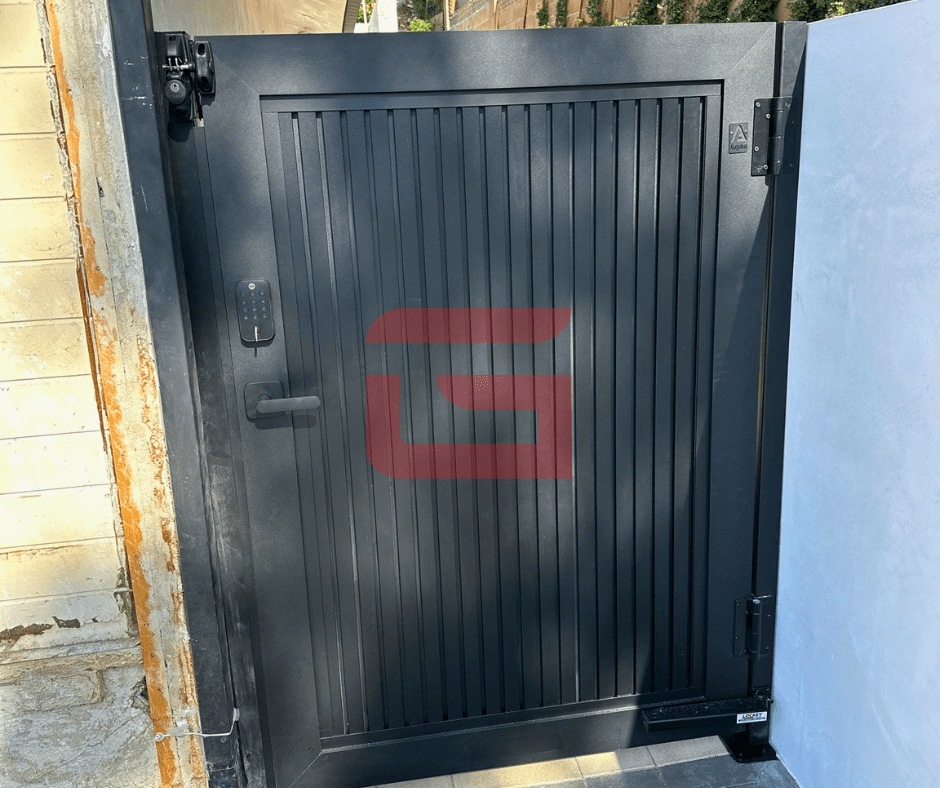
Sliding gate vs. swing gate cost
There is no universal “cheaper” option. Price depends on opening width, height, material, privacy level, site work and automation. National cost guides put automatic driveway swing gate materials around $500 to $8,500 and automatic sliding gate materials around $1,000 to $5,200, before installation labor.
On real Los Angeles projects, these factors move the price most:
- Opening width. Wide openings mean bigger frames, heavier hardware and, for swing gates, often two leaves and two operators.
- Site work. Footings, new posts, concrete cutting for a track, or underground conduit for power.
- Cantilever vs. track. A cantilever slide avoids a ground track but needs a longer gate and heavier posts.
- Privacy level. Full-privacy panels add material and wind load.
- Automation package. Operator, safety devices, access control and battery backup.
For a full breakdown, read our aluminum driveway gate cost guide for Los Angeles.
Not sure which gate fits your driveway?
Send Globus Gates a few photos of the opening, its rough width and whether the driveway slopes. We will tell you which gate type works and what it takes to install it.
Maintenance and lifespan
Sliding gates: a ground track collects leaves, gravel and debris, and the wheels need a clean path. Cantilever gates avoid the track, but their rollers still need periodic inspection. Keep the gear rack aligned and the safety sensors clean.
Swing gates: the main wear points are hinges and operator arms. Heavy leaves can sag over time if the posts or hinges are undersized, which causes dragging and misaligned latches.
Powder-coated aluminum helps both types. It does not rust like steel or warp like wood, so most maintenance is about the moving hardware, not the gate itself.
Zone 0 and fire-smart gate planning
For homes in California’s very high fire hazard severity zones, the gate and the first 5 feet of fencing next to the house are part of ember-resistant “Zone 0” planning. Aluminum is non-combustible, so sliding and swing gates both work. The layout still affects how you plan hardware, power and clearances.
We cover that angle in detail in Zone 0 home hardening with aluminum swing vs. slide gates and on our Zone Zero aluminum systems page.
How to choose: a 6-point checklist
- Measure the clear opening between posts or walls.
- Measure the flat depth behind the gate. If it is shorter than one swing leaf, sliding usually wins.
- Measure the straight fence run beside the opening. If it is shorter than the opening, swing usually wins.
- Check the slope of the driveway and of the run-off area.
- Decide on privacy level and automation before final sizing, because both affect posts and hardware.
- Confirm local rules. Some cities restrict gates swinging over the sidewalk or set height limits at the front yard.
Frequently asked questions
Is a sliding gate or a swing gate better for a driveway?
Neither is better everywhere. Sliding gates suit short or sloped driveways with room along the fence. Swing gates suit flat driveways with room behind the gate and little space beside the opening.
How much space does a sliding gate need?
A track sliding gate needs a straight, clear run beside the opening at least as long as the opening. A cantilever sliding gate needs extra length for its counterbalance tail.
How much space does a swing gate need?
Roughly the width of each leaf as clear, level space in the direction it opens. A double swing gate halves the leaf length and therefore the arc.
Can a swing gate work on a sloped driveway?
Sometimes. Rising hinges, a raked bottom or opening outward can help. If the driveway climbs steeply toward the house, a sliding gate is usually the cleaner solution.
Are sliding gates more secure than swing gates?
Both can be very secure when built tall, without climbable rails, and with a proper lock or locking operator. Sliding gates are harder to force open because they close into a receiver post.
Can I automate my gate later?
Yes, if the posts, hinges or rollers are sized for an operator. Planning power and conduit during installation makes later automation much easier.