
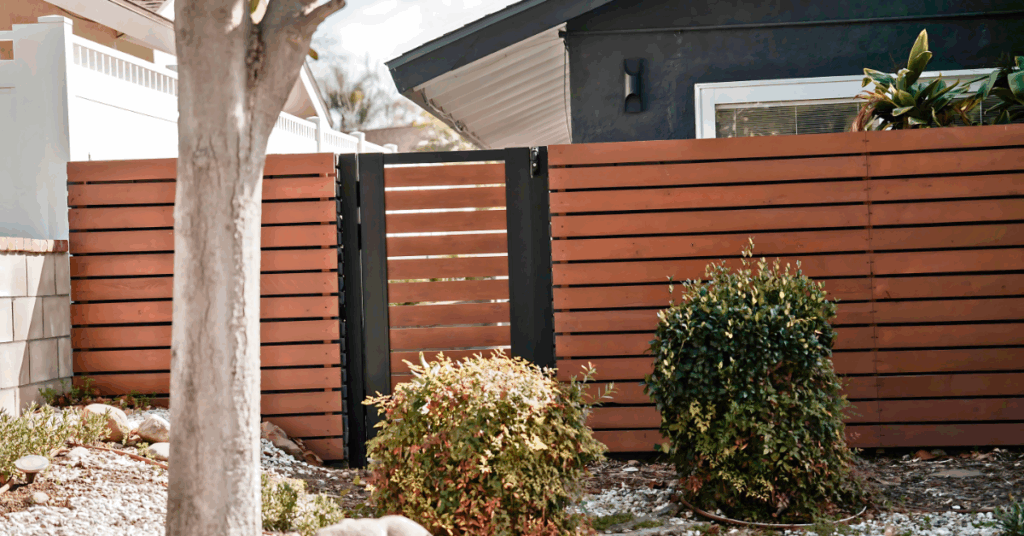
Wildfire-prone landscapes demand smarter perimeter choices. Replacing wood fences with aluminum reduces ember ignition risk while keeping the look and privacy homeowners want. This guide explains safety benefits, gate matching techniques, installation best practices, permitting, and cost considerations to help you plan a resilient, cohesive fence and gate system for 2026 and beyond.
Why wood fences increase wildfire risk
Wood fences can act as fuel lines. Dry boards, gaps, and attached debris let embers ignite panel faces and fastenings. Burning fences can spread flame to nearby structures and vegetation. Replacing vulnerable wood sections reduces continuous fuel loads along property lines. Review local wildfire reports and inspect fence setbacks from brush. For context on fire safe aluminum options see Wildfire safety aluminum. Regular clearing of grasses and leaves near fences remains essential even after replacement because ember showers can travel tens of meters.
Key benefits of aluminum replacement
Aluminum offers non combustible protection, low maintenance, and long service life. It resists rot, insects, and moisture; it will not ignite from embers. Aluminum panels also permit consistent finishes and powder coating for color retention. Homeowners gain predictable lifecycle costs and insurers may view non combustible perimeters favorably. For a deeper look at material advantages visit Top 8 benefits of modern aluminum fences. These benefits help reduce long term risk and simplify seasonal upkeep compared with wood.
Design principles for matching gates
Matching gates unify safety and style. Start by selecting a fence profile and then specify gate height, picket spacing, and finish that mirror the panels. Hardware choices influence function and appearance; choose corrosion resistant hinges and latches rated for the gate weight. Account for clearance and swing or slide mechanisms in the entry layout. See practical guidance on gate selection at Selecting your perfect gate. Consistent line width and finish across fence and gate improves aesthetics and simplifies future repairs.
Non combustible perimeter fence systems
Non combustible fences create defensible edges. Use metal posts, aluminum panels, and metal fasteners to eliminate continuous wood components along the line. Confirm materials meet local fire code classifications. Insurance friendly systems and certified Zone 0 options are available. Explore expert resources on fire zone suitability at Why aluminum fences are ideal for fire zones, see local installation examples at Fire resistant fencing Norco, and review non combustible system guidance at Zone 0 aluminum fencing non combustible systems. These links offer specification and compliance insights.
Installation best practices for safe lines
Proper installation ensures system performance. Set posts in concrete to engineered depth to resist uplift and warping. Maintain correct post spacing for panel rackability and wind loads. Use stainless or galvanized fasteners to avoid corrosion at connections. Pay attention to grade transitions and drainage to prevent soil movement. For step by step considerations and pros and cons on installation visit Aluminum fence installation CA. Hire experienced installers when terrain or permits complicate the work to ensure code compliance and long term durability.
Maintenance and longevity strategies
Minimal upkeep keeps systems reliable. Powder coated aluminum resists corrosion but benefits from seasonal rinsing to remove salt or pollen. Inspect hinges, latches, and fasteners annually and tighten or replace as needed. Refinish scratches promptly to prevent localized corrosion. Clear vegetation and debris from the base to reduce ember trapping. For seasonal care tips consult Seasonal maintenance tips for aluminum fences. A modest maintenance schedule preserves finish and structural integrity for decades.
Design your ideal fence and gates
Start with purpose and site constraints. Identify goals: fire resistance, privacy, style, or budget. Sketch the property line and note slopes, access points, and vegetation. Use online mood boards and photo libraries to finalize profiles. Visual tools help refine height, picket spacing, and finish. See creative ideas at Innovative design ideas using aluminum fencing kits. For broader inspiration try external design galleries like Houzz or Pinterest. The result will guide accurate quotes and tailored gate solutions.
Selecting gate hardware and automation
Durable hardware extends gate life. Choose bearings, hinges, and latches rated for the gate weight and environmental exposure. Corrosion resistant finishes and sealed motors perform better near coasts. Consider automation only after confirming gate geometry and safety interlocks. Review components and maintenance needs in the hardware primer at Gate hardware accessories explained hinges rollers locks. Proper hardware selection reduces downtime and improves user experience.
Practical matching steps on site
Measure, mockup, and verify. Confirm fence heights and sightlines at multiple locations along the line. Create a mockup panel and an installed gate test to check clearance and swing. Coordinate post locations with existing hardscape and utilities. Use consistent powder coat codes for fence and gate to ensure color match. Find style matching tips at Tips on matching fence designs with architectural styles. This measured approach prevents costly rework and creates a unified result.
Permits costs and insurance impacts
Plan for approvals and budget contingencies. Obtain local permits, confirm setback rules, and submit engineered details when required. Compare materials cost, installation labor, and finishing options. Non combustible upgrades can influence insurance underwriting and may yield premium benefits. Use regional budgeting guidance at Fence installation cost guide for homeowners 2026. Factor in long term savings from reduced maintenance and lower replacement frequency when evaluating ROI.
Applying fence safety to commercial settings
B2B facility decisions require integrated marketing and product strategy. For California based office furniture marketers, perimeter and gate choices affect property branding, access control, and client perception. Coordinate landscape, signage, and entry hardware for a cohesive corporate image. Map local suppliers and service partners to optimize fulfillment and installation. See commercial fencing perspectives at How commercial fencing. Locate regional vendors and showrooms on this map California office furniture and service locations to streamline procurement and project timelines.
Final recommendations and next steps
Prioritize safety then style. Replace combustible segments with aluminum panels, match gate profiles and finishes, and follow installation best practices for long term resilience. Obtain permits and consult local code experts before ordering materials. Design services can help you finalize dimensions and hardware. For tailored product options and to begin your project visit Design Your Ideal Fence and Gates Today to explore solutions, benefits and ordering paths that reduce wildfire risk and deliver cohesive gate matching.
Final words
Switching from wood to aluminum lowers ignition risk, eases maintenance, and supports consistent gate design. Prioritize non combustible perimeter systems, follow local permit and installation standards, and choose compatible gates for durability and style. Use thoughtful design and professional guidance to balance safety, aesthetics, and budget for long term wildfire resilience.
Frequently Asked Questions
Wood fences can ignite from wind-blown embers and may carry fire toward structures or vegetation. Aluminum is non-combustible, so it helps reduce ignition risk while also offering lower maintenance and longer-term durability.
Yes. Aluminum systems can be matched by height, profile, picket spacing, finish, and hardware so the fence and gate look consistent across the entire perimeter. This makes it easier to balance fire safety with curb appeal.
Homeowners should check post depth, spacing, grade changes, drainage, and wind-load requirements before installation. It is also important to use corrosion-resistant hardware and confirm that the layout allows proper gate clearance and operation.
In many areas, yes. Local rules may require permits, setback compliance, height limitations, or engineered drawings depending on the property and fence design. It is best to confirm requirements with the local building authority before ordering materials.
Although aluminum may have a higher upfront cost in some cases, it often delivers better long-term value because it does not rot, warp, or require frequent repainting or replacement. Lower maintenance and longer service life can make it a smarter investment over time.
Ronnie is the CEO and Co-Founder of Globus Gates, bringing hands-on leadership and industry experience to the company’s aluminum gates, fences, patio covers, wall cladding, and exterior systems. His insights focus on helping homeowners, contractors, designers, and builders understand durable, modern, factory-direct, and non-combustible aluminum solutions built for long-term performance.