

What Is a Cantilever Gate? The Sliding Gate That Never Touches Your Driveway
A cantilever gate is a sliding gate that hangs from rollers mounted on posts beside the driveway, so it glides across the opening without a track on the ground. This guide explains how it works, how it compares with a track sliding gate, how much room it needs and what drives the cost, so you can tell if it is the right gate for your driveway.
Cantilever gates, explained in 60 seconds
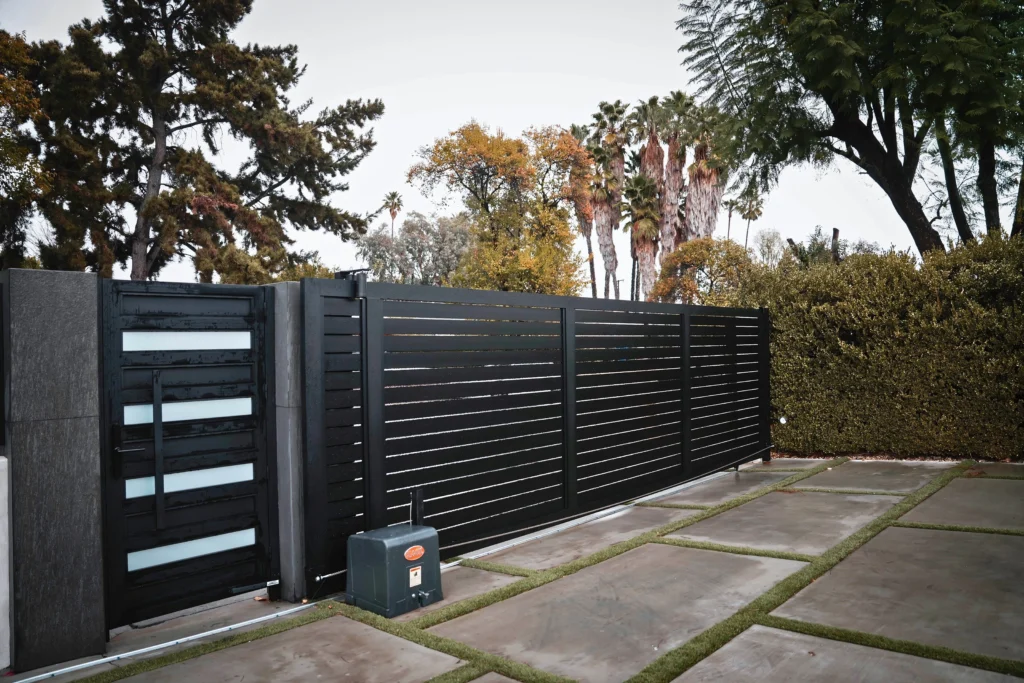
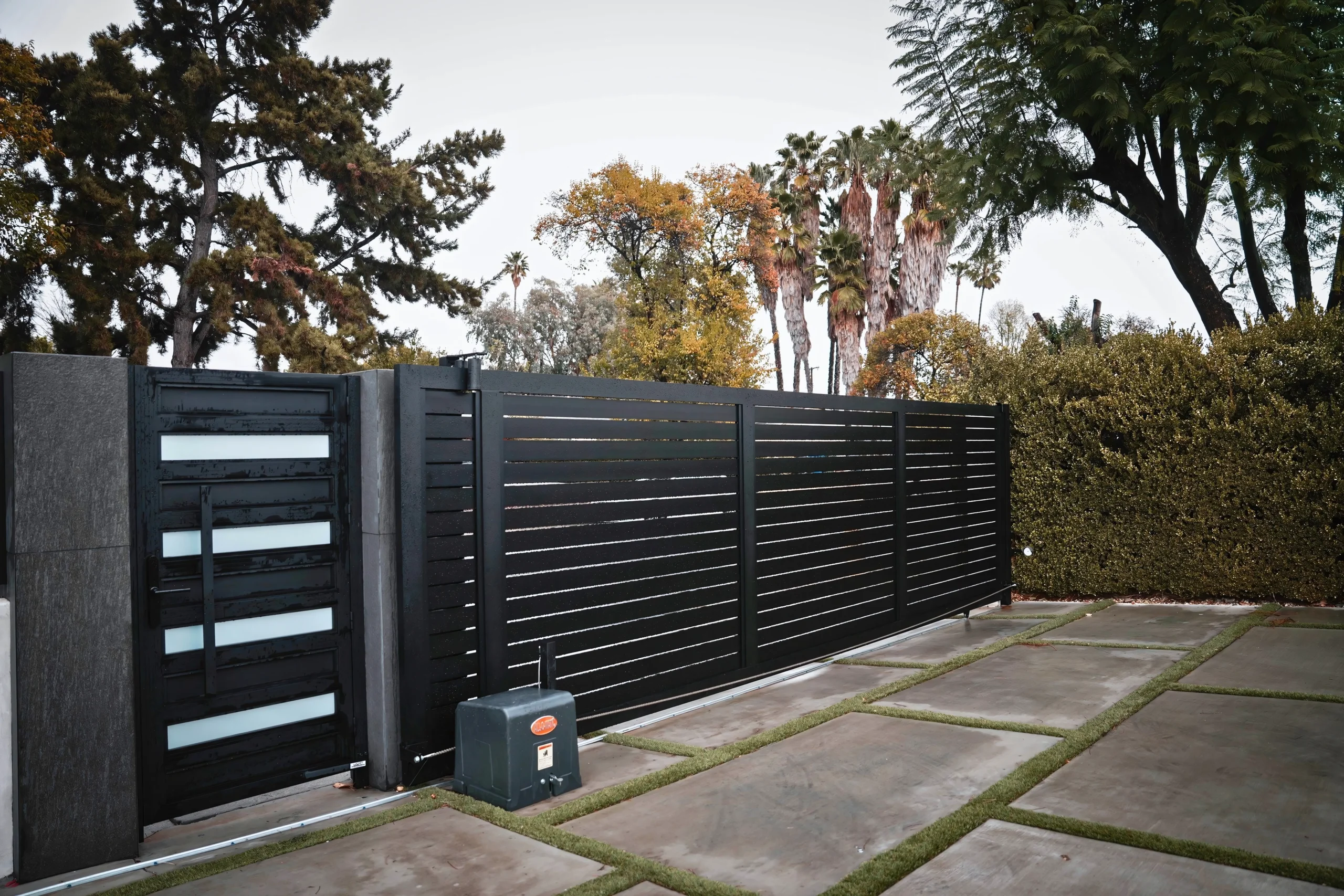
A cantilever gate, also called a cantilever sliding gate, is a sliding gate with no wheels on the ground. Two sets of roller carriages are bolted to posts set beside the opening, and the bottom rail of the gate runs through them. When the gate opens, it slides along the fence line on those rollers. When it closes, the front end reaches across the opening and rests in a catch on the far post, with nothing underneath it.
To stay balanced while the front end hangs in the air, the gate is built longer than the opening. That extra section, the counterbalance tail, stays behind the rollers and keeps the gate level.
The floating trick: how a gate slides with no track on the ground
Rollers on posts
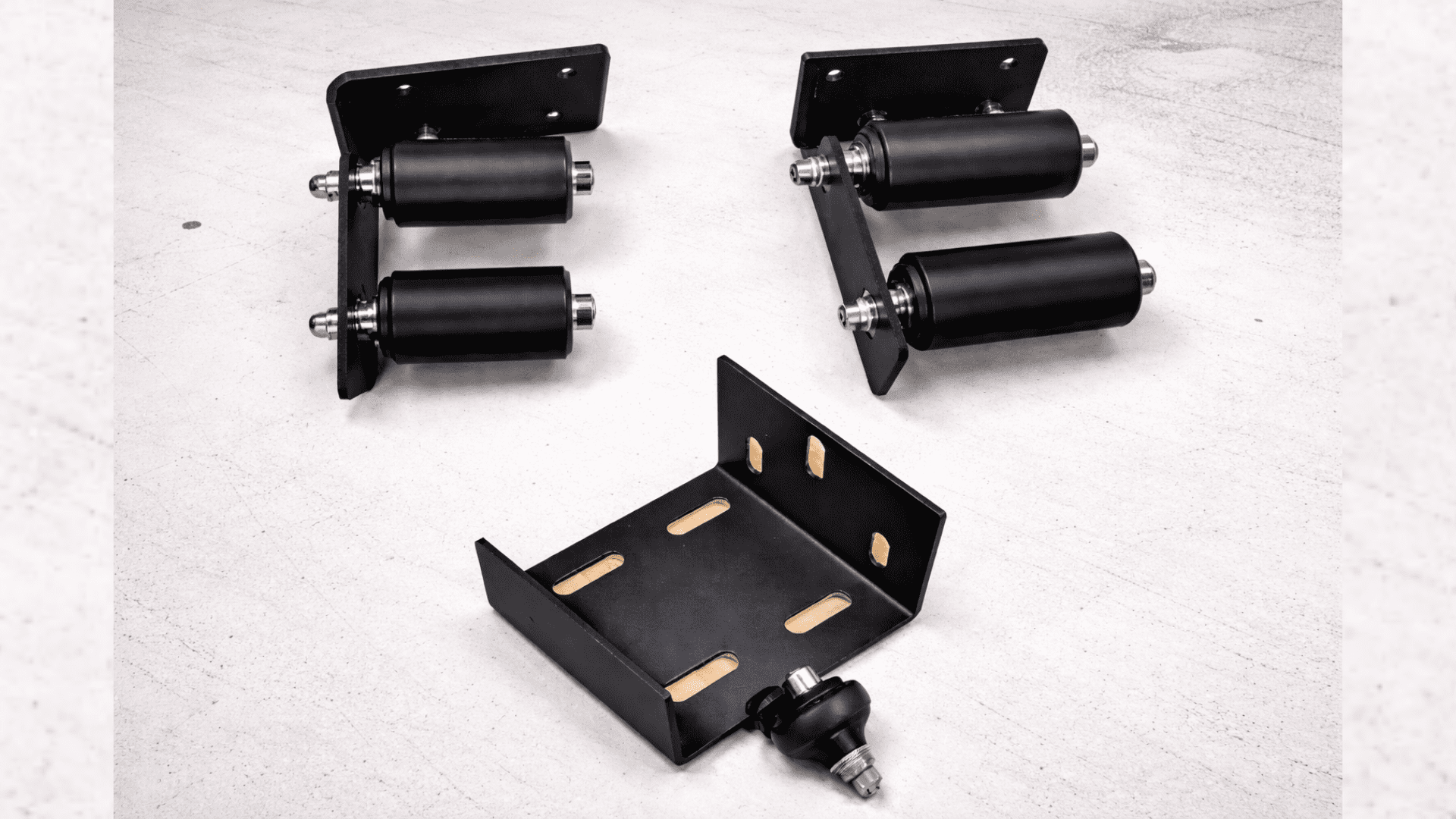
Two roller carriages are mounted on posts set in concrete along the fence line. The gate’s bottom rail rides inside them, so the posts carry all of the gate’s weight.
Counterbalance tail
Behind the rollers, the gate continues for roughly half the opening width. That tail balances the front section that reaches across the driveway.
Guide rollers
Guide rollers near the top keep the gate upright and stop it swaying in the wind as it moves.
Receiver post
On the far side of the opening, a catch or receiver post guides the front of the gate in and holds it when closed.
So how does a cantilever gate work in practice? The rollers carry the gate, the tail balances it and the guides keep it straight. Because the weight goes into the posts and their footings, those posts and the way they are set matter more than on almost any other gate. This is also why the gate frame has to be rigid: it spans the opening like a beam. Our guide on why aluminum gates need a frame explains why framing matters, and our guide to gate rollers and hardware covers the parts.
Cantilever vs track sliding gate: which one wins on your driveway?
People often search for cantilever gate vs sliding gate, but a cantilever gate is a sliding gate. The real comparison is with a track sliding gate. Both run along the fence line. The difference is what carries the weight: wheels on a ground track, or rollers on posts.
| Track sliding gate | Cantilever gate | |
|---|---|---|
| What carries the gate | Wheels on a track across the driveway | Rollers on posts beside the driveway |
| Anything on the ground? | Yes, a track across the opening | No |
| Gate length | About the width of the opening | About 1.5 times the opening |
| Side room needed | About one opening width | About 1.5 opening widths |
| Slopes, gravel, cracked concrete | Poor fit: the track must be level and clean | Good fit: the ground under the gate does not matter |
| Leaves, dirt and debris | Can jam the wheels | Nothing to jam at ground level |
| Posts and footings | Lighter | Heavier, set deeper |
| Typical cost | Usually lower | Usually higher |
Still deciding between sliding and swinging at all? Read sliding gate vs swing gate first, then come back to pick the type of sliding gate. For California-specific design and safety notes, see our guide to sliding driveway gates in California.
The catch nobody mentions: the gate is about 50% longer than the opening
The counterbalance tail is roughly half the opening width, so the whole gate is about 1.5 times the opening. When it opens, all of it has to slide somewhere.
- A 12 ft opening needs a gate of about 18 ft and about 18 ft of clear, straight run along the fence.
- A 16 ft opening needs a gate of about 24 ft and about 24 ft of clear run.
That run has to be free of walls, meters, trees, steps and property lines, and it has to stay on a consistent line so the posts and rollers can be set straight.
Sloped, cracked or gravel driveway? This is where cantilever earns its price
A track gate needs a level, clean, solid sliding gate track across the whole opening. That is hard to keep on many real driveways:
- Driveways that slope or crown across the opening, common on hillside lots.
- Gravel, pavers or cracked concrete, where a track shifts or breaks.
- Leaves, sand and debris that pack into the track and stop the wheels.
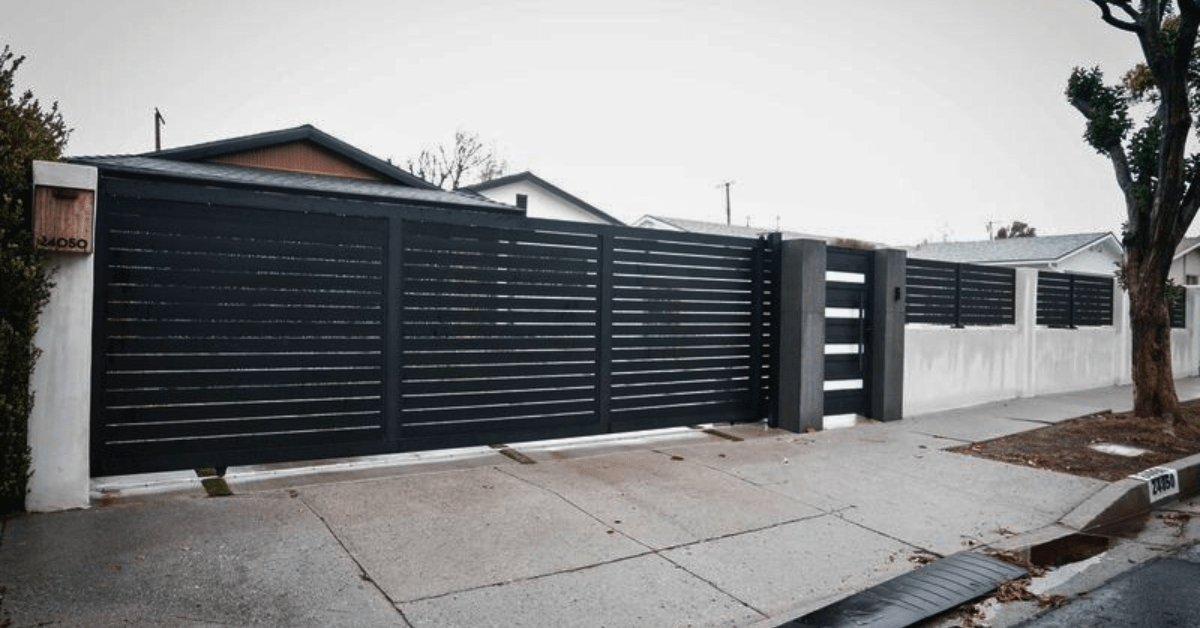
If you need a sliding gate for a sloped driveway, a cantilever gate is usually the answer, because it floats above all of it. The ground under the opening only has to clear the bottom of the gate, so the driveway can slope, change material or collect debris without stopping the gate.
Can you automate it? Openers, photo eyes and UL 325 safety
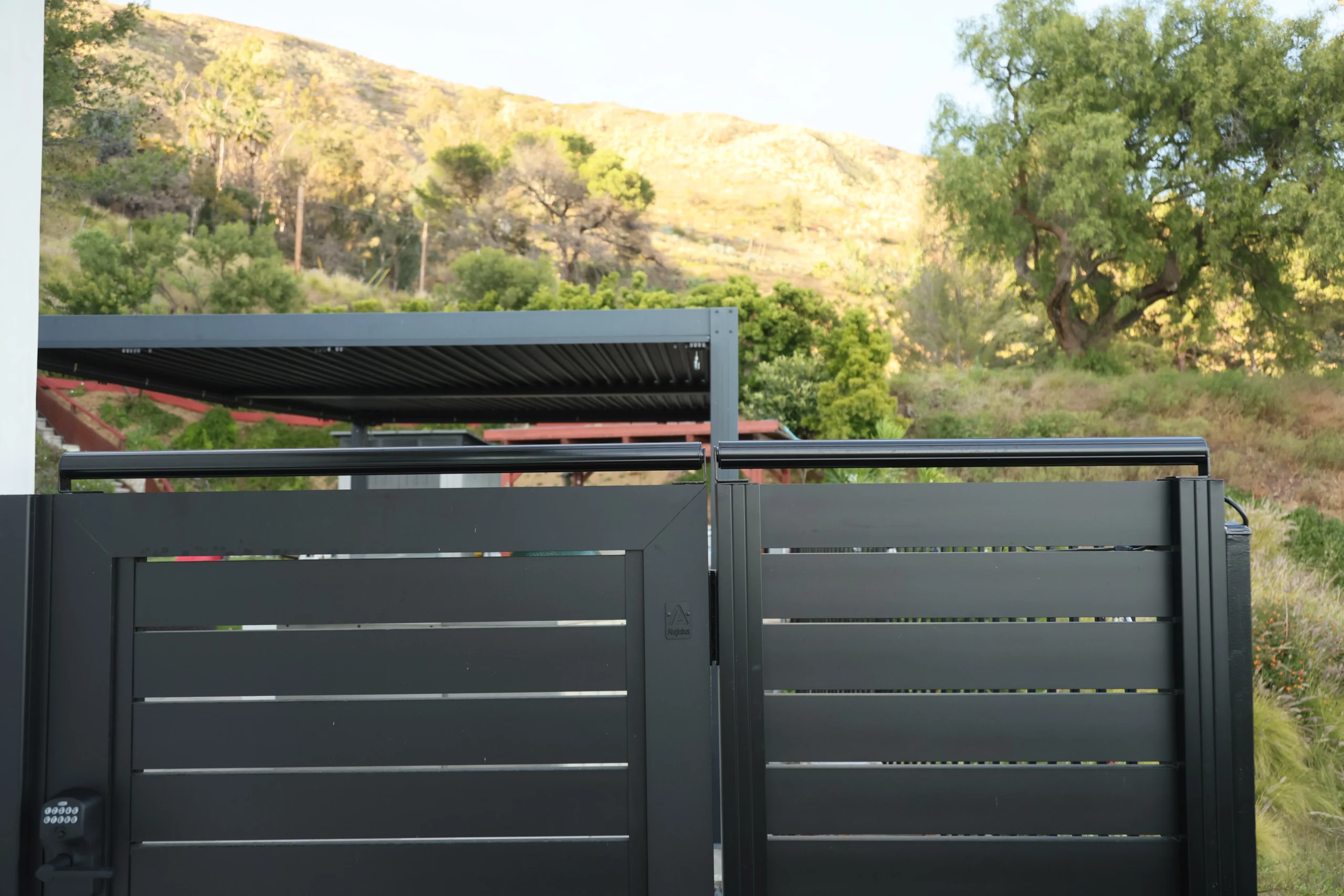
Yes. A cantilever gate runs on a standard slide gate operator that drives the gate with a gear rack or chain. Because the gate rolls freely on its carriages, it needs no special motor, but the operator must be sized for the gate’s length and weight.
Any automatic gate has to be installed with the safety devices required by the UL 325 standard, such as photo eyes and contact or non-contact edge sensors, so the gate stops or reverses if something is in its path. Plan power and conduit to the operator before the driveway work is finished.
For opener options and smart home control, see automated gate systems and our smart access driveway gates.
Why aluminum is easier on rollers and motors
On a cantilever gate, every pound hangs from two roller carriages and has to be pushed by the operator. A lighter gate means less wear on the rollers, less load on the posts and a smaller, longer-lasting operator.
Aluminum is a fraction of the weight of a steel gate of the same size, and a powder-coated aluminum gate will not rust, which matters for rollers that run against the bottom rail every day. It also holds a straight line, so the gate keeps running true through the rollers. Browse our aluminum gates, or see custom aluminum driveway gates for design ideas.
What drives the cost of a cantilever gate
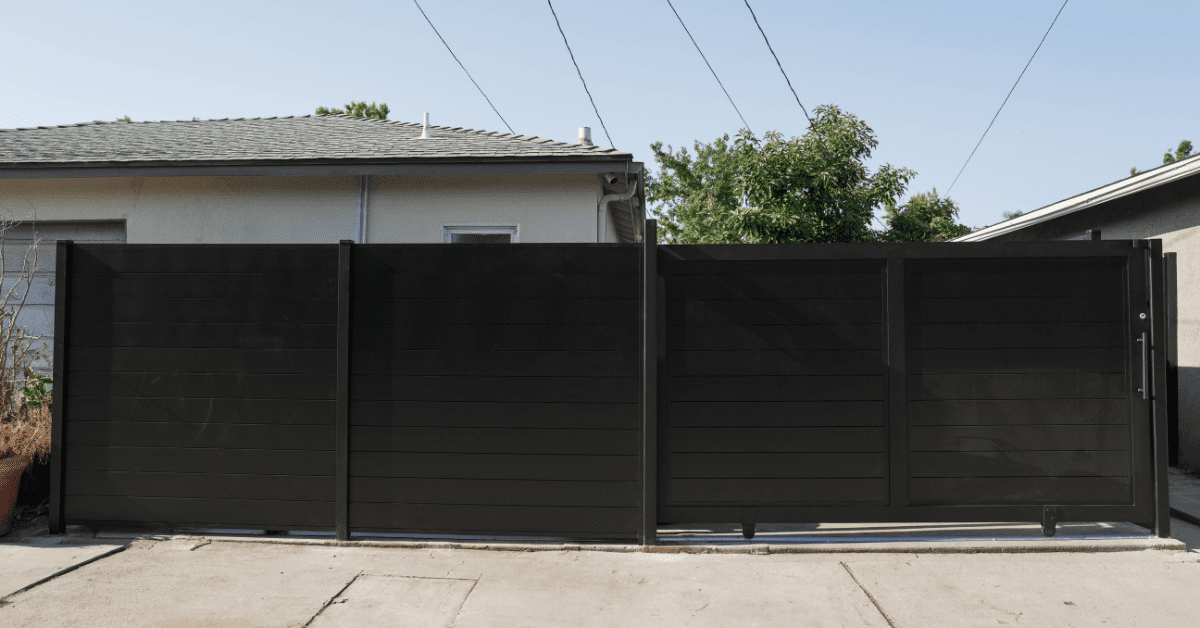
A cantilever driveway gate usually costs more than a track gate of the same opening. These are the main reasons, and the levers you can pull:
- Gate length. You pay for about 1.5 times the opening in frame and infill.
- Posts and footings. Heavier posts set in deeper concrete carry the whole gate.
- Height and infill. A tall, full-privacy gate weighs more and catches more wind than an open slat design.
- Automation. The operator, safety devices, power and access controls.
- Site work. Removing an old gate, slopes, trenching for power and any concrete repair.
- Finish. Standard colors versus wood grain or custom finishes.
For typical price ranges, see our guide to aluminum driveway gate cost. To see how a gate goes in from start to finish, read aluminum gate installation in Los Angeles.
Is a cantilever gate right for your driveway?
Globus Gates designs and installs aluminum driveway gates. We will measure the opening and the run beside it, check the slope and tell you which sliding gate fits, before you commit to anything.
FAQ: cantilever gate questions, answered
What is a cantilever gate?
A sliding gate carried by rollers mounted on posts beside the driveway. The gate hangs over the opening and never rolls on a ground track.
How much space does a cantilever gate need?
Plan for a gate about 1.5 times the opening width, because the counterbalance tail is roughly half the opening. A 16 ft opening needs about 24 ft of clear run along the fence line.
Is a cantilever gate better than a track sliding gate?
It is the better pick where the driveway slopes, is uneven, is gravel or collects leaves and debris. On a flat concrete driveway a track gate needs less side room and usually costs less.
Can a cantilever gate be automated?
Yes. It runs on a slide gate operator with safety devices such as photo eyes and edge sensors, installed to the UL 325 safety standard.
Do cantilever gates need a lot of maintenance?
Less at ground level, since there is no track to keep clear. The rollers and the operator still need periodic checks.