


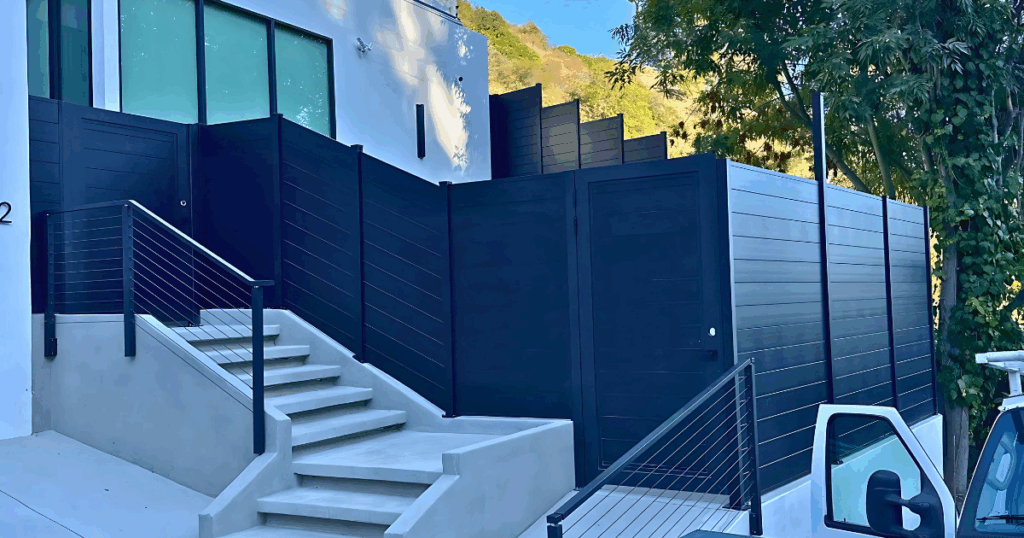
Aluminum fencing combines non combustible material, low maintenance and adaptable design to protect properties in fire prone areas. This guide compares slat, tongue and groove and privacy aluminum panels, weighing ember resistance, airflow, code compliance and installation best practices to help owners choose the right system for safety and curb appeal.
Aluminum advantages in high risk areas
Aluminum performs where combustible fences fail. The metal is non combustible and will not feed flames. It retains structural integrity when exposed to heat longer than wood or plastic. Aluminum panels resist corrosion with coatings that do not support burning. That durability reduces emergency repair needs after wildfire exposure. Consider finish, fasteners and gap design to limit ember entry. For deeper guidance on approved non combustible systems see zone 0 aluminum systems guide. Choosing aluminum means lower maintenance and predictable performance when fire risk is high, helping protect buildings and landscape while preserving aesthetics.
Comparing slat t and g and privacy for fire resistance
Panel type drives ember behavior. Slats shed embers if gaps are sized to prevent ember lodgement. Tongue and groove seals seams to limit ember ingress. Solid privacy panels block radiant heat and wind driven embers. Each approach affects ventilation and ember deflection differently. Local examples of fire resistant installations can illustrate best practices, such as fire resistant fencing norco and fire resistant fencing palos verdes. For product level non combustible standards consult zone 0 non combustible aluminum systems. Balance sealing and ventilation to prevent ember accumulation while allowing moisture to escape.
Slat systems performance and design
Slat systems combine airflow with visual screening. Properly profiled slats let wind pass and reduce uplift pressure. Ember defense depends on gap width, slat shape and fastener detailing. Narrow offset gaps keep embers from nesting while preserving ventilation. Use corrosion resistant fasteners and powder coated finishes for longevity. Slat panels also simplify repairs because individual rails are replaceable. For inspiration and regional examples see horizontal slat fencing redlands. Design slat spacing to local ember attack levels and pair with non combustible posts to maximize protection and minimize maintenance.
Tongue and groove sealing benefits
Tongue and groove improves sealing between boards. Interlocking profiles limit ember intrusion and reduce air gaps. This tight fit increases radiant heat barrier effect compared to open systems. Choose profiles that tolerate thermal expansion and allow drainage to prevent moisture trapping. Tongue and groove panels can be heavier and need stronger posts and brackets. Where permitted by code, T and G is effective near structures. For privacy and modern options review regional installation posts such as modern privacy fence california. Proper installation prevents gaps forming over time.
Privacy panels ember deflection and venting
Solid privacy panels block direct ember strikes. They reduce radiant heat transfer to adjacent landscaping and structures. However, fully sealed walls can trap heat and moisture if not detailed for drainage. Combine protective skins with vents at the base or top designed to keep ember entry minimal. Use non combustible posts and through fasteners to reduce failure points. See practical privacy cost and design discussions at privacy fence scottsdale guide. Prioritize details such as underpanel clearance and flashing to avoid ember lodgement and moisture issues.
Site specific installation strategies
Installation matters as much as material choice. Secure posts on concrete footings below frost line and anchor to resist heat warped soils. Keep gaps under panels small and consistent to prevent ember ingress. Use stainless or coated fasteners and continuous top caps where embers may accumulate. On slopes, step panels or use raked profiles and follow specialized guidance like how to install fence on a slope. Inspect hardware after storms and scheduled seasons. Thoughtful anchoring and drainage keep the fence performing through seasonal cycles and extreme events.
Regulations and zone compliance
Meet local code and zone classifications. Many jurisdictions have approved lists for non combustible boundary systems and Zone 0 or equivalent designations. Confirm permitted materials, required clearances and ember resistant grading with authorities before ordering panels. Documentation helps with insurance and inspections. Explore regional compliance references such as zone 0 approved fencing in california. When in doubt, request product test data and installation instructions to demonstrate compliance with local fire safety standards.
Maintenance practices for longevity
Routine care maintains protective performance. Aluminum requires less maintenance than wood, but periodic inspection prevents small issues from escalating. Clean finishes, inspect fasteners, and touch up coatings after damage. Remove vegetation within the defensible space and keep ground clearance to minimize debris buildup. Seasonal checks before fire season reduce ember trap risks. For regular care recommendations see seasonal maintenance tips for aluminum fences. A planned maintenance routine preserves both safety and curb appeal.
Selecting a qualified installer
Installer selection affects long term safety. Verify experience with fire zone installations and ask for project references. Confirm that contractors follow anchor, drainage and sealing best practices. Require warranties on materials and workmanship and ask for documentation of non combustible product data. For guidance on hiring and vetting professionals consult choosing the right fence contractor. Clear communication on site access, scheduling and cleanup reduces delays and ensures the finished system performs as intended.
Design your ideal fence and gate system
Design balances safety, function and curb appeal. Start with a performance brief: ember resistance target, privacy needs and aesthetic direction. Mix panel types where appropriate to maintain airflow and screening. Coordinate gates with panel style and hardware for consistent thermal behavior. Use planning resources and DIY guidance such as how to build a fence gate and selection advice like selecting your perfect gate. The offer to design custom systems helps you specify panels, finishes and details that meet safety goals while matching property style.
Budgeting and long term value
Consider lifecycle cost not just upfront price. Aluminum systems cost more than some alternatives initially but lower repair and maintenance cost yields value over time. Evaluate warranty coverage, finish systems and expected service life. Factor installation complexity for slopes, gates and reinforcement where needed. Use cost guides like fence installation cost guide 2026 to plan budgets. Opting for durable finishes, certified non combustible panels and skilled installation reduces total cost over decades.
California B2B considerations and marketing
Commercial buyers need scalable, compliant solutions. B2B procurement values consistent lead times, specifications and warranty terms. Position aluminum panels as non combustible perimeter systems for business campuses and housing developments. Use local examples that show code compliance and low lifecycle cost. For facility marketing and buyer discovery include a clickable map for local sourcing find office resources in California. Demonstrating performance data, installation capabilities and post sale support helps convert commercial clients seeking fire safe fencing solutions.
Next steps ordering and customization
Move from planning to installation with clear actions. Finalize panel type, finish and gate style based on ember risk and desired look. Request templated drawings, lead times and warranty details from suppliers. Confirm anchoring and site prep requirements with installers before ordering. For product selection and direct ordering of custom systems visit the online shop and configure options at order custom fence and gate systems. Selecting certified panels and experienced installers delivers safety, longevity and the visual result you want.
Final words
Aluminum fence systems offer a fire safe, durable and low maintenance perimeter option. Slat panels balance airflow and ember control, T and G improves sealing, and heavy privacy panels maximize protection. Prioritize installation details, compliant materials and qualified installers to get the full benefit. Use the right design to reduce ember intrusion while keeping the look you want.
Frequently Asked Questions
Yes. Aluminum will not ignite and is classified non combustible for most fire codes. Proper detailing is still needed to prevent ember entry at joints and penetration points.
Solid privacy panels provide the strongest barrier to embers and radiant heat. Tongue and groove offers a close second by sealing seams. Slat systems can work when gap design prevents ember lodgement.
Maintenance is minimal compared to wood. Inspect finishes, fasteners and clearance regularly. Remove debris and vegetation near the fence to reduce ember fuel sources.
Using non combustible materials and documented compliant installations can support insurance discussions. Provide product data and installation records to insurers.
Pick a contractor with fire zone experience, verifiable references and written warranties. Confirm they follow anchoring and drainage best practices and can provide installation documentation.