
Replacing a wood fence with aluminum can cut combustible risk and lower long term maintenance. This guide answers common homeowner questions, compares fire behavior, outlines costs, and shows design and installation choices that keep your property safer while boosting curb appeal.
Why replace wood with aluminum
Aluminum is noncombustible and will not feed flames the way dry wood can. Homeowners in fire prone zones reduce fuel sources by switching to metal fencing. Consider local codes, property layout, and defensible space when planning a replacement. Aluminum also resists rot and insect damage, lowering repeat repair needs. For material comparisons and selection guidance see choosing the right fence material. Evaluate your neighborhood risk, typical ember exposure, and fence adjacency to structures before committing to a full replacement to ensure maximum safety benefits.
Key replacement FAQs answered
Homeowners ask about lifespan, permits, and insurance. Aluminum commonly lasts decades with powder coat finishes and minimal upkeep. Check local permit requirements early to avoid delays. Insurance providers may favor noncombustible perimeter choices. Plan transitions in phases to manage cost and disruption. If you worry about privacy, aluminum options can mimic panels or slats for screening. For help weighing repair versus full replacement, consult this practical guide: fence replacement vs repair making the right choice. Document choices and receipts for insurer records.
Budget timeline and permit basics
Costs vary by style, height, and site. Expect material and labor quotes to account for post spacing, gates, and terrain. Permits can add time, especially in regulated fire zones. Schedule inspections and budget contingency for hidden site conditions. For current homeowner cost planning read fence installation cost guide for homeowners 2026. Prioritize noncombustible posts and clearances now to avoid costly retrofits later. A phased replacement spreads cost while immediately removing the most hazardous sections near structures and vegetation.
Comparing fire risk aluminum versus wood
Data and field observations show distinct behavior. Wood ignites, chars, and carries flame along its length and to adjacent elements. Aluminum does not burn and will not sustain combustion, though extreme heat can deform it. When you assess risk, consider ember intrusion points like gaps and gates. For detailed reasoning about aluminum benefits in fire zones, review why aluminum fences are ideal for fire zones. Use that insight to prioritize sections that need immediate replacement, such as those next to sheds or tall shrubs.
How aluminum reduces fire spread
Aluminum acts as a passive defense by eliminating a fuel source. It also reduces ember accumulation when designed with appropriate spacing and orientation. Incorporate design features that limit ember traps and allow quick cleaning. Consider noncombustible posts and minimal horizontal ledges. For practical wildfire safety details read wildfire safety aluminum. Combining aluminum fencing with cleared defensible vegetation near perimeter lines provides the best reduction in home ignition risk.
Mistakes to avoid during replacement
Common errors lengthen timelines and cost. Reusing old wooden posts, ignoring ember pathways, or choosing designs that trap debris undermines the benefit of aluminum panels. Avoid dense landscaping that contacts new fencing. Coordinate with local officials about required clearances. For a documented replacement project and lessons learned see wildfire safety replacing wood with aluminum project. Address drainage and soil stability so posts remain secure and do not create future maintenance problems.
Design your ideal fence today
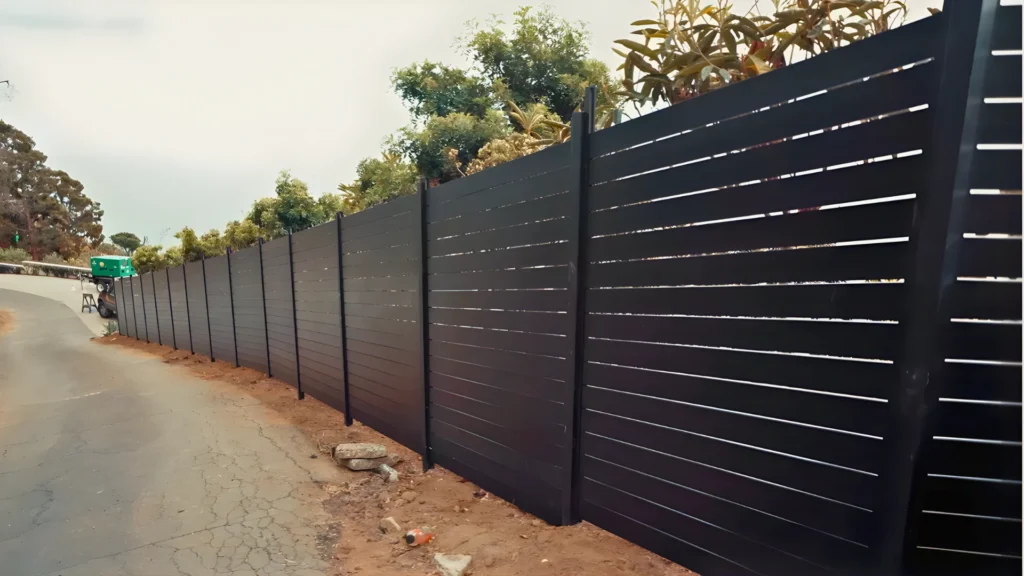
Design choices connect safety and style. Aluminum offers narrow profiles, privacy slats, and powder coat colors that match architecture. Determine priorities: security, privacy, sightlines, or maintenance. Use visualizing tools or professional consultations to confirm scale and color. The offer to design your ideal fence delivers tailored layouts, efficient material lists, and timelines that reduce delays. Benefit from expert layout advice that accounts for ember exposure and property lines. Consider low maintenance finishes and modular panels to simplify future updates and repairs while preserving safety and curb appeal.
Choosing styles and finish options
Style influences cost and performance. Open picket styles allow airflow and reduce ember accumulation. Privacy slat systems block views but need careful detailing to avoid debris traps. Powder coated finishes extend life and resist UV. Explore profiles and color choices to match home aesthetics. For inspiration and modern ideas see top 8 benefits of modern aluminum fences. Prioritize designs with minimal horizontal surfaces and hidden fasteners to reduce ember catch points and simplify cleaning.
Installation practices and maintenance
Proper installation secures performance. Use corrosion resistant anchors, appropriate embed depths, and consider concrete footings where soils shift. Regular inspections clear debris and check fasteners. Maintenance mainly involves periodic rinse and touch up of finish. If you prefer partial installation, use modular panels for quick swaps. For DIY suitability and guidance on labor choices consult what is the easiest fence to install yourself. Professional installation often reduces errors and preserves warranty coverage.
California B2B marketing approach for office buyers
Positioning matters for commercial buyers. Office property managers value warranties, fast lead times, and compliance with local codes. Emphasize safety credentials, lifecycle costs, and low maintenance. Use targeted outreach to architects and facilities teams with case studies that show reduced fire liability. Include a clickable location reference for local presence: see California office location. Bundled service options and clear timelines improve procurement confidence and shorten approval cycles.
Targeting commercial accounts and ROI
Demonstrate measurable returns. For commercial clients, quantify reduced maintenance cost, decreased insurance exposure, and multi year lifecycle savings. Highlight supply chain reliability, installation capacity, and post sale support. Offer scalable packages for campuses and multi building portfolios. Align messaging with facility manager pain points and show fast installation options that minimize tenant disruption. For contractor coordination and professional savings read why hiring professional fence builders saves time money stress. Clear warranties and service plans close B2B deals faster.
Final steps and call to action
Take the final steps to safer property. Review local codes, gather quotes, and select noncombustible posts and appropriate clearances. Use a professional layout to prioritize sections next to structures and vegetation. The offer to design and plan your ideal fence provides tailored solutions, timeline clarity, and material selection guidance that reduce fire risk and long term cost. Ready to start? Visit Design Your Ideal Fence & Gates Today to explore options, get pricing, and begin your upgrade.
Final words
Replacing wood fences with aluminum lowers fire risk, reduces long term costs, and simplifies maintenance. Proper planning, material choice, and professional installation maximize safety and value. Use the guidance here to evaluate risks, compare options, and design a durable, attractive fence that supports home protection goals.
Frequently Asked Questions
Yes. Aluminum is noncombustible, so it does not ignite or feed flames the way wood can. While extreme heat may warp metal, aluminum fencing will not sustain combustion, which can help reduce fire spread around your property.
In most cases, yes. Aluminum fences do not rot, warp, or suffer insect damage like wood, and they usually need only occasional cleaning and basic inspections. Over time, this can reduce repair, repainting, and replacement costs.
Often, yes, depending on your local code, fence height, property line placement, and whether you live in a regulated fire zone. It is smart to check permit and inspection requirements before starting so you can avoid delays or expensive corrections later.
Yes. Aluminum fencing comes in a wide range of styles, including open picket designs, decorative panels, and privacy slat systems. Homeowners can choose colors, finishes, and layouts that improve both property safety and visual appeal.
Avoid reusing old wooden posts, choosing designs that trap debris, or placing dense landscaping directly against the fence. For the best fire-safety benefit, use noncombustible components where possible, maintain clear space around the fence, and pay close attention to gates, gaps, and areas near structures.

Ronnie is the CEO and Co-Founder of Globus Gates, bringing hands-on leadership and industry experience to the company’s aluminum gates, fences, patio covers, wall cladding, and exterior systems. His insights focus on helping homeowners, contractors, designers, and builders understand durable, modern, factory-direct, and non-combustible aluminum solutions built for long-term performance.