
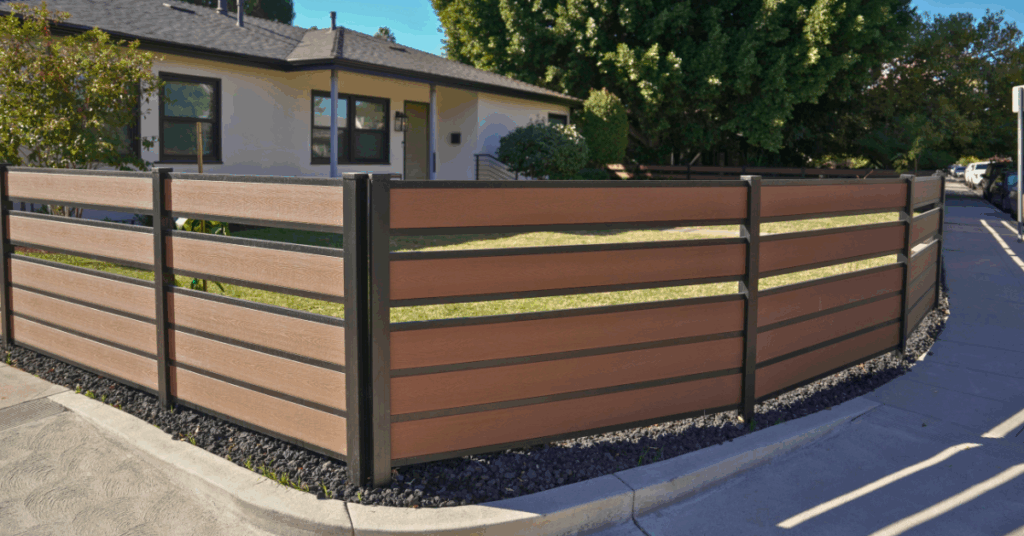
Wildfire-prone properties need protective choices. Replacing wood fences with aluminum lowers ignition risk and eases maintenance. This guide covers material trade offs, post types, footing options, installation details, regulations, insurance considerations, and design choices so you can plan a safer, code aware perimeter.
Why switch to aluminum
Aluminum offers a noncombustible fence option that reduces ignition sources around homes. Its lightweight profile and corrosion resistant coatings help it last decades with minimal upkeep. Choose powder coated finishes for sustained protection in hot environments. Aluminum panels and rails keep gaps small so windblown embers cannot lodge in dry wood slats. While aesthetics vary, modern profiles mimic classic looks without fuel load. Evaluate local codes and fire severity zones before replacing a wood fence. For an overview of why aluminum performs well in fire areas see why aluminum fences are ideal for fire zones.
Aluminum versus wood fire risk
Compare how aluminum and wood behave in wildfire exposure. Wood stores fuel and can ignite from radiant heat, embers, or direct flame. Aluminum does not burn but parts can warp under extreme heat. Consider these practical trade offs:
- Fuel load wood increases spread; aluminum eliminates that fuel.
- Maintenance wood needs regular sealing; aluminum needs little care.
- Repair scorched wood often requires full replacement.
For cost and material comparisons review what is cheaper a wood fence or aluminum fence, read performance contrasts at vinyl vs aluminum fencing, and avoid common pitfalls with aluminum fences fire zones common mistakes.
Design your ideal fence and gates
Design that blends fire safety with curb appeal improves acceptance and enduring value. Start by mapping property lines, access points, and defensible space. Prioritize sight lines for emergency responders and choose profiles that reduce ember catch. Use color and post spacing to complement architecture while meeting code. Include integrated gate designs to maintain egress and fire truck access. For creative approaches and layout ideas using aluminum systems see innovative design ideas using aluminum fencing kits. Keep the user in mind: a well chosen system simplifies maintenance and lowers long term costs while improving safety.
California B2B office furniture marketing
Industrial and commercial clients in California need resilient perimeter and site planning that match office moves and tenant upgrades. Marketing to B2B buyers requires messages about durability, compliance, and lifecycle costs. Offer project showcases, case studies, and clear delivery timelines to build trust. Highlight local availability and installation capability. Use maps to show service reach and proximity to major markets: Show California service area on Google Maps. For local product sourcing and modern fence options reference how to find modern fence in California.
Selecting posts for fire zones
Post selection determines vertical stability and fire resilience for any aluminum fence. Choose posts made from heavy gauge aluminum or galvanized steel cores to resist bending and heat. Taller fences need deeper posts and often larger cross sections. Consider slip fitted versus welded connections; welded joints reduce crevice ember traps. Use templates to set post spacing for wind and snow loads. When setting posts leave space for concrete cover and drainage. Practical installation tips and site adaptation strategies can be found in expert resources such as expert tips for building fences on uneven ground.
Choosing footings and non combustible options
Footings anchor posts and control heat transfer into ground and nearby structures. In fire zones prioritize concrete footings that fully surround the post base. Use noncombustible backfill and avoid wood packing or caps near grade. Consider elevated base plates or anchoring systems that limit direct contact with combustible landscaping. In high risk zones explore zone approved noncombustible systems that meet stricter certification. Those systems reduce inspection friction and can simplify permitting when replacing wood with metal alternatives. Learn about compliant noncombustible systems at zone 0 aluminum fence non combustible systems.
Anchoring and installation best practices
Proper anchoring keeps a fence standing through wind, heat cycles, and soil movement. Use full depth concrete around posts and compact in lifts to avoid voids. Set posts plumb and brace during curing. Protect anchor bolts with sealed plates and avoid recessed cavities that trap embers. Where soil is poor, extend footings or use helical anchors. Train crews on consistent torque for fasteners and on using corrosion resistant hardware. Detailed step sequences and common installer errors are covered in a practical installation guide at step by step fence and gate installation process.
Inspection maintenance and wildfire prep
Routine inspection and simple maintenance preserve performance and reduce risk. Inspect post bases annually, clear vegetation within defensible distances, and check for loose fasteners. Replace degraded caulking and touch powder coated finishes if damaged. Keep gutters, overhangs, and adjacent wood structures free of debris that can spread fire to fences. Train property teams to remove leaf litter and trim fuels away from perimeters before fire season. Seasonal maintenance guidance that suits aluminum systems is available at seasonal maintenance tips for aluminum fences.
Insurance rules approvals and documentation
Insurance acceptance often depends on noncombustible materials, certification, and documentation. Keep install records, product data sheets, and test reports handy for underwriters. Some insurers offer reduced premiums for noncombustible perimeter upgrades. Confirm that chosen systems meet local fire authority listings and include compliance statements in bid packages. If your area requires zone approval, collect manufacturer approvals and installer credentials. Learn how insurance interacts with approved systems at wildfire insurance approved aluminum fence gate systems.
Privacy security and aesthetic considerations
Aluminum systems can balance privacy, security, and style without adding fuel. Choose slat spacing and panel heights to meet privacy and safety needs. Integrate robust gate hardware and secure mounting to deter intrusion. Use finishes and profiles that complement the property architecture. Consider plantings that are fire resilient and do not create ladder fuels near the fence line. For family oriented design and comfort options review guidance at choosing the perfect residential fence for your family comfort.
Cost lifespan and return on investment
Assess costs across installation, maintenance, and expected service life. Aluminum has a higher upfront material cost than some wood types but far lower maintenance and longer service life. Compare lifecycle costs, potential insurance savings, and replacement frequency to calculate true value. Consider resale appeal and reduced wildfire risk in ROI calculations. Provide clients transparent budget scenarios, including options for premium finishes and warranties. For planning budgets reference a practical cost guide at fence installation cost guide for homeowners 2026.
Choosing a contractor and next steps
Select a contractor with fire zone experience, permits knowledge, and clear warranties. Ask for references, proof of insurance, and examples of past work in similar risk zones. Review bids for footing depth, post gauge, and coating system specifics. Confirm a schedule and site protection plan during installation. When you are ready to finalize design options and source compliant components use professional guidance and supplies from the manufacturer’s shop to start your project: Design Your Ideal Fence & Gates Today. For help finding qualified installers see choosing the right fence contractor.
Final words
Aluminum fencing reduces combustible perimeter materials and simplifies maintenance while meeting many fire zone requirements. Choosing the right post type and footing improves resilience, lowers insurance friction, and extends life. Pair technical choices with thoughtful design to retain curb appeal. Use the planning tips here to move from assessment to action and secure a safer property boundary.
Frequently Asked Questions
Aluminum is noncombustible so it will not burn like wood. It can warp under extreme heat, but it does not feed a fire.
Yes. Concrete footings provide stable anchorage and reduce ember accumulation at post bases. Use noncombustible backfill and proper depth per local code.
Some insurers offer reduced rates for noncombustible perimeter upgrades. Provide documentation and approvals to your insurer to qualify.
Modern aluminum profiles and finishes can mimic wood lines and colors while delivering the durability and safety advantages of metal.
Ask for local references, permit experience, and examples of work in high risk areas. Verify insurance, certifications, and warranties before hiring.
Ronnie is the CEO and Co-Founder of Globus Gates, bringing hands-on leadership and industry experience to the company’s aluminum gates, fences, patio covers, wall cladding, and exterior systems. His insights focus on helping homeowners, contractors, designers, and builders understand durable, modern, factory-direct, and non-combustible aluminum solutions built for long-term performance.